Marvin Otis
Fictional. Generated by AI — not a real person, and no likeness of one is intended.
64, dentist in Small-town Ohio · rolled by @colin.hasbrook · card — no film
History
who has worn him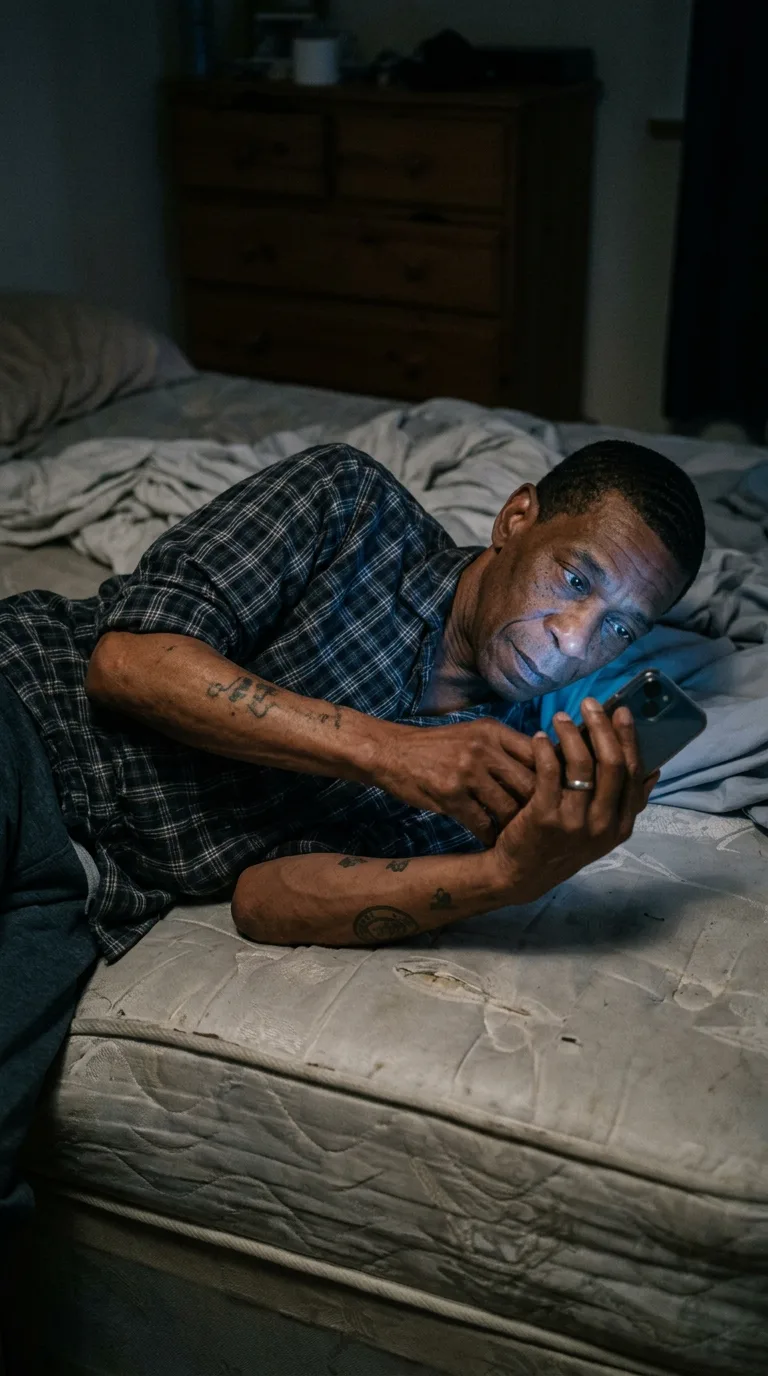
Rarest thing about him: Dentist — rare, 1 in 152
Season 0seed 1036041649 · engine v10
Character card
lineage 2NZHHJ
His body-swap story
@colin.hasbrook, wearing Kyle Ferrante, rolled the wheel on and woke up as Marvin Otis, spent under a minute in him, then spun the wheel and woke up as Kevin Stallard
Kyle Ferrante's kitchen smells like burnt coffee and the freezer that never quite seals right, and you have been him for forty seconds, standing at the counter in his good arms, his broad shoulders, that stupid freckled face that women apparently like, and you already hate it. Not him — you never hate them for long, there isn't time — but the smallness of the morning ahead of him: three case files, a home visit to a family that will lie to his face, a supervisor who thinks empathy is a metric. You spun for this six days ago because the file said *meaningful work*, and you believed, for about a week, that meaningful might be its own kind of good. It isn't. It's just tired, wearing a nicer shirt. You set his coffee down un-drunk, take out your own phone — his phone, his thumb — and open the page with the wheel on it, and somewhere in Miami, at the exact stroke of noon, Kyle Ferrante stops being anybody's problem.
The wheel turns and you are lying on your side in the dark.
The mattress is bare underneath you, no fitted sheet, just ticking gone gray and a rip near your hip that the box spring is already threatening through. Your shoulder is thin under a flannel shirt, buttons done wrong by one. Your thumb — smaller, drier, the nail bitten to nothing — is stopped mid-scroll on a video that means nothing, and then it isn't stopped anymore. It moves. Faster than he had it moving. Steadier. The phone throws its blue light up into a face that has quit blinking on its own schedule, and somewhere behind your ribs there is a rattle when you draw breath that Kyle Ferrante's lungs never had.
The room says middle of the night. The body says otherwise — this flesh has been lying here since some hour that light would call afternoon, curtains shut against it on purpose, a strip of gray at the edge where the sun is still doing its business without him. Shift work does this. Nights at the practice building up appointments for a town that only has one dentist left willing to see Medicaid, drinks after, sleep chased into the daylight because there's nowhere else to put it.
The phone is the first key. It's warm from his hand and it gives you a flash — him thumbing through the group text with his brother that never really talks about anything, three weeks stale, a wedding photo somebody reposted from twenty years back that he didn't comment on because there was nothing to say that wouldn't sound bitter. Marvin. The name arrives folded into the ringtone he never changed, an old voicemail greeting recorded in a better mood: *you got Marv, leave it after the beep.*
The shirt gives you more. Flannel, soft from washing, and your hands — his hands, sleeve by sleeve — remember buttoning it wrong three nights ago after a twelve-hour day that started with a molar extraction gone sideways on a kid too scared to sit still and ended with him alone in this room not bothering to fix the top button because who was going to see. The smell in the weave is cigarettes and the cheap gin he keeps in the freezer door, and under that, faint, the antiseptic smell that never fully leaves a dentist's clothes no matter how many times they're washed — clove oil, latex, the particular clean of a room built to hide pain.
The mattress under your hip brings the divorce. Ex-wife's name arrives as *Denise*, arrives with the shape of an argument in a kitchen that isn't this one, a house that got sold, a settlement that left him this apartment above what used to be the hardware store and is now nothing, boarded, on a street with one stoplight that blinks yellow after nine. Two kids somewhere — a daughter who calls on birthdays and means it, a son who doesn't and used to. And a second wife, current, asleep or working or just elsewhere right now, whose ring isn't the one on your hand — the ring on your hand is the *old* one, the wedding band from the marriage that ended, and he never took it off, and neither wife ever made him, and that fact alone tells you more about this man than the file ever would.
Your jaw aches, low and dull, an old thing — a fight in his twenties, a fall off a ladder cleaning gutters for money he needed, something that set wrong and got left wrong because insurance didn't stretch that far even for a man who spent his days fixing other people's mouths for free on Thursdays. The waves in your hair, brushed in that morning without thinking, muscle memory older than either wife — a comb, a durag folded and pocketed before the first patient, forty years of the same twelve motions.
You feel the nicotine want low in your chest, a pack-a-day itch that the middle of any day, awake or backward, always answers the same way. You feel the outward drift in your left eye before you understand it's yours — a soft, private embarrassment from grade school that never fully stopped stinging, patients' kids staring a half-second too long in the chair before their mothers hushed them.
And under it all, steady as a second pulse: the good thing, because there is one — Thursday clinic, the free day, old Mrs. Alberding's dentures fitted right for the first time in six years, her thanking him with a hand on his wrist that meant more than any check ever did. That's the one memory that comes back gentle instead of aching. He built that day into his week on purpose. Nobody in this town would call Marvin Otis a success, and he built one good afternoon into it anyway, every week, for himself as much as anyone.
The thumb stops.
You look at your hand — his hand, thin-fingered, nails bitten down to pink, a wedding band gone thin from decades on the same finger, tattoos ghosted along the forearm, a crest half-faded into skin gone loose with age — and you turn it over slow, like it might tell you something the memories didn't.
"Huh," you say, to the dark, to no one, in a voice with more gravel in it than you expected. "Didn't think I'd wake up as somebody's grandfather."