Marquis Delva
Fictional. Generated by AI — not a real person, and no likeness of one is intended.
20, water treatment operator in Miami · rolled by @marquis.delva · card — no film
History
who has worn him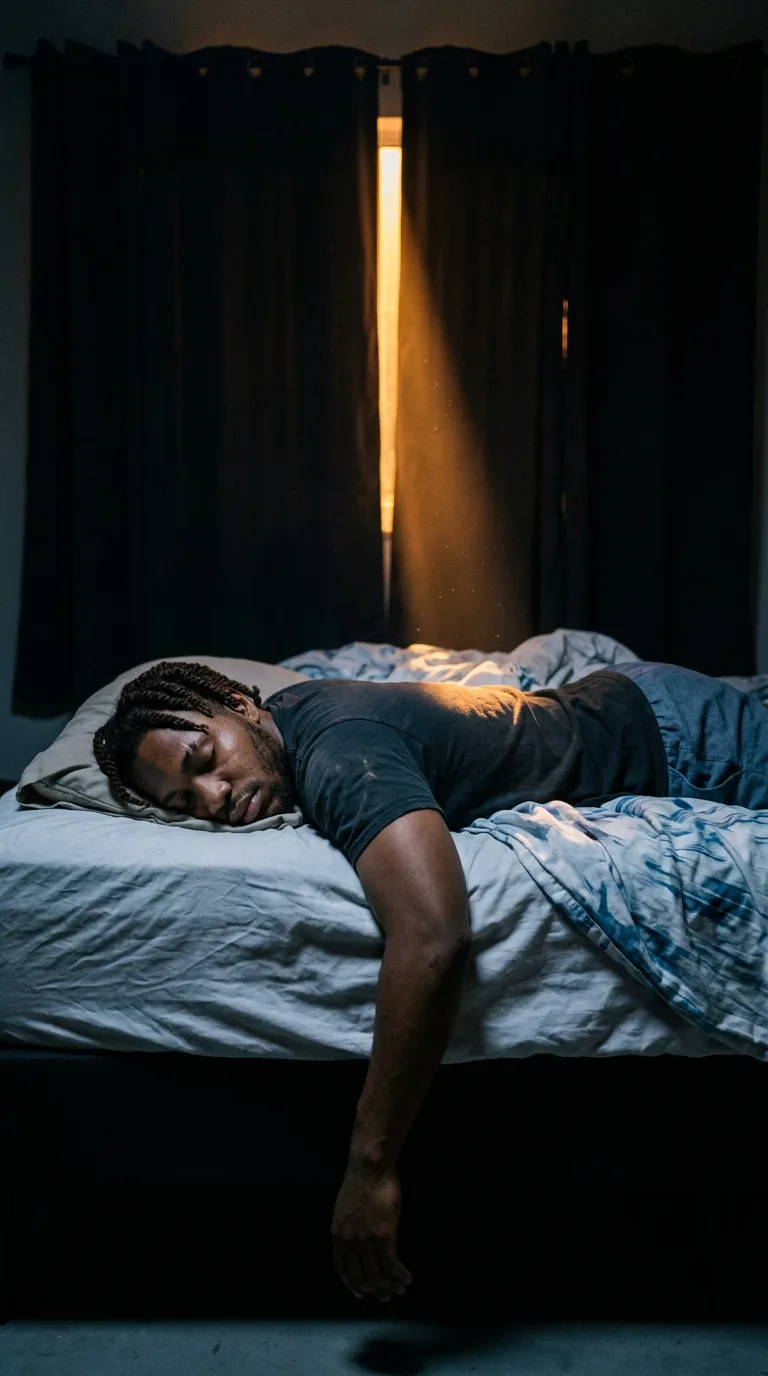
Rarest thing about him: Twists — rare, 1 in 393
Season 1seed 292264297 · engine v11
Character card
lineage 65VKT1
His body-swap story
@marquis.delva rolled the wheel on and woke up as Marquis Delva — their first
The apartment is quiet in the way apartments get when nothing has happened in it for hours. Sunday, midday, the kind of gray light that makes the couch look older than it is. You have had the tab open for twenty minutes, scrolling past it and back to it, the way you circle anything you actually want. vessel.cards. You found it on a forum thread that read like a joke until it didn't. A wheel, rendered in gold and glass, spinning lazily on a black field, waiting for a card number. You have wanted this — not this site, not this exact thing, but the idea underneath it — since long before it had a name. Every story about waking up in someone else's skin, every thread at two in the morning about what it would feel like, all of it aimed at a door that never existed. Now there's a button. You pay. Your thumb finds the spin before your mind finishes deciding, and the wheel goes, and goes, and the gold blurs into a ring of light, and stops on nothing you can read.
The room arrives before you do. Dark, close, the smell of fabric softener and something faintly chemical underneath it — chlorine, maybe, old and dried into skin. A blade of orange streetlight cuts through a gap in heavy curtains and lies across a bed. You are face down in it. Your — his — arm hangs off the mattress, fingers loose, and the breath that was ragged a second ago levels out into something slow and even, one long pull, like a held note finally let go. Then the arm draws itself up, unbidden, and the whole body rolls onto its back, and the hands fold over the chest like a man laid out for a viewing, a posture this body has never once taken in its sleep. You are inside it. You are heavy in a way you did not expect, twenty years of a life you didn't live pressing down into a mattress that isn't yours.
It comes in through the sheets first — cheap cotton, softened by a hundred washes, and under your back the memory of a mattress bought secondhand off a coworker two years ago, hauled up three flights with Devon from the plant cursing the whole way. The name arrives with the memory: Marquis. This is Marquis Delva's bed, Marquis Delva's dark, Marquis Delva's Sunday that is actually the deep dead middle of the night, because he works the graveyard shift at the plant and Sunday for him started at eleven the night before and won't end until the sun's most of the way up. That's the joke this body's been living for two years — everyone else's Sunday morning is his three a.m.
The T-shirt against your chest is thin, gray, worn translucent at the collar, and touching it gives you a flash of him pulling it over his head at shift's end, sweat-damp, the smell of the aeration basin's mineral funk still on him no matter how many times he showers. Under that: the basin itself, seen from the walkway, the water going white and frothing where the diffusers push air up through it, and him standing there with his headphones slung around his neck — the same ones, you realize, that live on a hook by the door, that he's owned since a birthday two years back, a gift from his mother because she worried about him working nights alone with nothing but his thoughts. Rosalind Delva. The name comes with a whole church, a whole Sunday-that-should-be, folding chairs and a keyboard and her voice rising over the congregation while he sat two rows back feeling the words more than believing every one of them, evangelical the way you inherit a language before you inherit the faith behind it.
Your hands — his hands — are calloused at the base of the fingers from valve wheels and ladder rungs, the nails bitten down close, ragged at the corners, a habit he's had since some anxious year in high school he doesn't fully remember starting. The scar through his eyebrow comes back sharpest of all: a bike, a curb, eleven years old, blood in his eye and his sister screaming louder than he was. Nobody at the plant asks about it anymore. It's just his face now, the one thing anyone would pick him out by in a lineup of night-shift men in blue coveralls.
There's a woman who isn't in his life anymore — no ring, no ex who matters, nothing that left a mark — and that absence sits differently than a wound would; it's just quiet, a life he built around himself instead of around anyone else. He drinks a beer sometimes with Devon after a shift, never smokes, never wanted to. He is careful with money because there has never been enough of it to be careless with — five figures in an account that grows by inches, rent that eats most of what's left, a mother he sends something to when he can. None of it is much. All of it is his, entirely, in a way that makes your chest — his chest — ache with a feeling that isn't yours and that you have no name for.
The morning he put these exact sheets on comes back too, small and useless and vivid — a Tuesday, doing laundry because his one day off landed on it, humming something off the radio, thinking about nothing at all. That's most of a life, you understand, lying there in his dark room wearing his folded hands: mostly nothing at all, done over and over, amounting to a person.
You sit up. The streetlight slides off your shoulder. You bring your hands up in front of your face — his hands, the bitten nails, the calluses — and turn them over slowly, palm to back, like you're checking they're attached right.
"Whose Sunday is this," you say out loud, to the dark, to no one, and you don't know yet if you mean his or your own, or how long you get to keep asking.