Marlon Etheridge
Fictional. Generated by AI — not a real person, and no likeness of one is intended.
59, auto body repairman in Boston · rolled by @marlon.etheridge · card — no film
History
who has worn him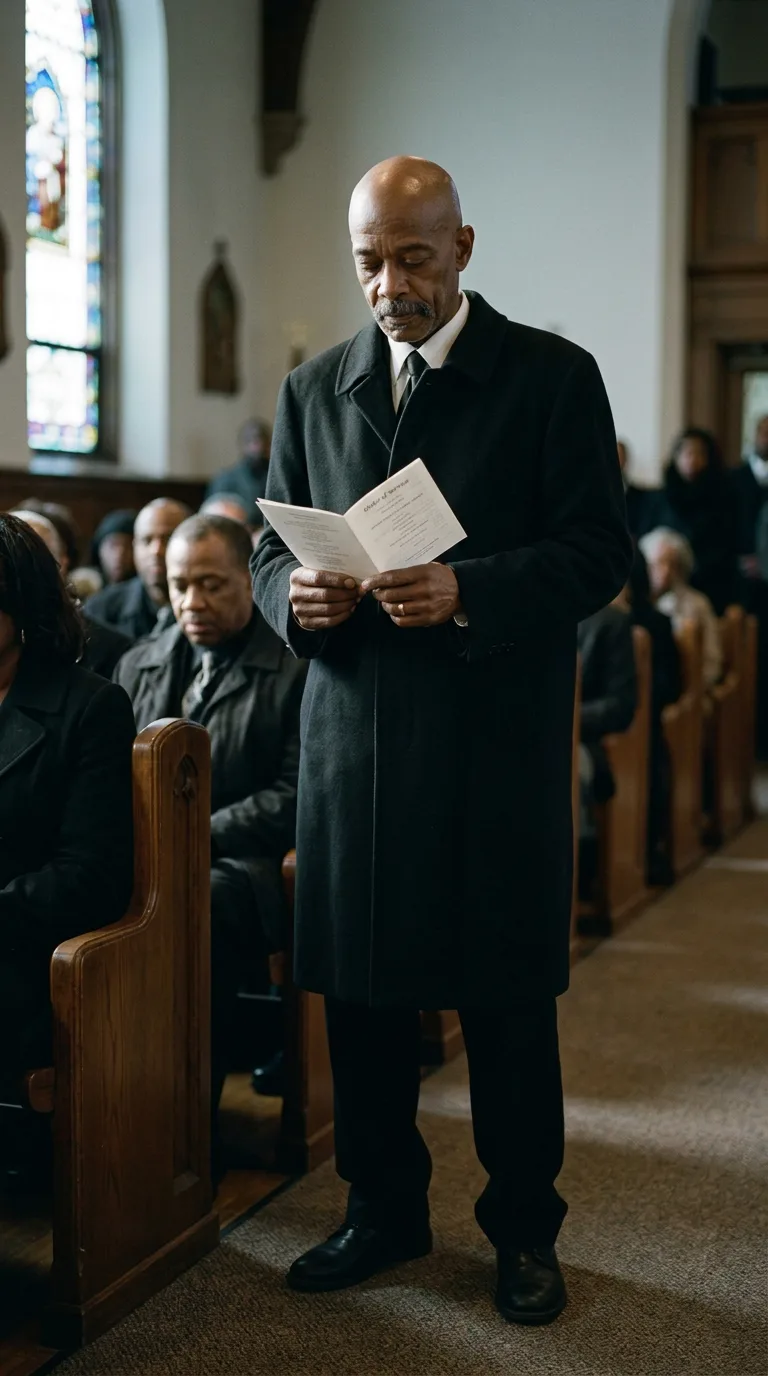
Rarest thing about him: Auto body repairman — uncommon, 1 in 678
Season 1seed 1363018869 · engine v11
Character card
lineage 00DF9D
His body-swap story
@marlon.etheridge rolled the wheel on and woke up as Marlon Etheridge — their first
The site loads slower than it should, like it's thinking about whether to let you in. Monday afternoon, nothing happening, the kind of gray hour you fill by scrolling until your thumb goes numb. You've wanted this since you were a kid making up stories about waking up in someone else's life — every movie about it, every thread at 2 a.m. where strangers swore it was real. Now there's a wheel on a screen and a payment page that works exactly like it says it will. You spin before you can talk yourself out of it.
The organ stops.
You come up a half-beat behind a room full of strangers standing, and your body — his body — rises with them, knees stiff, coat heavy on narrow shoulders. There's a folded paper in your left hand. Your other hand is already smoothing the front of a black coat you don't recognize the weight of, learning buttons that aren't yours, fingers slow and careful like they're relearning what fingers are for. Nobody turns around. Nobody looks back. The pew in front of you is a wall of black shoulders and lowered heads.
The order of service is warm from being held too long. That's the first thing that comes back — not a picture, just heat, the damp give of paper against a palm that sweats when it's nervous. Then: Marlon, someone saying it, an aunt's voice from somewhere far under this, this is Marlon, Denise's husband, and a hand shaking his hand at a repast decades ago. The coat is not his. It's borrowed, a cousin's, too roomy in the shoulders, and the memory of borrowing it arrives whole — standing in a doorway this morning, in the grey stillness before the sun fully cleared the triple-decker across the street, Denise fixing his collar with two fingers, saying you didn't have to come, and him saying yes I did, she was Ronnie's mother.
The shirt beneath the coat is his own, and touching its buttons — his own hand grazing his own chest — brings the whole morning back sleeve by sleeve: the sting of Right Guard under one arm, the second button that always fights him, the tie he tied twice because the first knot sat crooked and Denise said leave it, nobody's grading you. His knee is bouncing, has been bouncing since he sat down, a small tremor nobody in the pew behind him can see, doing it now standing too, a leg that has never once in fifty-nine years agreed to be still. It bounced through his nikah, through the birth of his daughter, through nine hours' overtime at the shop the week the transmission on the Buick ate half his savings.
His hands know things yours never will: the particular drag of 400-grit against primer, the way a door skin gives under your palm right before it's smooth, thirty-one years of it, a trade he backed into and then loved without ever quite admitting it out loud. Ramadan mornings starting a panel before sunrise so the smell of the booth wouldn't turn his stomach later. An old girlfriend's name surfacing unbidden — Trina — nothing dramatic, just a Tuesday twenty years gone, a diner, a decision he made and has mostly stopped thinking about, except sometimes, except now, standing in a coat that isn't his.
The wedding band is a small hard fact against your finger. It brings Denise whole: her laugh, the two of them slow-dancing in the kitchen to nothing, her hand flat on his chest telling him to quit smoking before their daughter got old enough to notice, and him quitting, badly, then well, seven years clean and still sometimes reaching for a pocket that isn't there. Their daughter's face won't come clear — just her voice on the phone last week, just this is Ronnie's mother, meaning someone she loved is gone and Marlon came because that's what you do, that's what fifty-nine years of showing up teaches a man.
The organ has stopped. The room is a held breath. You are still learning the shape of a leg that won't quit moving, a moustache you keep almost touching, dimples set so deep into a still face that a woman two pews up glances at him without meaning to, the way people always have, without him ever knowing why.
You look down. His hand — narrow, calloused, a stranger's ring on it — turns over once in front of him like he's checking it's real.
"Ronnie," you say, quiet, to no one, "I'm here."
Then you lift your eyes, and you are already wondering how long the wheel will let you keep him.