Marcus Whitlock
Fictional. Generated by AI — not a real person, and no likeness of one is intended.
55, refrigeration technician in Houston · rolled by @colin.hasbrook · card — no film
History
who has worn him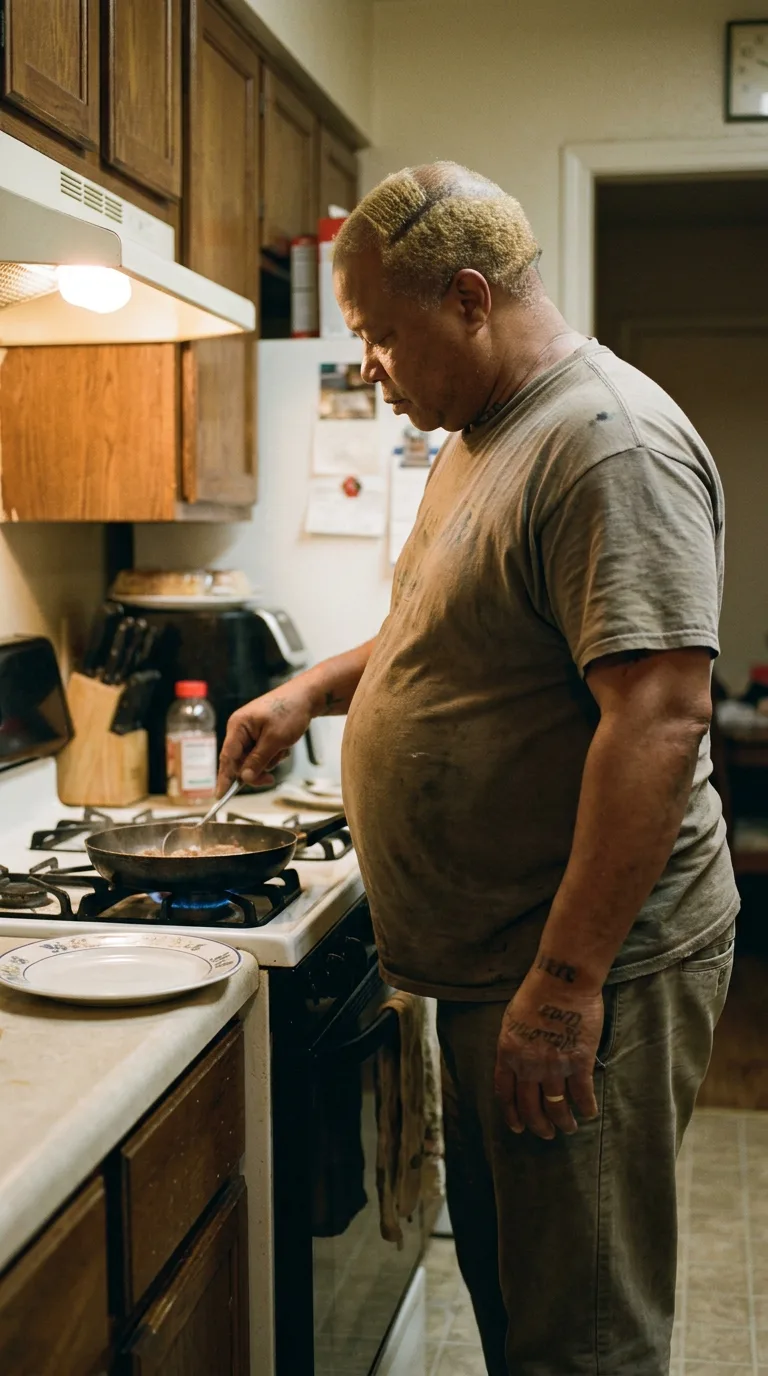
Rarest thing about him: Blond — legendary, 1 in 762
Season 0seed 927299979 · engine v10
Character card
lineage 2NZHHJ
His body-swap story
@colin.hasbrook, wearing Bryce Halloran, rolled the wheel on and woke up as Marcus Whitlock, spent under a minute in him, then spun the wheel and woke up as Colin Broussard
Bryce Halloran's apartment is quiet the way a rented life is quiet — nothing on the walls that means anything, a bed nobody's died in yet, twenty-four years old and none of them worth keeping. Four minutes in him tonight and already you're bored of his skinny wrists, his green eyes that see nothing interesting, the sales calls stacked up for Monday that aren't yours to make. Miami is asleep outside his window. You are wide awake inside him, restless in a body that has never worked hard enough to earn its own soreness, and the itch that brought you back to the wheel the 527th time isn't hunger exactly — it's the flatness of a body with no weather in it. You want something that's been rained on.
You spin.
The spoon is already moving before you arrive, and then it isn't yours, and then it moves the other way. That's the arrival — a stir reversing mid-circle, a heavy hand suddenly heavy in a way that has history behind it, salt going into a pan you didn't taste and don't need to, because something in the wrist already knows how much is enough. You are standing in a kitchen that smells like onions and old grease and a gas flame, in a body wider and lower to the ground than the one you left, feet planted in boots that have stood on concrete floors for thirty years. A second plate comes down out of the cabinet before you've decided to reach for it. Your hand did that. Not you.
The shirt is the first thing that talks. Cotton gone soft as a bar rag, a collar stretched loose — and it gives you a morning, sleeve by sleeve: an alarm at four, the ache in the left shoulder that means rain later, the particular grunt of getting an arm through a sleeve when the shoulder doesn't want to lift past a certain height anymore. Marcus Whitlock, size and shape arriving in you like a slow-poured drink — heavy through the middle, dimples cut into cheeks that don't need a smile to show them, thinning blond hair he stopped fighting years ago, combed the same way every day out of habit more than vanity. High blood pressure sits in him like weather, a doctor's voice saying *watch the salt* while his hand salts anyway, out of a stubbornness that isn't defiance so much as forgetting.
The tattoos on his hand and neck warm under your notice like a held coal — script, a name, a date. NATHAN. 10-12-92. Touching them opens a hospital room, fluorescent and cold, a nurse handing him something impossibly small and warm, and the sound he made that nobody recorded, a sound with no words in it, just relief shaped like a man. Twenty-nine years fold down into that one contact — a boy who is a man now, calls twice a month, calls more when the weather's bad and less when it's good, which Marcus has learned to read as its own kind of report card. A second name lives on the other hand, another date, a daughter three years younger, quieter, the one who texts instead of calls and somehow says more.
The pale line on his ring finger tells you nothing outright — it just aches, a phantom weight where sixteen years of marriage used to sit, and touching the counter where the second plate landed gives you her, briefly, whole: Renata, laughing at something on the stove that had nothing to do with the joke, the two of them younger and thinner and certain they'd figured something out. The divorce isn't a wound anymore so much as a room he doesn't go into on purpose, except his hands keep walking him past the door — setting two plates when there's only him to feed, an old groove worn so deep the leg still finds it. He noticed her absence for years. He has, lately, mostly stopped.
The apron string against his back, the rubber grip of the spatula, the cool tile under sock feet — each is a year, unasked-for. A walk-in cooler fogging white while he braces a compressor with his shoulder and swears at a fitting that won't seat. A church basement with folding chairs and weak coffee, a pastor who doesn't raise his voice, Marcus standing in the back because sitting still that long makes his leg go if he isn't careful — it's going now, under the table that isn't there, a small tremor of a man whose body has never learned how to be doing nothing. A glass of something amber, once, years ago, set down half-finished and never quite picked back up again — not a story with an ending, just a taste that stopped mattering. No cigarette ever between these fingers; that itch was never his to have.
The pan wants stirring and his hand answers it without you, muscle doing what muscle has always done, and you ride inside that competence like a passenger who has never once held a wrench correctly. Fifty-five years of weight sit differently than twenty-four — knees that announce themselves on stairs, a lower back that has opinions about standing this long, and under all of it a low, decades-old patience that has nothing to do with age and everything to do with a life spent fixing what's broken instead of replacing it.
You look down at the hand holding the spoon — thick fingers, a burn scar you didn't put there, a line of pale skin where a ring isn't anymore — and you turn it over slow, like checking it for damage that isn't going to be there.
"There we go," you say, to the empty kitchen, to the second plate, to nobody, in a voice with more gravel in it than you've had in months — and you don't yet know if that's relief or just the shape his throat makes when it talks.