Marcus Whitfield
Fictional. Generated by AI — not a real person, and no likeness of one is intended.
28, family caregiver in Western Kansas · rolled by @marcus.whitfield · card — no film
History
who has worn him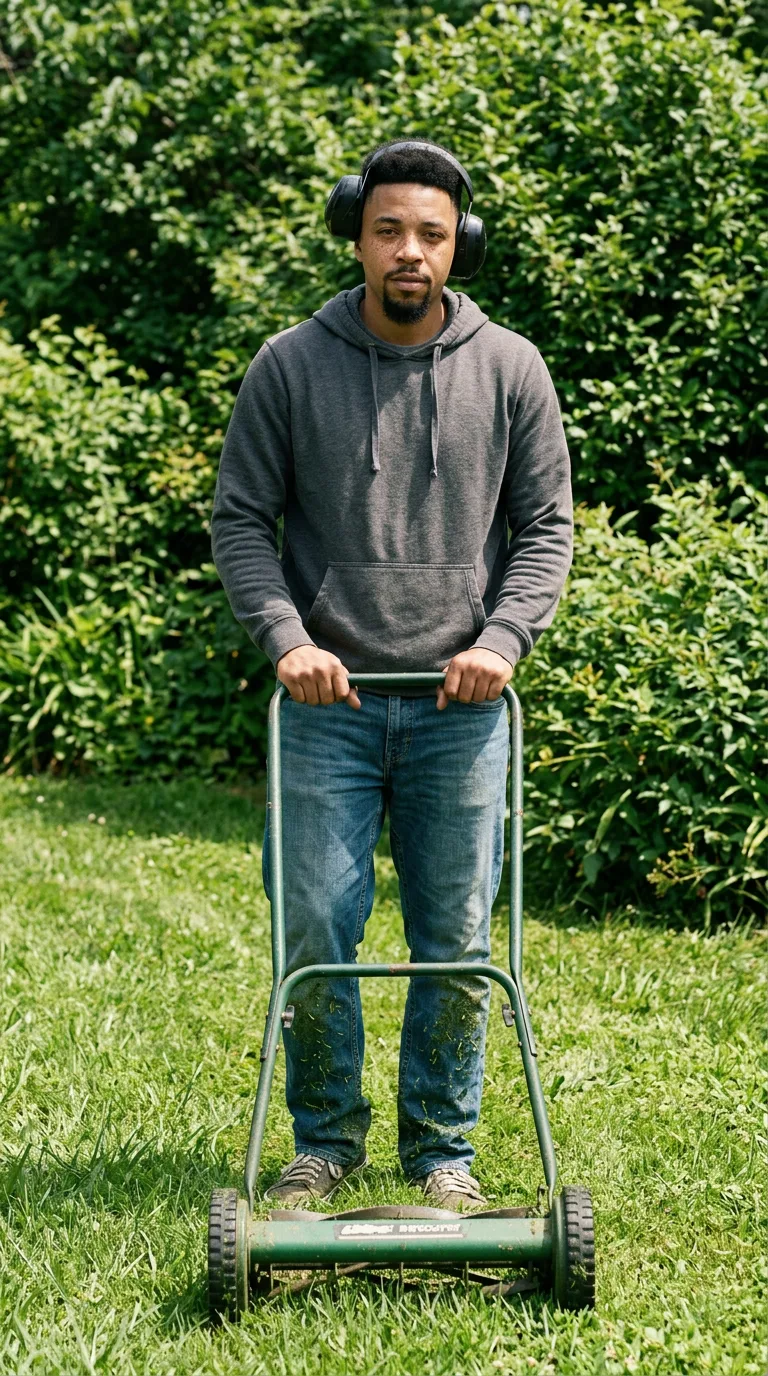
Rarest thing about him: Family caregiver — uncommon, 1 in 682
Season 1seed 1145861989 · engine v11
Character card
lineage LU7P6V
His body-swap story
@marcus.whitfield rolled the wheel on and woke up as Marcus Whitfield — their first
The apartment is dark except for the laptop, and the laptop is bright with a wheel you have looked at four times this week and told yourself you wouldn't pay for. It's Saturday, technically, since it passed midnight an hour ago. Everyone else in the building is asleep. You've wanted this since you were a kid making up rules for a game nobody else played — what it would feel like to open your eyes and not be you. Every possession movie, every thread at two in the morning about waking up in somebody else's skin. It was never for sale before tonight. You put in the card number like it's nothing. You click spin because the alternative is closing the laptop and being exactly who you were an hour ago, and you already know you don't want that. The wheel spins. It stops on a man you've never seen.
The mower engine hiccups under your hands — his hands — and catches again, and you are standing in the sun holding a bar with old green paint worn to bare metal at the grips. Grass clippings are stuck wet to your shins. There's a weight pushing back through your palms, an actual machine wanting to keep going, and your feet know where the next row is before you do. One ear is warm and muffled and the other is bare to the sound of the engine and somewhere behind you a redwing blackbird going off in a tree. The earmuff has slid half off. Without deciding to, the hand comes up and settles it back over the ear, and the next pass runs a straight line beside a slightly crooked one, like whoever was walking this yard a second ago finally found his rhythm.
It is the middle of the day here, wherever here is — heat coming up off the grass, a huge black-bottomed cloud stacked on the horizon turning the light the color of a bruise — and it does not match the hour you left behind, and you don't have time to wonder about it before the rest of him starts arriving.
It comes in through his hands first, off the mower bar, worn smooth in two spots exactly where his palms are now: his father bought this mower instead of a gas one because gas ones woke the whole block and his father worked nights at the elevator and slept days, and somewhere in that logic is the shape of a whole life — Friday afternoon, and a man asleep right now behind the window you can feel at your back without turning around, dead to the world because he clocks out at six a.m. and this lawn doesn't cut itself. The porch light is still on from this morning; nobody remembered it. Through the soles of his shoes — thin canvas, gone soft at the heel — the yard gives up its own memory, hardpan under a green skin of grass that never fully took because of the drought two summers back, and how he seeded the bald patch by the fence himself, on his knees, patient the way he's patient with everything now.
The shirt against your back — grey, warm from sun and body both — brings the morning whole: him standing in his own room three hours ago pulling the hoodie off a doorknob, sliding one arm in and then the other while his mind was already down the hall listening for his mother's oxygen machine, its small mechanical breath he's learned to hear under everything else, the sound he startles awake to check on and the sound he startles awake without, some nights, for no reason at all. His hands know this house too well: the particular give of the third stair, the cabinet that needs a hip to close, the recliner by the window angled so she can see the birds and the wheat stubble past the fence line without craning. He didn't go to college. There was a scholarship once, small and half-real, and then his mother's diagnosis was bigger than the scholarship, and that was that — not a tragedy, just a fact he carries the way he carries the folder of her prescriptions, organized, dated, a caregiver before the word ever got applied to him. He goes to church on Sundays because it is the one place he sits down and is not needed by anyone. He has not dated anyone in over a year; there was a woman, briefly, who couldn't understand why he left dinner early to go check a feeding tube alarm, and he didn't try to explain it twice.
His body holds all of it plainly: twenty-eight and already permanently a little tired in the shoulders, a lower back that twinges when he lifts her wrong, forearms gone lean and hard from years of a mower that has no engine assist, calluses laddered across both palms exactly where the bar sits now. A pack of cigarettes is flattened in the hoodie's front pocket, half gone, the smell of them already in the cotton, in his own breath probably, a thing he does out back by the propane tank so the smoke doesn't drift through her window. He is freckled across the nose and cheeks in a way people always comment on and he has stopped hearing it as a comment. He believes, plainly, unfussily, that God is looking after his mother better than he can, and some days that is the only sentence holding the whole structure up.
The thunderhead is closer now, going the color of a wet bruise, and the smell of ozone is starting to cut under the cut grass, and none of it belongs to you except that you are standing in the middle of it, breathing his exact breath.
You stop pushing. You lift one hand off the bar and look at it — the freckles, the calluses, a thin white fleck of scar tissue you didn't put there and don't remember getting because it was never yours to remember — and you turn it over once like it might mean something different on the other side.
"Storm's comin'," you say, out loud, in his voice, to no one, and you don't know yet if that's the last thing he ever would have said or the first thing you will.