Marcus Whitehorse Begay
Fictional. Generated by AI — not a real person, and no likeness of one is intended.
36, sales rep in San Francisco · rolled by @caleb.dunham · card — no film
History
who has worn him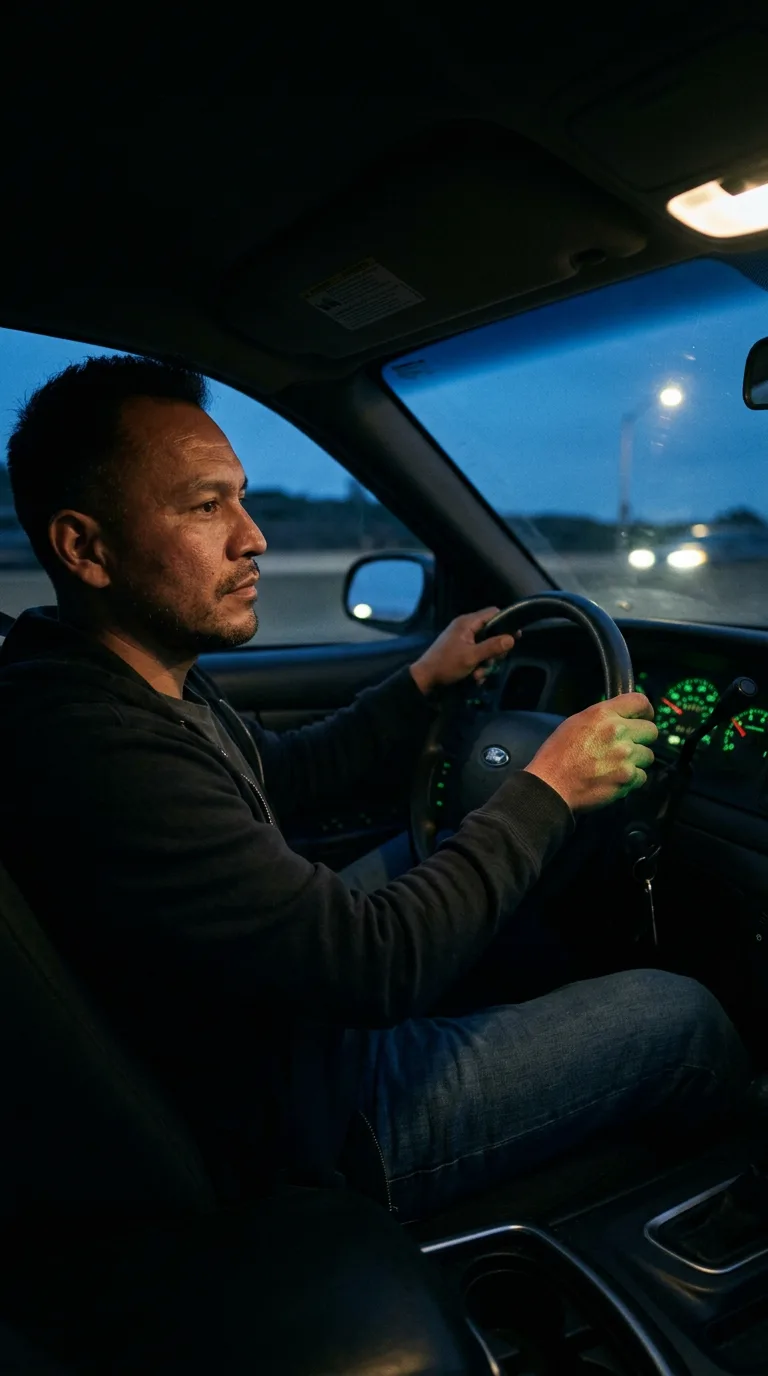
Rarest thing about him: Native American — common, 1 in 41
Season 1seed 698393738 · engine v11
Character card
lineage 9IC4OB
His body-swap story
@caleb.dunham, wearing Gilbert Ortega Lucero, rolled the wheel on and woke up as Marcus Whitehorse Begay, spent 7 days in him, then spun the wheel and woke up as Dean Michael Ostrander
You are leaving Gilbert Lucero because of his knees.
They are not bad knees. They are an engineer's knees, fifty-three years of stairs and site visits, and this afternoon one of them clicked on the way down to the garage and a whole life's worth of small warnings came up through it. The belly sits over his belt like a thing he is carrying for someone else. His green eyes tire by four. He has been him a day and two hours, and in that time you have learned that he sighs when he stands, that he has a drawer of reading glasses in three strengths, and that the goatee itches in the dry Las Vegas air in a way he stopped noticing years ago and you never will. It is the ninety-first time. You are not ungrateful. You just want to be somewhere that doesn't hurt on the stairs.
So you sit at his desk, with the evening going orange in the blinds, and you press the wheel, and it turns.
Then there is a road.
The car is moving. That comes first: the hum under the seat, the dark ahead, and a pale line at the edge of the headlights that is a foot closer than it should be. Your hands are on a wheel, ten and two, and green dash light sits on the knuckles. You pull. The car comes straight in one smooth swing. Your hands let go, then settle lower and wider, because that is how they sit when they are not his. The signal ticks on for an exit that is not his. You did that. He did not.
The first thing is the leg. His right knee is bouncing against the underside of the dash, fast and tireless, and it will not stop when you ask it to. Under it the denim is soft and worn thin. Touch the thigh and it comes.
A kitchen, a morning, the jeans pulled up over cold legs. His daughter on the counter, swinging her heels against the cabinet, asking why he is always going somewhere. His own voice answering, easy, lying a little: *Because somebody has to buy the groceries, little bit.* The ache of it is not yours. It sits behind the breastbone like a swallowed stone.
The hoodie is heavy on the shoulders, brushed soft inside, and the cuffs are frayed where his thumbs go through. He put it on in the dark of a hallway this morning, sleeve by sleeve, one arm and then the other, with the zipper pulled up to his collarbone, because the garage under the house was cold white light and the driveway was steep and he hated how it felt to back out of it. He did it every morning, and the zipper sticks halfway. Your fingers know to lift and tug.
The wheel is warm under his palms. Leather worn smooth at ten and two, and the memory comes with it: a dealership parking lot, a handshake, a man saying *you're doing well, Marcus*, and him laughing, because he was. Money, finally. He had not grown up with it. Under the pride, a quiet grief: his mother's kitchen, her hands rolling dough, and the way he did not call her enough.
An ex-wife, a name like a bruise you press to check it is there. Two kids, every other weekend. His mouth tastes of mint gum and nothing else. He has never drunk. He does not need to. He prays, sort of, to the dark and the road and whatever is out in it, never in a church.
The body is good. Thirty-six, strong across the back, no pain anywhere, and a lightness in the chest that Gilbert's body never gave you. The stubble is rough under your thumb when you rub your jaw.
The exit comes up on the right, green and white in the headlights, three miles early.
You lift your hands from the wheel for a moment and the car holds itself steady. You turn them over in the green light. Brown, broad, calloused at the heel, a stranger's, and yours.
You look up into the glass and say, to the face in it, "Okay. Let's see how long you last."
Somewhere in you the wanting is already turning over, small and patient. Tomorrow, or in four minutes.