Marcus Fontaine
Fictional. Generated by AI — not a real person, and no likeness of one is intended.
41, nurse in New Orleans · rolled by @colin.hasbrook · card — no film
History
who has worn him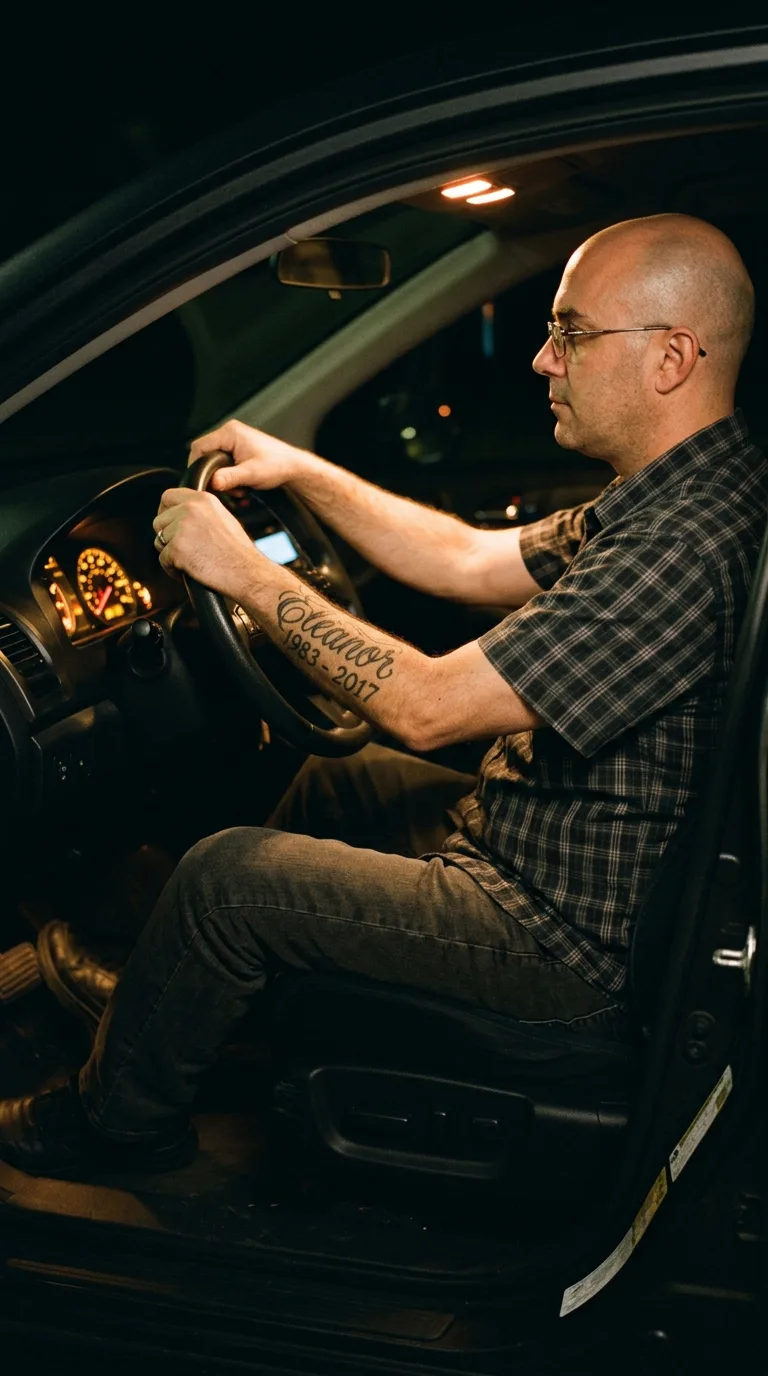
Rarest thing about him: Full sleeve — epic, 1 in 43
Season 0seed 715477681 · engine v10
Character card
lineage 2NZHHJ
His body-swap story
@colin.hasbrook, wearing Craig Buttermore, rolled the wheel on and woke up as Marcus Fontaine, spent under a minute in him, then spun the wheel and woke up as Danny Kowalczyk
You are Craig Buttermore for less than a minute, and it is enough.
You feel it in the vitiligo hand first — the patchy back of it, resting on the mouse at a desk that is not yours, a manager's desk, a manager's beige little kingdom in El Paso. You feel it in the dad-bod give of the gut against the waistband. You feel it in the specific, total nothing of him: no ache anywhere, no want anywhere, a man built like a Tuesday. Sixty seconds of Craig Buttermore is the flavor of a cracker. You did not even get to learn what he'd have told you, given time — you didn't give it time. Your thumb is already on the trackpad, already back on vessel.cards, the wheel loading behind your own borrowed, blinking eyes. You do not stop to examine why. You know anyway: it's the same reason it's always been the reason, four hundred and twenty-four times before this — the last body was fine, and fine is the one thing you cannot sit still inside. You pay. You spin.
—
The wheel lands on New Orleans and it lands on him mid-turn, both hands leaving the wheel of a dark car and finding it again lower, wider, wrong. The dash light is green-blue on knuckles that aren't Craig's — thinner across the back, a ring on one, ink starting at the wrist of the other and running up under a rolled plaid sleeve. Three miles from a house that isn't yours yet, on a road with no other cars on it, the turn signal clicks on for an exit nobody who lived here would take. You are behind a stranger's sternum, breathing at a stranger's rate, mid-shift-still tired in a way that isn't muscle, it's clock — his body thinks it's two in the morning even though outside the window the last of a Louisiana dusk is going purple over wet asphalt, sun so recently out you can still smell the steam coming up off the street through the half-open window. Night shift wearing evening like a coat that doesn't fit the season.
—
The shirt is the first thing that gives him up — flannel, soft from a hundred washes, and touching it you get a flash of a closet, narrow, one room wide, the whole house one room wide, shotgun-style, hangers scraping. Then the whole morning comes, if you can call a morning that starts at 6 p.m. a morning: he is standing in that closet in his boxers with his back seizing up the way it always does now, low, right of the spine, an old workhorse ache with no single origin story anymore — just years of turning patients, years of bending over beds not built for a man his height — and he reaches for the flannel because the scrub top is balled at the bottom of a hamper and he doesn't feel like digging. Eleanor's name comes up his arm as he shrugs the sleeve on, and for a second the feeling in the shirt-touch is so specific it's almost unbearable: not grief exactly, older than that, worn down at the edges like a coin. Eleanor. 1983–2017. A tattoo he got in a bad month, script across the inside of his forearm where he'd see it doing chart work, where a patient checking his pulse might ask about it and he'd say "family" and let them assume whatever kindness they wanted to assume.
The ring is next — not a wedding ring, you understand that instantly from the shape of the memory attached, the particular unmarried permanence of it. Nadine. Girlfriend, four years, the shotgun house both their names on the lease. You get her laugh through the metal of the ring somehow, unfair and total, her voice from the kitchen this evening telling him to text when he's off, a kiss against his jaw that he'd leaned into without looking up from tying his shoes. Before Nadine there's another woman right behind her in the touch-memory, closer to the surface than she has any right to be for a man in a stable relationship — Renee, the recent ex, eight months gone and still somehow in the car with him some nights, an argument that ends nothing, just fades, the kind of ex who doesn't need a reason to still matter.
The steering wheel — you're still holding it, hands resettling now under new command — gives you the drive itself, three miles of it and further back, years of it, the hospital's fluorescent hallway at two in the morning, the nurses' station, a chart open under bad light, his own handwriting getting worse every year. He cracks his knuckles without meaning to — both hands, a habit so old it isn't even nervous anymore, just punctuation — and the small violence of it kicks loose a memory of Javier. Houston. A conference, years back, the two of them stuck at the same folding table during a dull stretch of a joint safety training, an electrician and a nurse with nothing in common finding out they had almost everything in common, the specific loud laugh Javier had, a friendship that outlived the training by a decade of text messages and one bad camping trip. You know Javier from the other side too — you were him eleven spins ago, you know what his hands do, what his house smells like, and it sits strange and warm in you now like meeting an old friend through a photograph he doesn't know you're holding.
His body underneath it all: skinny-fat, no muscle memory of exertion though the hands know saline locks and IV starts and the particular deftness of finding a vein in bad light without being asked to think about it. Back pain, low and constant, worse today from a double shift he can already feel coming in the joints. Bald head cooling now in the open window's air. Brown eyes tired in a way that has nothing to do with the hour outside and everything to do with the hour inside him.
—
Your — his — hands come off the wheel and you hold them up in the dash light, turning them, the ring catching green, Eleanor's name disappearing into shadow and back as the wrist rotates.
"Who signed off on this exit," you say, out loud, to no one, in his voice, and you almost laugh at how much it sounds like something he'd say.
You don't know if it's a minute or a year. You never do, going in. The wheel doesn't tell you, and neither will he.