Marcus Ferrell
Fictional. Generated by AI — not a real person, and no likeness of one is intended.
21, tow truck driver in Seattle · rolled by @toby.lankford · owned by @colby.marsh · card — no film
History
who has worn him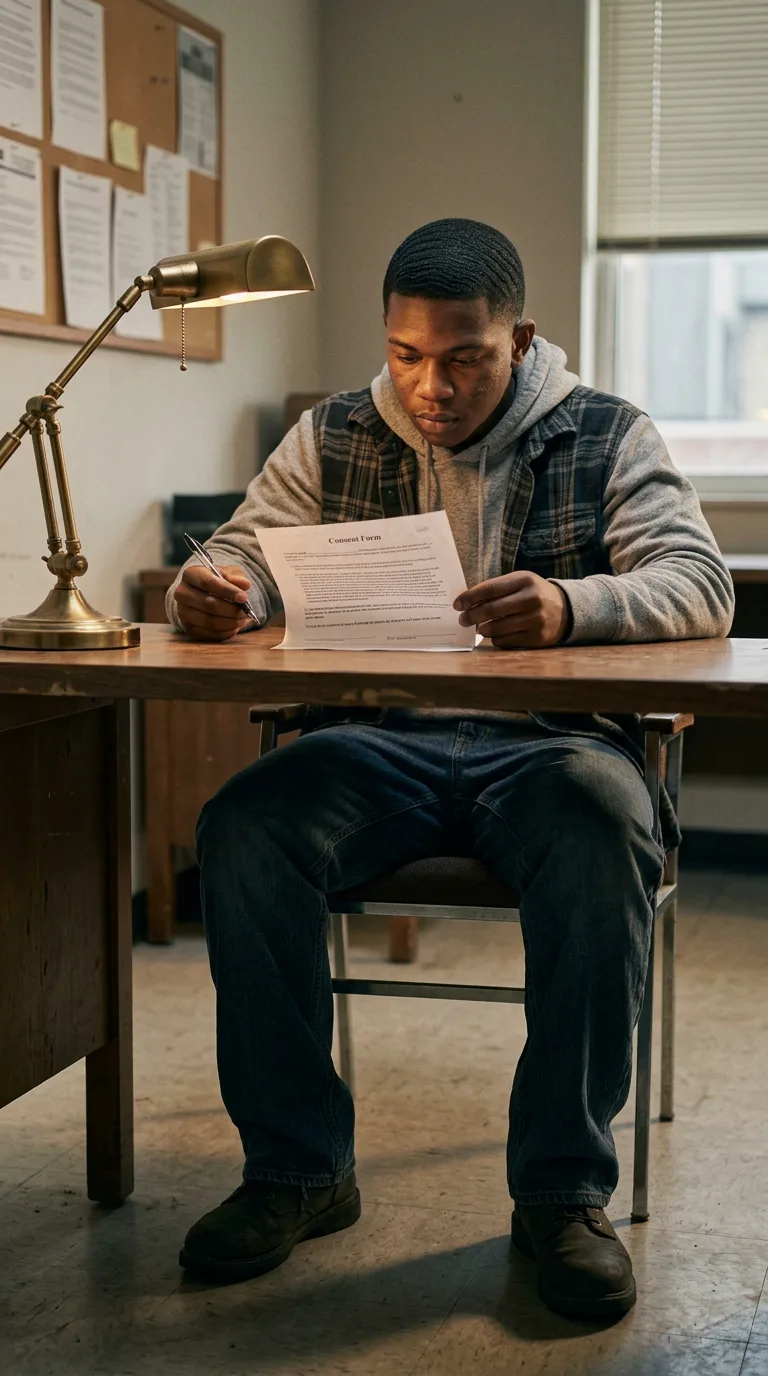
Rarest thing about him: Chronic back or joint pain — rare, 1 in 34
Legacyseed 34764056 · engine v8
Character card
His body-swap story
---
You worked the same yard for two years and he never once let you take the heavy end.
That's the thing you go back to. Ace Towing, dispatch out of the industrial slice off Airport Way, and you were the old man of the crew at forty-nine with a spine that had gone to gravel. He was twenty-one and he'd get to the passenger side of the flatbed before you were out of your seat, already dragging the chain out of the box, already crouching under a bumper in four inches of runoff, saying *I got it, I got it,* not like a favor, like a fact of the world. He never made it a kindness you had to thank him for. That was the part you couldn't forgive him.
Because he hurt too. You knew it. You watched him get down off the deck of that truck at three in the morning on 509 with a Camry cinched down behind him, and you watched the little hitch he did — the half-second where he put his hand flat on his lower back and looked out at the median like there was something to see. Twenty-one years old with a bad SI joint and no insurance worth the name and eleven hundred a month for a room in Beacon Hill with two other guys. He'd sit in the cab picking at the skin around his thumbnail, peeling it back in little strips while the light bar turned everything blue and gold, and he never said a word about the pain. Once a month he'd get properly drunk with the yard guys and even then he wouldn't say it.
You said it. You said it constantly. You were the one who talked about your back the way other men talk about weather.
So when the offer came — and it came to you, it came for you, in a room that smelled like carpet glue and old coffee, with a stack of paper and a number on it — you thought about the fact that he had never let you take the heavy end. You thought: he is young and he is strong and he does not know what he has. And then you thought a worse thing, the true thing, the thing you carried out of that room like a stone in your boot: *he would say yes.* Not because he's a fool. Because five figures is a house down payment in his arithmetic, is his mother's furnace, is the debt cleared, and because he genuinely believed — you'd bet the whole sum on it — that God had put him here to be useful to somebody.
You didn't have to lie to him. That's what you'll tell yourself for the rest of the years you've stolen. You told him the terms as they were given: for good, no return, no term on it. He asked what happens to him. You told him you didn't know. He nodded like a man being told a tow's out of range and he'd have to go anyway.
He wanted to read it himself. That was Marcus. Twenty-one and he sat down at that scarred wooden table under the desk lamp with the pull-chain and the corkboard behind him going yellow with notices nobody read, and he went through every page with his mouth moving slightly, one hand holding the sheet up off the table, pen already uncapped in the other because he'd decided before he sat down and was reading anyway out of respect. The window behind him was blinds and grey Seattle afternoon. He had his plaid over the grey hoodie, the same one he wore under the Ace jacket all winter. Work boots. He hadn't showered off the shift.
Halfway down the last page he stopped and asked you, without looking up, whether you were sure your back was the whole of it.
You said yes.
He said, *Then that's a fair trade, man. You been hurting longer.*
That's not a thing a person says. You have gone over it in a body that no longer belongs to him and you still cannot make it a thing a person says.
He initialed the bottom right corner. He set the pen down squarely, parallel to the edge of the paper, the way he set chains down on the deck — everything in its place, everything findable at two in the morning in the rain. He straightened up and he looked at you and his face was perfectly, unbearably calm. Peace. The face of a man who has signed.
And then you were behind it.
Nothing tore. That's the horror nobody warns you about. It was like sliding into a truck cab still warm from the last driver — the seat already shaped, the mirrors already set, a coffee cup in the holder and a phone charger you don't recognize. You came in and the *pain* was the first thing, immediate and absolutely familiar, low in the right hip, and you understood with total clarity that he had been carrying that alongside you every night for two years while lifting your end of the chain.
Your head went back. Light came off you — out of the eyes, out of the mouth, a second, no more, hot and white and gone. Then slack. Then the sound of your own breath going in and out of a young man's chest, faster than it should, because the lungs were his and they didn't know yet what they'd agreed to.
You brought the hands up.
Brown, dry, cracked across the pads. Knuckles scuffed. Every cuticle worried down to raw. You turned the left one over and looked at the palm and the calluses were in the wrong places — his places, chain-and-hook places, not your places. You'd had thirty years of driving and lifting and the map of it was gone. Somebody else's map now. Somebody else's forever.
You wanted it. You have to hold that. You wanted this and you took it and there is no way back and no term on it and no one to give it back to.
The thumb went to the index finger by itself and started picking, and you let it, because that was his and you were not going to stop it.
You looked up into the light from the window.
And you said the only thing there was to say in that room, to nobody, to him, to whatever was listening on the other side of the paper.