Marcus Endicott
Fictional. Generated by AI — not a real person, and no likeness of one is intended.
45, school principal in New York · rolled by @marcus.endicott · card — no film
History
who has worn him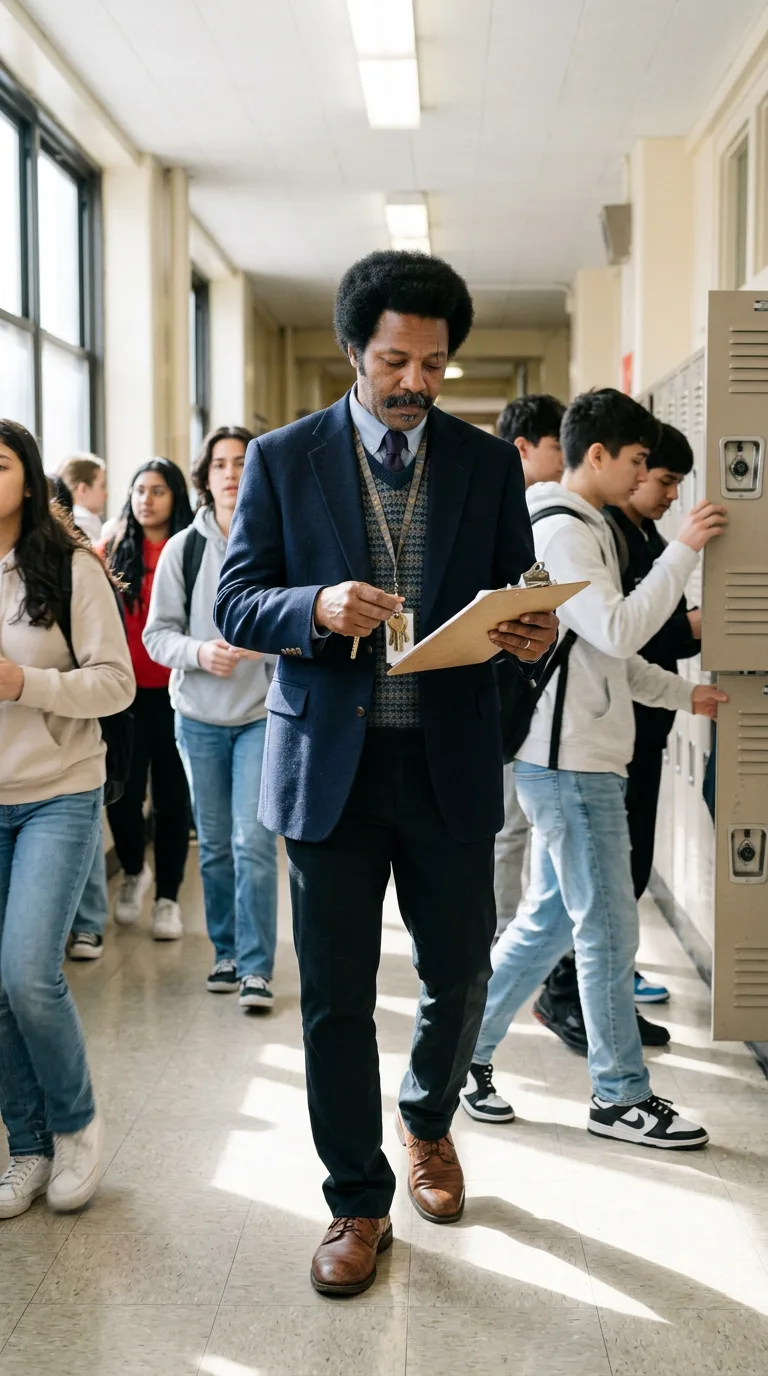
Rarest thing about him: School principal — common, 1 in 311
Season 1seed 1315215786 · engine v11
Character card
lineage YTPQVV
His body-swap story
@marcus.endicott rolled the wheel on and woke up as Marcus Endicott — their first
The screen has been the same for an hour: a wheel, a price, a button that says SPIN, and under it in small gray letters, *you get him for as long as you keep him.* You have read every thread there is to read about this, for years, the way some people read about weather systems they'll never stand inside. Tonight is nothing — dishes undone, a show muted halfway through an episode, the particular late-evening quiet where wanting something outlasts having anything else to do with yourself. You have never had a body to leave. You have this one chance to find out what it's like to not be asked. You pay. You spin. The wheel doesn't slow down so much as it stops mattering.
The hallway is exactly loud enough to be a school at the top of a shift — locker doors, a bark of laughter down at the far end, sneakers scuffing tile — and you are holding a clipboard in a hand that is not the hand you think of when you think *hand*, because you have never thought of a hand before now, not really, not as a thing with knuckles and a wedding ring and a groove worn into the third finger. The pen stutters over the paper. Once, wrong — a check mark in the wrong box — and then, slow and correct, the same mark fixed. The ten after that come out deliberate, each one, the way you'd write if someone were grading you on it, on a job this hand has done ten thousand mornings without once looking down.
He does not know. There is no moment where he notices, because there is no longer a *he* standing behind the eyes to notice with — there is only what's left in the wiring, coming up through what you're touching, the way heat comes up through a floor.
It starts with the lanyard. Keys against your sternum, cool through the shirt, and with them: an office, brick-colored carpet, a coffee mug shaped like an apple that a fourth-grader made him in a ceramics elective eleven years ago at a different school, in a different borough. His hand—Marcus's hand, you have his name now, it arrived with the mug—turning the mug so the chip in the rim faces the wall. Small vanity. He likes his office to look like nothing is wrong in it.
The clipboard gives you the shift itself: middle school, six-thirty alarm, a building that used to run three shifts a day when the district was short on space and still does out of habit, so his morning starts while most of the block is still dark. He took this post because the last principal walked in February and somebody had to, and he has never once regretted it out loud, though there was a stretch — eighteen months, maybe two years — where he came home so hollowed by four in the afternoon that Denise would find him asleep sitting up on the couch, tie still knotted, and she'd loosen it herself rather than wake him.
Denise. The name comes with the weight of the sweater vest against his ribs, the diamond pattern she picked out for him at a Macy's in Downtown Brooklyn, laughing at him in the dressing room mirror — *you look like somebody's favorite uncle, Marcus, and I mean that as a compliment.* Six years living together in the brownstone on Hancock, her plants taking over the good windowsill, the stoop where they sit some Fridays with a six-pack between them and nowhere to be. He almost proposed once, had the ring picked out at a place on Fulton, and then didn't, for reasons that are his and blurred even to the memory — something about Renata, the ex, the one whose name still comes attached to a particular ache when a certain song comes on the radio in the car, though it's been nine years and he would tell you, if you asked, that he's happy, that this is the life, that he doesn't look back. Mostly that's true. This morning it was true.
The shirt on your back gives you the putting-on of it, hours ago in his hour: the light still gray in the bedroom, Denise's breathing even beside him, buttoning from the bottom because his father taught him that, some old rule about not losing your place, tucking in with the heel of his hand, the tie a clip-on he's ashamed of and has never told a soul about because a school full of teenagers does not need one more thing to laugh at him for. The blazer next, the wool of it gone soft at the elbows from six years of wear, weight settling onto shoulders that carry it like a second spine. Forty-five years old and the knees complain on the stairs some mornings, the eyebrow — the scar through it, a bicycle at nine years old, a curb in Bed-Stuy, his mother's hands shaking worse than his did — the eyebrow doesn't hurt anymore but he touches it sometimes without knowing why, when he's thinking hard, a tell his assistant principal has learned to read like weather.
The shoes on his feet know this floor. Twenty-two years of tile like this one, three different buildings, and the feet have opinions the rest of him doesn't consult — where the floor dips near the science wing, where a kid is about to cut too close to the lockers and needs a hand raised, not a word, just raised, and they'll see it and slow. That's his gift and he's never called it a gift. He calls it Tuesday.
You look at the hand holding the clipboard. Not his. Yours now, for as long as this lasts, which is a length nobody on either side of this has ever measured — could be the length of a passing period, could be longer than the wheel has ever let anyone keep anything. The ring catches hallway light. Down the corridor a kid slams a locker too hard and looks over, half-guilty, the way they do, waiting to see if the principal saw.
You lift your eyes off the hand and into the noise of the hallway, and you say, to no one, low enough that it could be a man talking to himself between periods:
"Okay. Okay — let's see what you got."