Marcus Deveraux
Fictional. Generated by AI — not a real person, and no likeness of one is intended.
47, sales manager in New Orleans · rolled by @jerome.wallace · card — no film
History
who has worn him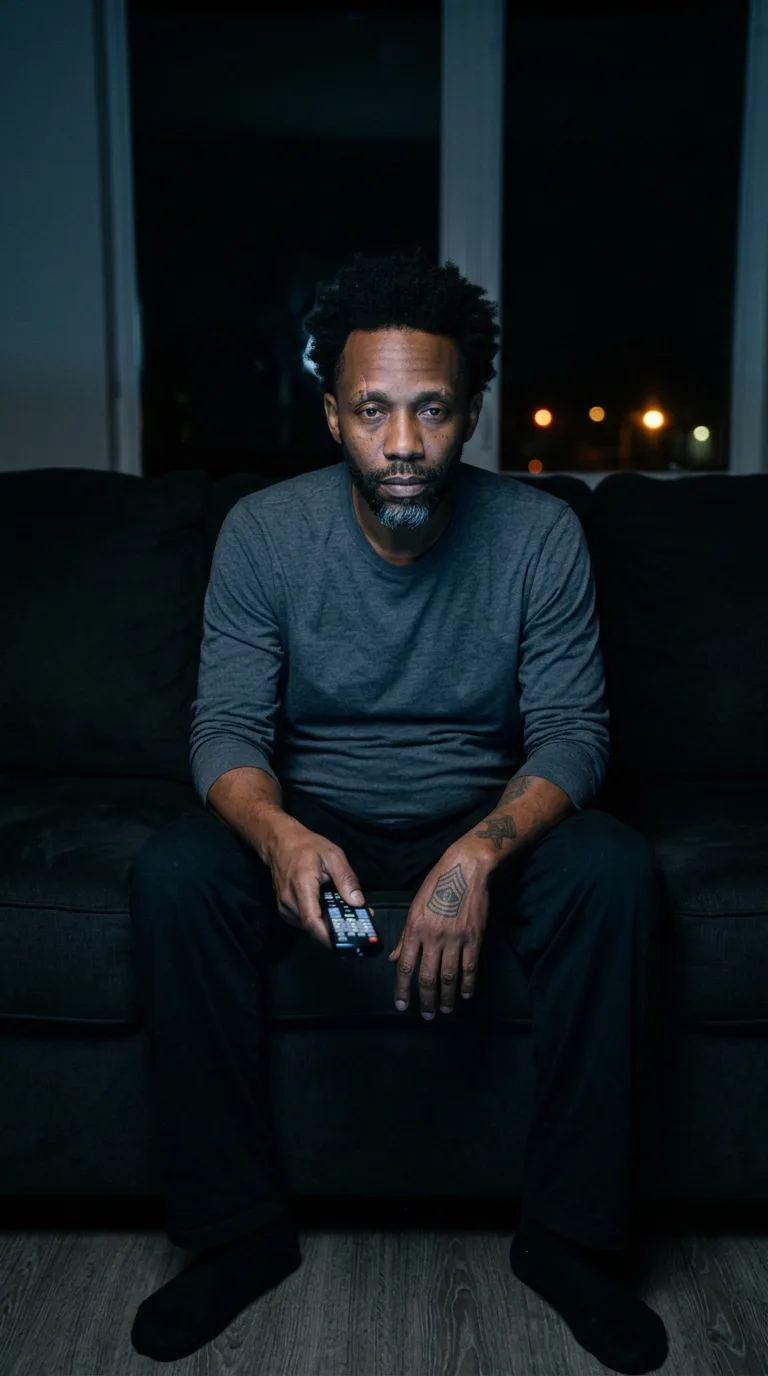
Rarest thing about him: 6'3" — common, 1 in 52
Season 1seed 1487905066 · engine v11
Character card
lineage OZ80W3
His body-swap story
@jerome.wallace, wearing Dennis Struzik, rolled the wheel on and woke up as Marcus Deveraux, spent under a minute in him, then spun the wheel and woke up as Danny Kowalczyk
---
Dennis Struzik's hands smell like cut grass even at night, even hours after the mower's gone quiet in the shed. That's the thing about him you can't shake off between spins — the green under the nails, the ache low in the back that never really leaves, the way his knees pop when he sits on the lanai with a beer sweating in his fist. You've been him thirty-seven minutes short of an hour and already the boredom of him is a physical thing, a weight sitting where his gut is. Comfortable enough. A little land, a little sun, nobody waiting up. But you have done this thirty-seven times before and you know the shape of the itch now: it isn't hunger and it isn't hate, it's just that the beer is warm and the ocean sound off the water is the same sound it was ten minutes ago, and somewhere else, right now, in the exact same second, someone is living a different Friday. You set the bottle down on the rail. You open the laptop already open on the table, the wheel already loaded from last time, like you never really closed it. You pay again. You spin.
The bright frame swallows you.
You are sitting up straight before you know you have a spine to sit up with, and the remote is heavy and small and already set down on the couch arm by a hand that is not yet fully yours to command — long fingers, a plain silver ring loose enough to turn. The room is dark, wet-aired, close. A television throws blue light against a wall you don't recognize, and somewhere outside this room, through a window with the blinds cracked, New Orleans is doing whatever New Orleans does at two in the morning on a Saturday: nothing, mostly, streetlight and a siren three streets off and the long wet hiss of a car passing on a road that never quite dries. You laughed at this scene the first time it aired. You do not laugh now. The body under you is bigger than Dennis's — long-legged, soft through the middle in that specific way of a man who used to be an athlete and now sits in conference rooms, six-foot-three folded onto a couch built for someone shorter. Your back finds the give of an old cushion. Your bare feet find hardwood, cool, old-house cool, the kind that never fully leaves the boards.
The shirt is what opens him first — not this shirt, this is a sleep shirt, worn thin, but the arm inside it carries the memory of a different one, a dress shirt, sleeve by sleeve, cufflink caught on a hair before it seats. That's this morning — his morning, hours and hours gone already by his clock, folded now into your hand like it happened five minutes ago. Standing in front of a mirror in a room one board wide, threading a blue tie because Sherita in accounting said the blue one photographs better on the video calls, and laughing to himself, alone, because there is nobody left to say it to out loud. The knot going wrong twice. The little private triumph of the third try.
The ring gives you more, unclenched now, turning slow between two fingers without him ever deciding to do it — a habit so old it isn't even a thought, just a weather pattern in his hands. It isn't a wedding ring anymore, not legally, but it still turns like one. Sonya. Nine years married, four kids between the two of them though the story always says three or more because he stopped counting them like a number somewhere around the second and started counting them like a Tuesday, a Thursday, a recital, a science fair. The divorce wasn't loud. That's almost the worst part of it — no blowup to point to, just two people who loved each other running out of a reason to keep proving it, and one Saturday morning she was moving a box of her mother's dishes to her car and he was holding the door for her like a doorman at his own funeral. He still turns the ring like a man rehearsing an apology he was never asked to give.
The couch cushion under his weight remembers itself into a hundred nights just like this one — this exact slouch, remote loose, some rerun laughing at itself in a dark room, kids asleep down the shotgun hall in the room that used to be Sonya's sewing room, the box AC unit ticking in the window because window units are all a house this narrow can carry. He works nights sometimes without meaning to, insomnia dressed up as habit, some clock in him set to whenever the sales floor charts stop scrolling behind his eyes. Monday there will be a glass conference room and a wall of quarterly numbers and a team that likes him more than they should like a boss, because he remembers their kids' names and never once raises his voice, not even the day the Tran account fell through and everybody thought he would.
The forearm gives up the tattoo without being asked — the ink doesn't need touching, it's right there under the sleeve, and it arrives anyway, unit insignia, a war that ended before some of his own kids were born, a version of him that slept different, ate different, hurt in places this couch has slowly untaught. The eyebrow scar is older than the ring and older than the army too — nine years old, a bicycle, a curb, blood in his eye and his mother screaming louder than he was. He forgot the actual pain of it decades ago. What's left is just the pale line and the story he tells his kids when they ask, embellished a little more with each telling, a shark now, in the newer versions.
He is spiritual in a way that has no name for it — a feeling on the porch some evenings that something is listening, nothing churchly about it, just a kind of company. A drink most nights, sometimes two, the second one always slower than the first, like he's trying to make the evening last past its natural length. No cigarette ever caught, though half the men he grew up with smoked like it was oxygen. He was always the one who didn't need it.
Your hand — his hand — comes up in the blue light and you look at it the way he never quite does, turning it the way the ring gets turned, palm up, palm down, the tattoo dark against the brown skin, the scar catching light on his brow when you tip your head, though you can't see that part, only feel where the skin pulls thinner there.
You say, to the empty dark room, to nobody, in his voice, low so it doesn't wake the hall: "Whose house is this."
It isn't really a question. You already know whose. You just haven't decided yet how long you're going to be him when you find out.