Marcus Davis
Fictional. Generated by AI — not a real person, and no likeness of one is intended.
36, janitor in Pittsburgh · rolled by @colin.tarwater · card — no film
History
who has worn him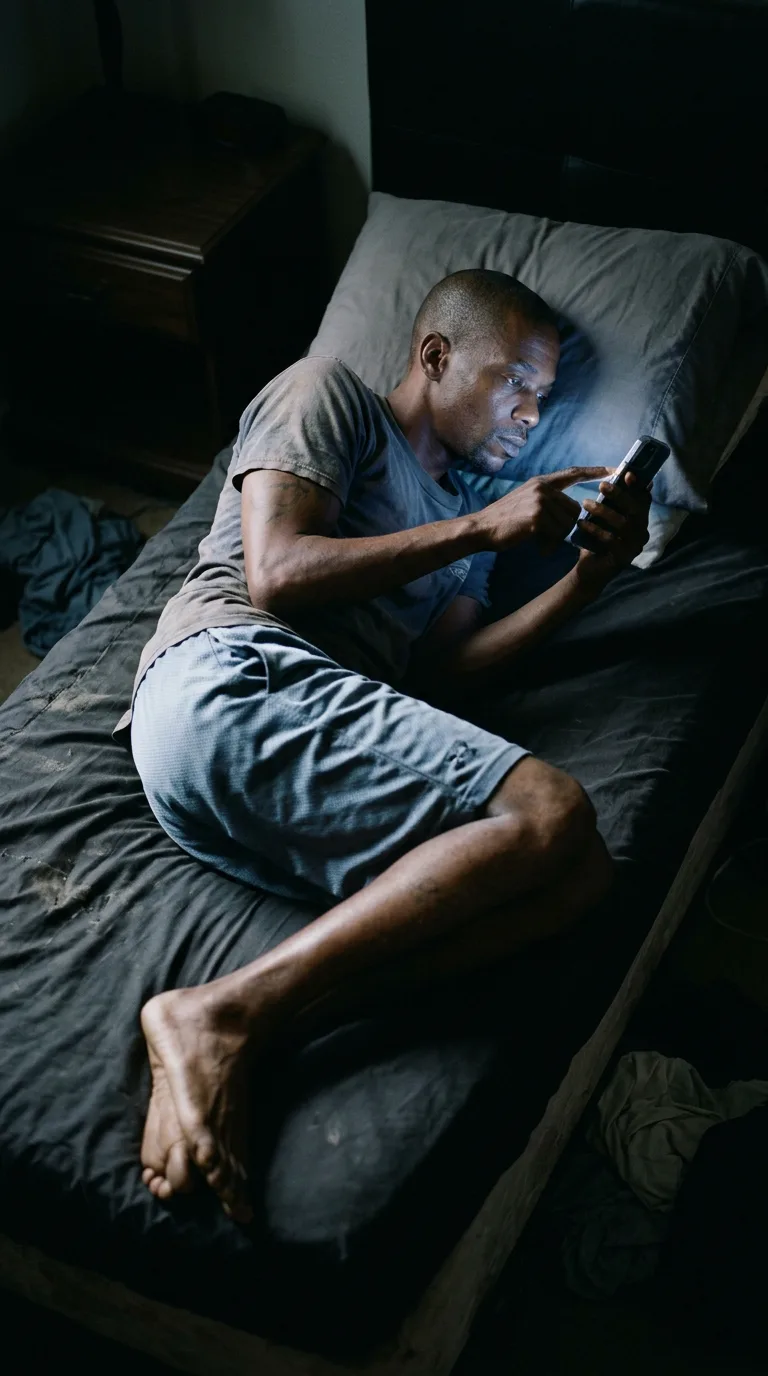
Rarest thing about him: An autoimmune condition — rare, 1 in 66
Season 0seed 180816287 · engine v10
Character card
lineage COEU7T
His body-swap story
@colin.tarwater, wearing Gerald Fontaine, rolled the wheel on and woke up as Marcus Davis, spent 1 minute in him, then spun the wheel and woke up as Devin Ashby
---
Gerald's mouth throbs where the front tooth used to be, and that's the whole reason, really, sitting there under the fluorescent hum of some gas station security booth at whatever hour a New Orleans Saturday counts as morning. Sixty-four years old and every socket in this jaw complains at once, phantom and real, and the tongue keeps finding the gap out of habit that isn't even yours yet. Less than a minute in this one and already you're doing the math on how many more minutes it's got left in it feeling like this. Bad knees. A gut that sits on the belt like it's tired too. You paid your money, you watched the wheel spin once already tonight in your head before you ever touched the screen, and you are not a patient man about discomfort that isn't your own to begin with. So: phone out, thumb already knowing the site before the page even loads, the itch bigger than the guard booth, bigger than the paycheck this body is standing watch over. Spin.
The thumb keeps moving. That's the first thing — it's already going, flicking up through a feed mid-scroll, faster than its owner had it going, steadier, and the blue light of the phone lays itself flat across a face that has stopped blinking on its own schedule and started blinking on yours. You're on your side. Weight low and light, a leanness you feel immediately in the ribs, in how easy the arm is bent to hold the phone six inches off a face that isn't sixty-four anymore. No ache in this jaw. No ache anywhere, actually, not yet, not the kind you left behind — this one has other complaints, quieter ones, the kind that live under the skin instead of in a busted tooth. The room is dark and small and smells like a stranger's detergent.
The shirt is against your back first, and it comes in on that — gray twill gone soft at the collar from a hundred washes, DAVIS stitched crooked over the left pocket because he sewed the patch on himself, third time replacing the one the laundromat iron scorched. That single flash breaks open into the locker room at the school, cinderblock and pipe-noise, and the particular quiet of being the only man left in a building built for eight hundred kids who've all gone home hours ago. He likes it that way. Liked. The word won't sit still yet. Buffing the gym floor at nine at night with the radio turned to the gospel station because nobody's around to mind, the big machine dragging his skinny arms in slow circles he's stopped fighting years ago — his body knows this work the way it knows how to breathe, wrists loose, shoulders doing more than they look like they should for a frame this thin. Knuckles that ache some mornings, joints that swell without asking permission on a schedule no doctor's ever fully explained to him, a diagnosis with a long name he shortens to "my thing" when the sub tries to make conversation. He takes the pills. Some days the pills don't do much. He mops anyway.
The keys are next, a memory arriving through the ring of them at his hip even now, at rest, weightless against the mattress — forty-some keys for forty-some doors, and he knows which is which by the notch filed into the ones that jam, not by looking. Church on Sunday, the second pew from the back, his mother's voice still in his ear forty years after she taught him the same three hymns. No wife ever stuck; there was a woman for two years once who wanted more of him than double shifts left over, and that ended plainly, without malice, and there's been nobody since who mattered enough to keep the memory sharp — it comes through faint, more relief than grief. No kids. A drink every couple Saturdays with the guys from the old crew, nothing more, never needed the cigarette everybody else on that crew leaned on.
And the shirt again — this morning, before whichever shift this was, pulling it over his head in a bedroom two feet smaller than this bed deserves, checking the name patch was straight in a mirror with a crack across the corner, thinking about nothing much, thinking about the Steelers, thinking about whether the boiler on the third floor was going to hold through another winter. Ordinary. All of it ordinary, and none of it his anymore.
You look at the hand still holding the phone. Thin fingers, a callus along the side of the thumb from years of a mop handle, nothing on any of them, no ring, no mark, nothing to say what this hand has ever belonged to except the work it's done. You turn it once in the blue light like you're checking it's real.
"Guess I'm up," you say to the empty room, and put the phone face-down on the mattress, and do not know yet how long you intend to mean that.