Marcus Abimbola
Fictional. Generated by AI — not a real person, and no likeness of one is intended.
30, physical therapist in Small-town Ohio · rolled by @marcus.abimbola · card — no film
History
who has worn him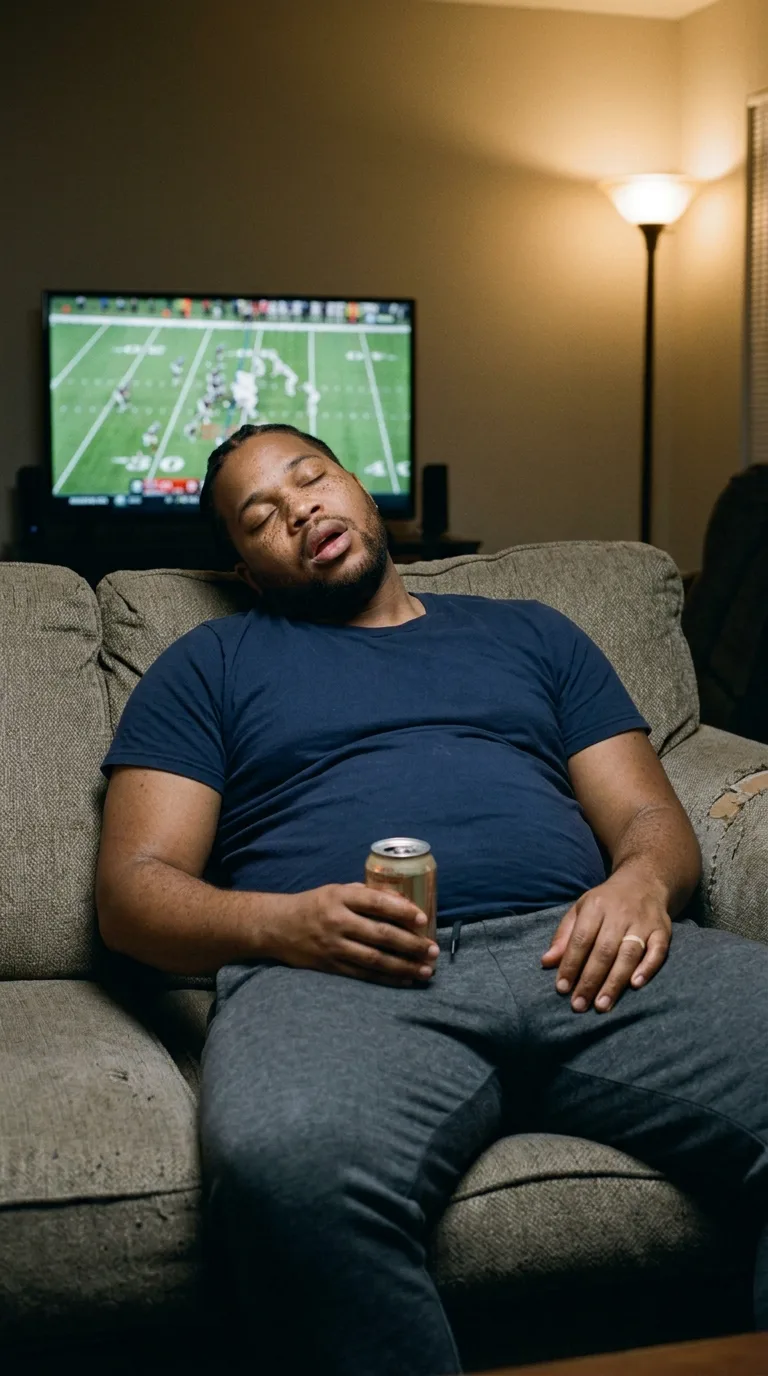
Rarest thing about him: Cornrows — uncommon, 1 in 285
Season 1seed 975248499 · engine v11
Character card
lineage EPUAGN
His body-swap story
@marcus.abimbola rolled the wheel on and woke up as Marcus Abimbola — their first
The screen is too bright for this hour and you know it, and you keep scrolling anyway. It's the kind of morning that hasn't started yet, the kind where the dark outside the window is still doing its job, and you've been awake too long doing nothing in particular, the way you do most mornings before the day asks anything of you. Years of this — threads at two a.m., forums with names like doors to rooms you weren't sure existed, the old films where somebody wakes up wearing somebody else's hands. A private thing. Nobody's business. You never thought it would be for sale. Then a link, a page, a wheel rendered in flat gray light, a button that says SPIN like it's nothing. You pay before you can talk yourself out of it. You spin before you can be scared of what spinning means.
There is no sensation of crossing. There is only suddenly here.
Here is a couch with a worn arm and a can gone warm in a loose grip, and a television throwing green light across a dim living room, and a body that is heavier through the middle than any you've imagined wearing, settled into cushions like it has sat in this exact spot a thousand times. The game is already in its second replay. A whistle, a flag, a stadium roar flattened by a cheap speaker. The thumb — his thumb, now yours, now his, the distinction already losing its edges — finds the volume rocker with a certainty that has nothing to do with you.
And then it starts coming in.
The shirt first — navy, soft from washing, a little tight across the stomach — and with it a flash of a closet door, fluorescent light, the particular ritual of choosing clothes for a body that has changed shape since the clothes were bought and has decided not to mind. Monday. Scrubs hung on the rehab gym's hook all day, parallel bars, a treatment table with a thin paper sheet that always tears wrong, a patient's hand gripping yours — his — too hard on the way to standing. The knee of a sixty-year-old improving by inches you measure in patience. There's real pride in that, worn smooth with repetition. You're good at this. Your hands — his hands — already know how to find a joint's reluctance before the patient says a word.
The can against the palm: cheap beer, and the memory arrives almost apologetic, a half-drunk six-pack bought out of habit more than hunger, because quitting hadn't been a decision so much as a drift — a slow tide pulling him off the thing he used to do most nights with somebody who isn't on the couch anymore. The sweatpants at the thighs: gray, soft, laundered Sunday, folded by nobody but himself now. The fabric remembers an apartment. One bedroom. A couch too big for one person, bought when there were two.
The ring line comes last and hits hardest — not an object but an absence, a pale stripe of skin on the finger where gold used to sit, and under it a whole marriage folding open at once: a wedding in a backyard with string lights, a daughter born three a.m. on a Tuesday, her fist closing around this same finger before the ring was even off, a custody schedule taped inside a kitchen cabinet, a goodbye that wasn't cruel, just tired, just done. The finger still turns an invisible ring sometimes, out of thirty years of habit grooved into muscle before the hand even knows it's doing it.
The body under all of it is thirty and carrying more weight than it used to, a softness at the stomach that aches faintly in the lower back by evening, shoulders strong from lifting patients twice his size off tables, knees that complain on cold mornings in a town where the diner on Main closed two winters ago and nobody reopened it. Freckles dust the nose and cheeks, scattered like something unfinished. Braids pull taut and neat against the scalp, two days old, still sharp at the part lines. None of it hurts right now. Right now it is only heavy and warm and half-asleep and almost, almost his.
The game cuts to commercial. The room goes quiet enough to hear the refrigerator humming through the wall.
You look down at the hand around the can — his hand, broad-knuckled, a faint ghost-pale band where a promise used to sit — and you turn it over once, slowly, the way you've watched it do a thousand times already without ever once deciding to.
"Didn't even see the goal," you say, to no one, in his voice, and you don't know yet if that's grief or just something true.