Marcos Villareal
Fictional. Generated by AI — not a real person, and no likeness of one is intended.
25, court reporter in Anchorage · rolled by @colin.hasbrook · card — no film
History
who has worn him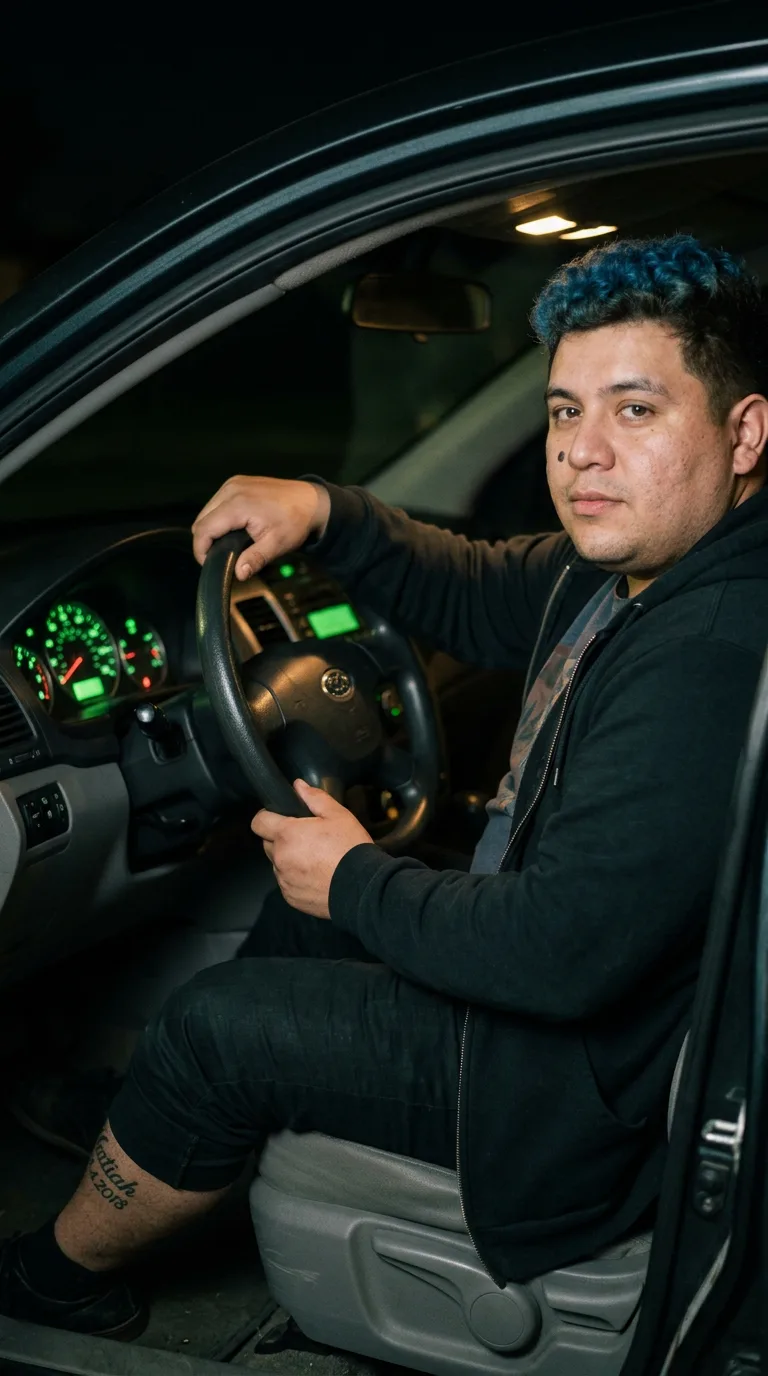
Rarest thing about him: Fashion color — epic, 1 in 56
Season 0seed 151168100 · engine v10
Character card
lineage 2NZHHJ
His body-swap story
@colin.hasbrook, wearing an unnamed body, rolled the wheel on and woke up as Marcos Villareal, spent under a minute in him, then spun the wheel and woke up as John Tallchief
You are standing at the front of a Phoenix classroom, third period, and a kid in the back row is explaining — again, patiently, like you're the slow one — why he didn't do the homework, and you realize you are looking at his mouth moving and hating every second of the sound. This body is 29 and it aches in the lower back by ten in the morning. It has brown eyes that need a stronger prescription than the glasses give them. It is heavy in a way that makes standing at a whiteboard for six hours a small, grinding violence. You have had it eleven days. Eleven days of grading, of a refrigerator with a leftovers container from someone you'll never meet, of a life so completely finished before you got there that wearing it feels like living in a house where all the furniture belongs to somebody dead. You already know, standing there, that you are not going to finish the lesson. You tell the kid to go to the office. You do not call anyone. You go into the supply closet, take out your phone, and open the page with the wheel on it, because eleven days is long enough, because the wanting always comes back faster than you plan for, and because there is no version of you, anymore, that doesn't do this.
You pay. You spin.
The road is dark and narrow and lit by your own dash, and your hands are on it — ten and two, heavier hands than you've had, wide, a little cracked at the knuckle — and the car is already drifting, a foot toward the centerline, and then it isn't; it pulls itself straight in one motion that isn't quite yours yet, and your hands come off the wheel and land again lower, wider, more sure of themselves than you are. The blinker clicks on. It's for an exit you have never taken.
The smell gets you first — pine cleaner and old fast food and something colder underneath, engine heat leaking up through the floor mats. Then the shirt against your back, a dress shirt gone soft with washing, and it opens like a door: this morning, buttoning it in a bathroom with a cracked mirror, humming along to nothing, checking the mole on his cheek in the light because a coworker once joked he could cover it with makeup and he never has and never will. He likes it. His mother has one just like it, an inch to the left.
His hands on the wheel know a thousand small things yours don't — the particular give of this steering column, the way you have to nudge the wipers twice before they catch. Court this morning: eight hours of testimony folded down into finger-motion, a stenography machine's chorded keys instead of full words, his knees aching from the low bench he sits under, daylight coming hard and flat through the tall windows behind the judge. He is good at it. He has always been good at things that ask for exactness and give nothing back. He likes the quiet of it, the way a whole room's noise turns into code under his hands and nobody watches him do it.
The cuff of his sleeve brushes his wrist and there's the brace he wears for it — tendonitis, both wrists sometimes, an old ache that the pills for his head don't touch, that he's private about the same way he's private about the pills themselves, taken every morning without comment, the reason some days are simply easier than others and he doesn't examine why.
His calf itches under the sock and there it is, sharp: Matiah, and a date, needled into skin two years ago in a shop that smelled like rubbing alcohol, his son's name, his son's whole life measured out since in half-days and weekend calls and a crib that's a toddler bed now in a house that isn't this one. The mother of him is somebody he doesn't share a roof with anymore — a recent parting, still raw enough that thinking her name feels like touching a bruise to check if it still works. It still works. There's a woman now, newer, warmer, who texts him good morning without fail, and he loves the easiness of her the way you love finally sitting down.
Three miles from a house with a snowmobile under a blue tarp and long amber light coming low across plywood siding this time of year, this time of morning — a morning that is, for him, deep into a shift that ran all the way through the dark hours, because Anchorage keeps its own clock and he keeps whatever hours the court schedules him for, home is not far and neither is sleep, and neither of those is a thing you get to give him.
You look at the hands on the wheel. Wide, brown, a little cracked, someone else's hands doing something they already know how to do.
"Not my exit," you say out loud, to no one, in his voice, and you don't correct the blinker yet — you just sit with the sound of him saying it, and somewhere far off and unscheduled, the wheel is still turning.