Marcos Villanueva
Fictional. Generated by AI — not a real person, and no likeness of one is intended.
39, court reporter in San Francisco · rolled by @colin.hasbrook · card — no film
History
who has worn him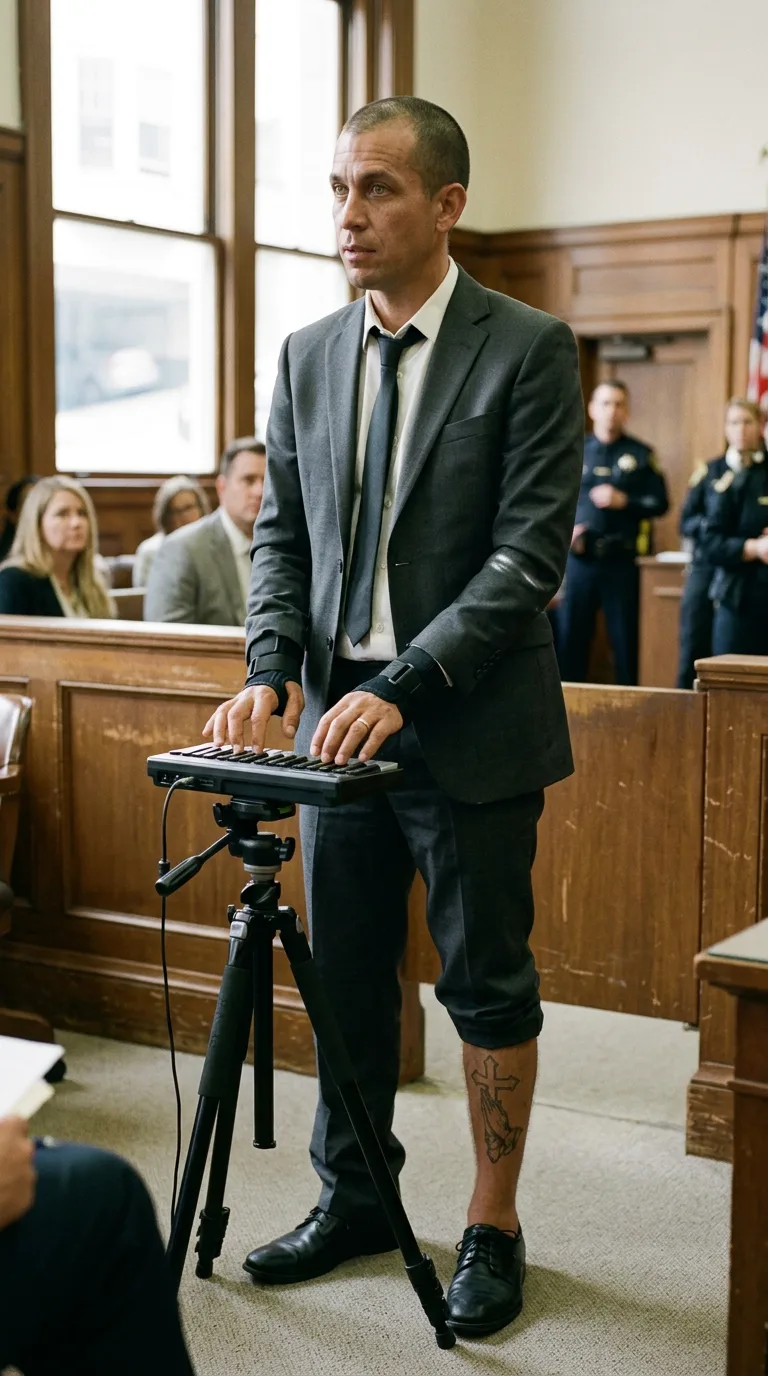
Rarest thing about him: Stutters under pressure — rare, 1 in 78
Season 0seed 1501379791 · engine v10
Character card
lineage 2NZHHJ
His body-swap story
@colin.hasbrook, wearing Kyle Pruett, rolled the wheel on and woke up as Marcos Villanueva, spent under a minute in him, then spun the wheel and woke up as Brett Halloran
The garage smells like cold concrete and old carpet glue, and the desk in front of you has three monitors going and a chat scrolling faster than you can read it, somebody spamming an emote of a wheel spinning, over and over, like it's funny. It is a little funny. You are Kyle Pruett, bald by choice or by nothing, 31, sitting in a folding chair that has permanently taken the shape of somebody heavier than you, and you have been him for less than a minute and you are already bored of him. That's the truth of it, plain and a little shameful: nothing wrong happened, nothing chased you back to the site, you just sat down in this body and felt how thin the floor was under this life, no wife, no calf tattoo, no memory of a courtroom, just a chat waiting for you to do the bit again. You open the tab. The wheel is already loaded from last time, spinning lazily in place like it never really stopped. You click. You do not think about Kyle again.
The chorded keyboard is between your knees and your left hand is already moving, laying down strokes in a rhythm that has nothing to do with you yet — and then it does, because the motion comes out wrong, a half-second's stutter, fingers landing on the wrong plate, and you feel the correction happen underneath you before you decide to make it. Slow. Correct. The next stroke, checked. The one after, checked. Ten strokes you didn't ask for, on a machine that hasn't needed watching in years. Daylight is coming down through tall old windows onto wood the color of tea, and somewhere above you a judge's voice is still going, unbothered, and you are standing, weight settled through both feet in a way that says this body has stood here ten thousand times before and does not expect anything different today.
The tie is the first thing that gives you something — snug enough at the throat that your fingers go to loosen it without being told, and in that loosening comes a bathroom mirror, before dawn, hands (his hands, going numb around the knuckle, that old ache) working the knot three times because the first two came out lopsided and Elena laughed from the bed and said just wear the clip-on, mijo, nobody in that courtroom is grading your tie, and he said somebody's always grading something, and that was true in a way she didn't mean and he didn't explain. The wrist braces come next, black and velcroed, and they open something colder: a stepladder, eleven years back, a rung that wasn't where he thought it was, and the flare that went up both forearms when he caught himself on it wrong, and the doctor's flat voice afterward saying it would ache like this from now on, manageable, not fixable. Manageable. He built a whole career out of manageable. The chorded keyboard under his palms right now is the reason the braces exist — steno at speed for eight hours a day, hands doing four hundred words a minute of somebody else's testimony, and every one of those years is sitting in the joints when you flex them now, a low familiar burn that isn't pain exactly, just cost, paid on installment.
The shirt against your back gives you the morning itself, whole: him standing in the under-house garage that is not a garage anymore, driveway cut so steep the recycling bin rolls if you don't wedge it, cold white light coming down flat through the one window at the top of the stairs, Elena's voice from upstairs asking if he wanted the good coffee or the fast coffee, and him saying fast, always fast, court doesn't wait for good coffee. Buttoning this exact shirt sleeve by sleeve, the left cuff snagging on the wristbrace the way it always does, a small domestic annoyance he has never once fixed because fixing it would mean admitting the braces are permanent. The jacket going on over it, gray, a size he bought eight pounds ago and never replaced, so it sits a little loose at the shoulder and a little tight nowhere at all — skinny fat, the kind of body that looks fine in clothes and admits everything without them. He'd looked at himself in the hall mirror for exactly as long as it takes to decide he looked fine, which is to say he didn't really look.
The calf tattoo you can't see but you can feel it anyway, a phantom weight low on the leg, and it opens on its own: nineteen years old, a shop in the Mission, his mother's rosary draped over the tattoo gun's cord like she was blessing the machine and not him, praying hands and a cross because his abuela had died that spring and he wanted something on him that would still be true when he wasn't sure of anything else. He has been sure of less than he'd like since. There's a woman under all this too — not Elena, someone before her, someone the ring on his left hand doesn't erase so much as file next to: Camila, who left for Portland and asked him once, near the end, if he was ever going to want anything he didn't already have, and he hadn't had an answer then and doesn't have one now, fifteen years later, married, steady, checked. The stutter in his hands isn't only the old fall. It's every deposition where a lawyer raised his voice and Marcos felt his fingers go a half-beat behind his ears, every night he sat across from Elena at dinner not saying the thing, every time being sure has felt like the second-best option he settled for on purpose.
You feel all thirty-nine years of him settle into the meat of your shoulders, the good posture that costs him something below the belt line to hold, the small tired permanent burn in both forearms, the readiness in the fingers that is older than any fear. It is not your life and it is warm anyway, borrowed like a coat that fits.
You look down at your hands on the little keyboard, brown-knuckled, a plain band catching the window light, and you turn the right one over slow, like you're checking it's real, and a court officer near the door glances over like he's clocked something in your face that wasn't there a second ago.
"Sorry — lost my place," you say, to no one, to everyone, and your eyes come up off your hand into the room like you're not sure yet whose room it is.