Marco Villalobos
Fictional. Generated by AI — not a real person, and no likeness of one is intended.
28, soldier in Philadelphia · rolled by @colin.hasbrook · card — no film
History
who has worn him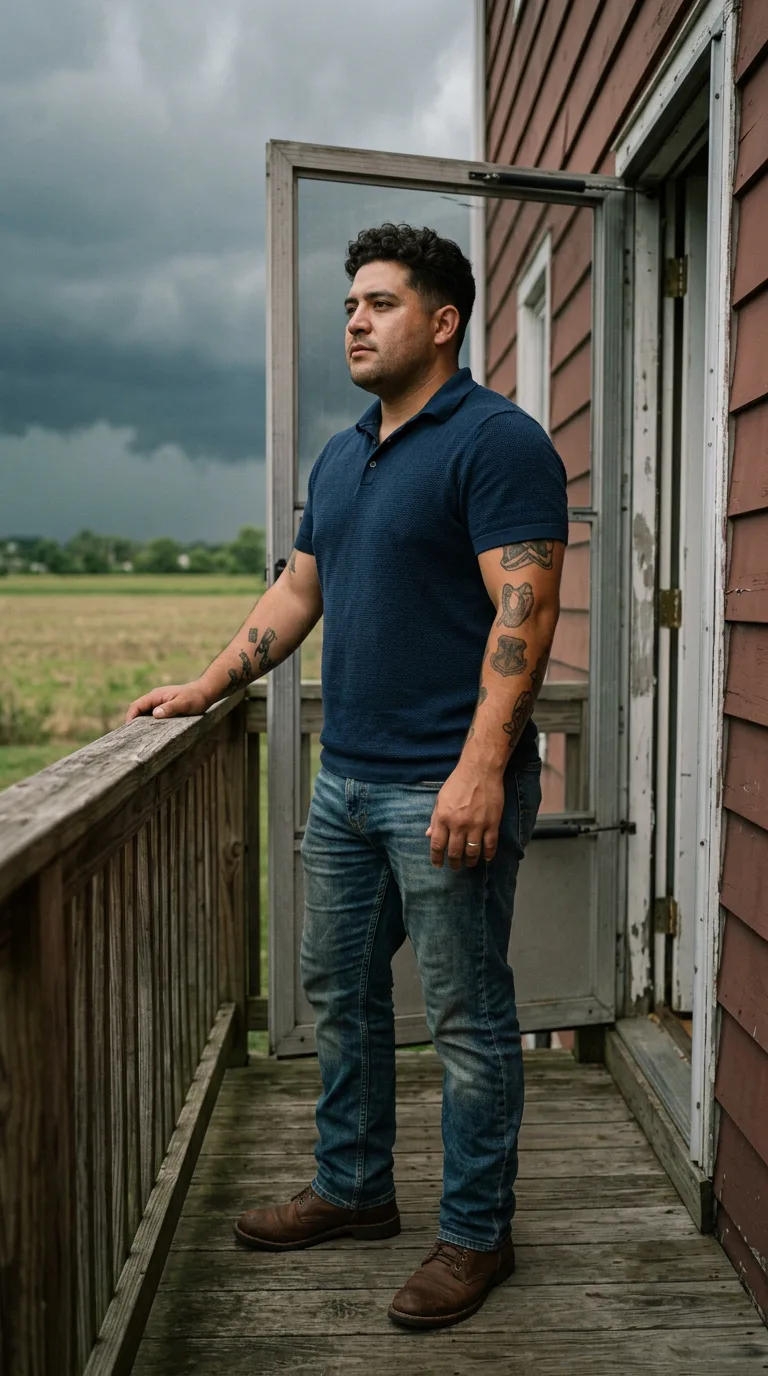
Rarest thing about him: Watching a storm come in — rare, 1 in 128
Season 0seed 627703820 · engine v10
Character card
lineage 2NZHHJ
His body-swap story
@colin.hasbrook, wearing Warren Nagata, rolled the wheel on and woke up as Marco Villalobos, spent under a minute in him, then spun the wheel and woke up as an unnamed body
The espresso machine hisses behind you and Warren's knees complain when you shift your weight off the mat, the same complaint they make every morning at eleven, because Warren works nights and this is his morning, whatever the sun outside says. Fifty-nine years old, small in a body that was never going to be big, and none of it yours by choice — you didn't pick short, you didn't pick freckles across the back of these hands, you didn't pick the ache low in the spine from decades of somebody else's decisions before you ever got here. You've been him less than a minute and already the boredom is a physical thing, a itch under skin that isn't yours to scratch. A barista. Forty-three men before this one and the wheel gave you a man who steams milk for a living. You wipe your palms — his palms — on the apron and you are already reaching for the phone in the back pocket, already thumbing to the site, because there has to be something better than this waiting in the spin, there always might be, and that maybe is the whole reason you keep paying.
The wheel turns where you can't see it turn. Then—
The wind stops.
All at once, the way a held breath stops, and the field in front of you goes the color of a bruise under a sky that's about to open, and your hand is on a porch rail that's rough and gray under your palm, and the screen door behind you bangs once against its frame in the last gust before the dead air, and your body — not Warren's, not small, not sixty — is thick through the shoulders and heavy in a way that feels like ballast instead of weight, feels like something built to take a hit and keep standing. You step off the porch. You didn't decide to. The legs decided, moving into the field, into the weather the whole house was built to keep out, chin up, easy, like walking toward the storm is a thing this body has done a hundred times and never once been afraid of.
The polo is damp already at the collar, a summer weight cotton that a hand — his hand, a memory of his hand — buttoned three from the top this morning and left the rest open, because Marco doesn't like anything tight at the throat. That's the first thing that comes, small and stupid and complete: a mirror, a bathroom with a Phillies calendar on the wall, his wife Yesenia's hairdryer running in the next room, the polo pulled over his head and the fabric catching for a second on the dog tags before he tugs it straight and lets them fall against his chest, cold, then warm. He put this on for nothing in particular. A day off. A day off is rare enough that a man remembers dressing for it.
The jeans come next through the memory of his knees bending to pull them on, worn soft at the thigh from years of the same three pairs in rotation, a fading Rit-dye blue that Yesenia teases him about, tells him to throw them out, and he tells her every year that he will and every year he doesn't. Boots on the porch boards under him now, brown leather, laced twice around and tucked, the same boots that have stood in formation and stood at his daughter's dance recital and stood in this exact spot a hundred evenings watching weather roll over a rented field that isn't even really his, just the yard that came with the rowhouse block ending, because they're not home, they're at Yesenia's cousin's place outside the city for the weekend, out where there's sky enough to see a storm coming from three counties off.
The tattoos on the forearm answer the wind on the skin there — a unit patch inked hard-edged and proud, a memory arriving underneath it whole: him at twenty-two, sun bleaching everything white, someone he served beside laughing at something that isn't funny anymore to anyone but them, a name he doesn't say out loud even now. Under his shirt, at his sternum, dog tags swing once against him and bring back the day he got them re-stamped after his son was born, standing in a jewelry counter he felt stupid being in, doing it anyway. The wedding band on the left hand is warm from his own pulse, and that one goes deepest of all: Yesenia at the courthouse, laughing because his hands were shaking worse than hers, eleven years of it now, two kids loud enough to fill any house, a marriage that works most days by the plain fact of both of them showing up for it.
His blood pressure medicine is a foil sheet in the bathroom cabinet two hundred miles from this porch, and some faint ambient unease rides along with that fact, a low hum he lives with instead of a fear. There's a vape in his jeans pocket, and the ghost-feel of pulling on it on the drive out here, on the porch an hour ago, nicotine instead of the beer he doesn't drink anymore, hasn't in three years, doesn't miss it most days.
None of it is faith. Nobody taught him to pray and he never went looking for someone who would. What he has instead is this: the field, the wife inside probably calling his name right now, the screen door still swinging on its hinge, the storm two hundred yards off and closing fast, green-black and total.
You look down. Thick hands, a little scarred at the knuckles, the ring catching gray light. You turn them over once, both sides, like you're checking they're real, and somewhere behind them you can still feel Warren's counter, five states and one whole body away, already someone else's problem now.
"There you are," you say, to no one, to the field, to the storm coming on, and you don't step back toward the door.