Manuel Osorio
Fictional. Generated by AI — not a real person, and no likeness of one is intended.
55, teacher in Los Angeles · rolled by @colin.hasbrook · card — no film
History
who has worn him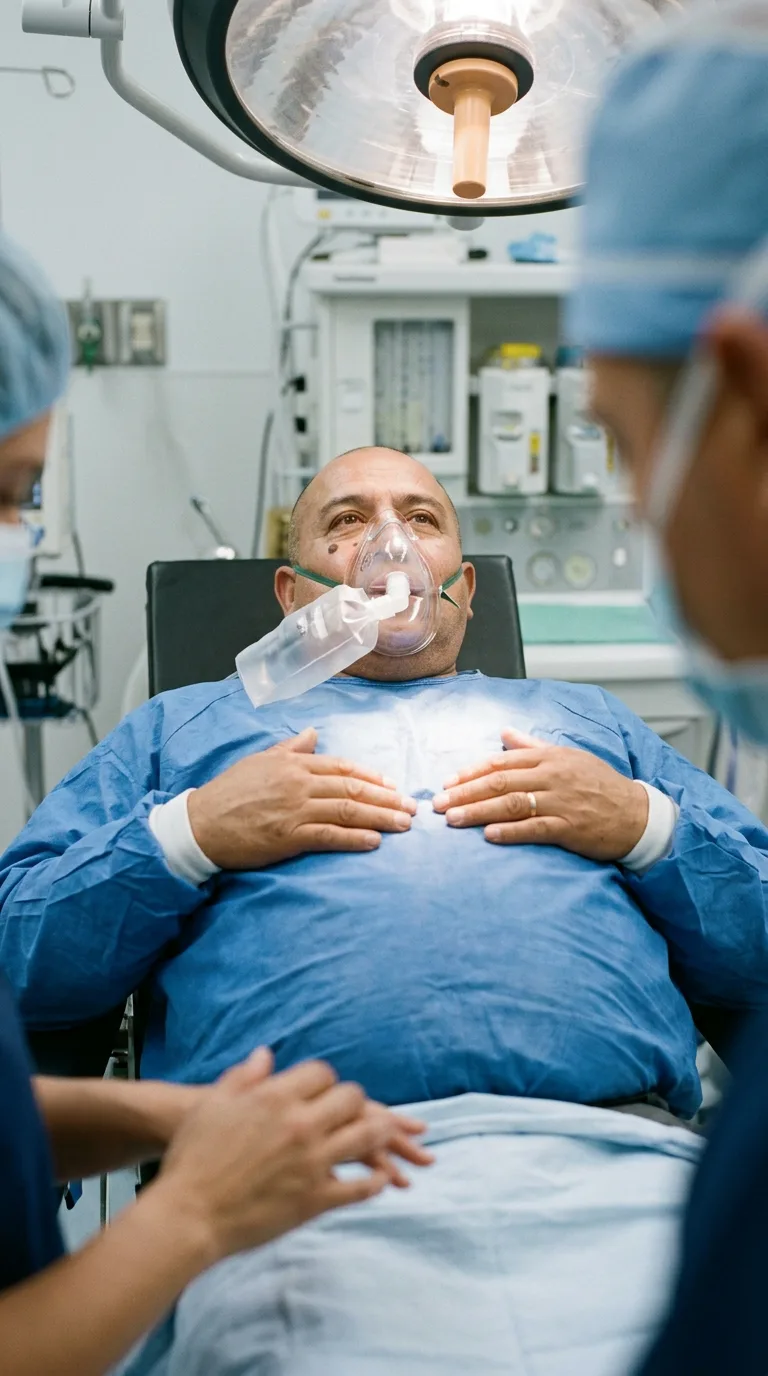
Rarest thing about him: Under anaesthetic — uncommon, 1 in 55
Season 0seed 27747641 · engine v10
Character card
lineage 2NZHHJ
His body-swap story
@colin.hasbrook, wearing Sameer Adiga, rolled the wheel on and woke up as Manuel Osorio, spent under a minute in him, then spun the wheel and woke up as Marcus Delrio
The welder's hands are the first thing you stop trusting. Sameer's hands — forty-one years of them, freckled to the knuckle, a burn-scar shining pink on the left thumb — lie flat on a stranger's kitchen table at three in the morning, and you are looking at them the way you'd look at gloves left behind by someone else. Everyone in this Queens walk-up is asleep. The welding torch is off in the corner where he left it Friday, and it has nothing left to tell you; you already know everything Sameer Adiga has to give, because you have been him for eleven months and there is no more of him arriving, only the same rooms recurring. His shift ended, his ex texted him something you didn't answer, his knees ache in a way that isn't news anymore. You are not unhappy in him. You are just finished with him, the way you get finished, and the finishing has its own weather, blowing in low and certain until you're at the site again with his phone in his freckled hand, thumb already moving.
You spin.
The gown is blue and it is tented over a belly that is not Sameer's belly, and the light above you is a huge white circle, and there is a mask fogging with somebody else's breath against your mouth, in, out, and a voice counting — seis — and your eyes, not asked, drag once left to right under the lids, taking in a nurse's shoulder, a tray of steel, a monitor drawing its calm green hills. The hand on your chest — heavier than any hand you've worn in years, a wedding band biting soft into the third finger — opens. Closes. Opens again, testing that it still belongs to somebody.
It does. It belongs to you now, and the anesthesia is a wall you're standing behind, and behind that wall the room starts talking.
The gown against your back is thin and static-clung and it says nothing — hospital cotton, no history in it — but the ring says everything at once, a small tight flood: Elena's hand in yours at the county clerk's office twenty-six years ago, her laugh when the officiant fumbled his name, Osorio, and she'd said it right back at him twice just to watch him smile. Twenty-six Christmases of that ring clicking against a coffee mug at six a.m. before school. The band doesn't come off for anything, not swimming, not grading papers with his fingers cramped around a red pen, not the morning eleven years ago when he'd sat in his car outside a motel off Sepulveda with Denise's number still warm in his phone and the ring caught the sun on the steering wheel and he'd driven home instead, and never told Elena, and has thought about that turn in the road maybe four hundred times since, not with guilt exactly — with a kind of tired gratitude, the way you're grateful for a fence you didn't know you needed until you were leaning on it.
The mask over your mouth-and-nose is next, and it gives you this morning, if it's morning where he came from — early enough that the courtyard palms outside his apartment were still gray, Elena asleep, his daughter's door shut with her college acceptance letter taped to it for the third month running because nobody had the heart to take it down, his son already gone to his own place across town. He'd dressed slow because his back had been at him — the chambray shirt, the same one from the portrait, buttoned from the bottom up because it's easier on a gut like his, the badge lanyard looped over last, keys into the pocket already worn soft from thirty-one years of the same motion. Then not school clothes after all — a different bag, the pre-op folder Elena had highlighted for him, because this is the Saturday they finally did the hernia they'd been putting off since spring break, and he'd joked in the car that the kids in 4th period were placing bets on whether he'd wake up funnier. High blood pressure cuff biting his arm twice before they let it go. He hasn't had a cigarette in nineteen years and he wanted one in the parking garage anyway, out of nothing but habit, the want outliving the need the way it does.
The tray of steel nearby, catching light — that's not his to remember, but the fluorescent hum over an empty classroom is, chalk dust and the particular quiet after the last bell when thirty desks empty out and he stays at the front a minute longer than he has to, not because there's anything left to do, just to feel the room stop needing him. He likes that minute. He has never told anyone he likes that minute.
Your chest is heavy and warm under the gown, dad-bod soft, and there's a pulling low in the belly where they haven't started yet, and the mole on your cheek itches faintly from the tape holding the mask, and none of it is unpleasant so much as unfamiliar — a body that has been fed and slept and loved in for fifty-five years, comfortable in the exact way a couch is comfortable after you've broken it in for somebody else.
You open your hand. Close it. This one is already good at that — it didn't need you to teach it.
You lift your eyes past the lamp, past the nurse's shoulder, and find whatever's watching — a scrub cap, a lens, doesn't matter — and around the mask, muffled, you say the only thing there's room for:
"¿Ya? ¿Ya terminamos?"
Not yet. Not for a long while, maybe, or maybe not — you don't know, lying here wearing a stranger's marriage and his ache and his ring, whether tomorrow finds you still counting his breaths as your own.