Lyle Branham Cornett
Fictional. Generated by AI — not a real person, and no likeness of one is intended.
63, water treatment operator in Eastern Kentucky · rolled by @sione.taufa · card — no film
History
who has worn him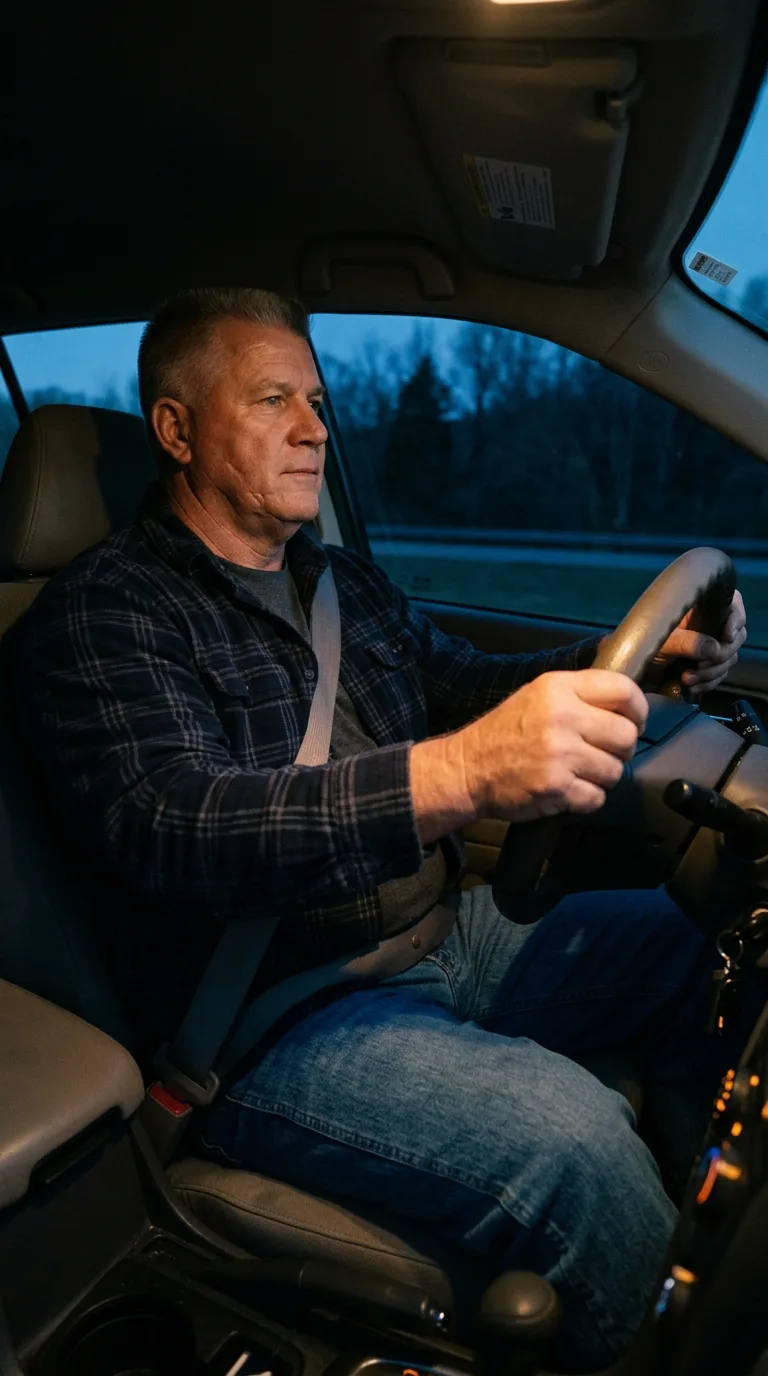
Rarest thing about him: A burn scar — uncommon, 1 in 164
Season 1seed 1096838593 · engine v11
Character card
lineage 8ZQHYV
His body-swap story
@sione.taufa, wearing Rahul Khanna, rolled the wheel on and woke up as Lyle Branham Cornett, spent 1 minute in him, then spun the wheel and woke up as Sione Taufa
You are Rahul Khanna, and you have been him for seven minutes. The register drawer is still open in your head, the sound of it, and the girl at the next lane saying something about her break. You stood in that fluorescent light with a hand that was not yours holding a roll of quarters, and you understood with perfect clarity that you were bored by a man who had done nothing wrong. He was fine. He was thirty and tall and quick on the keys, and nothing in him was missing except whatever the wheel could give you next. A cashier cannot burn his hand on anything. You wanted weight. You wanted to be a man who had been somewhere. So you paid, and the page turned, and you did not say goodbye to Rahul, because nobody was left to hear it.
Dark road. Your hands are at ten and two and the dash light is lying across the knuckles like a thin green tide. The truck drifts a foot toward the line and you pull it back in one smooth motion, and the pull is already in the arms, the arms know it. Both hands come off the wheel and settle lower, wider, the way you did not choose. The signal ticks on for an exit that isn't yours. You don't know whose it is yet. The seat belt lies across a belly that is a shelf of hard, settled fat over muscle, and your breath comes slow and deep and a little wet at the bottom.
The flannel is first. It rests against your forearms, soft from a thousand washings, and the cuff under your thumb gives you a morning: a kitchen, the blue before sunrise, buttoning the left sleeve first because the right wrist stiffens, a coffee going cold on the counter, the jeans already on, belt pulled to the third hole where it has lived for years. Under the flannel is a gray T-shirt, and the shirt gives you the walkway at work, the grating ringing under his boots, the basin below going white as the air hit it, and the satisfaction of that, of making dirty water honest. The wheel is wrapped in cracked leather and under your palms it gives you his daughter at fourteen, in this seat, white-knuckled, and him saying easy, easy, you're doing it, a pride so big it embarrasses him. His right knee is bouncing against the underside of the dash. It has bounced all his life. You press it still and it starts again.
Your jaw and neck feel tight on one side. When you lift your chin the skin pulls, a shiny, tight sheet from ear to collar, and the memory behind it is heat and a shout and a hand that grabbed his shirt, years ago, a pipe, a mistake of a second. He has not thought of it in months. The keys swing from the column and their chime brings his ex-wife's voice on a porch, not angry, just tired, saying you don't have to be so far away to be gone. A cigar sits in his shirt pocket, unlit. It smells like a Saturday. There is no bottle anywhere in him anymore, only the shape of the place it used to be. Three miles from home, the road is humming through the seat. The tires tick. Somewhere ahead there is a house with the porch light on, and you are not going there tonight, because the signal is flashing for the exit.
You lift your right hand off the wheel and turn it over in the dash glow: thick fingers, split calluses, a pale band where a ring was, the nails clipped short and square. It is a big hand. It is steady. You close it slowly and feel the whole forearm answer.
You look up into the dark glass and the face that looks back is a stranger's, tired and blue-eyed, scarred along the jaw. "Well," you say, in a voice gravel-low. "Hello, Lyle."
The knee bounces. The signal ticks. You wonder how long before the wanting comes back.