Lonnie Faraday
Fictional. Generated by AI — not a real person, and no likeness of one is intended.
64, school principal in Los Angeles · rolled by @lonnie.faraday · card — no film
History
who has worn him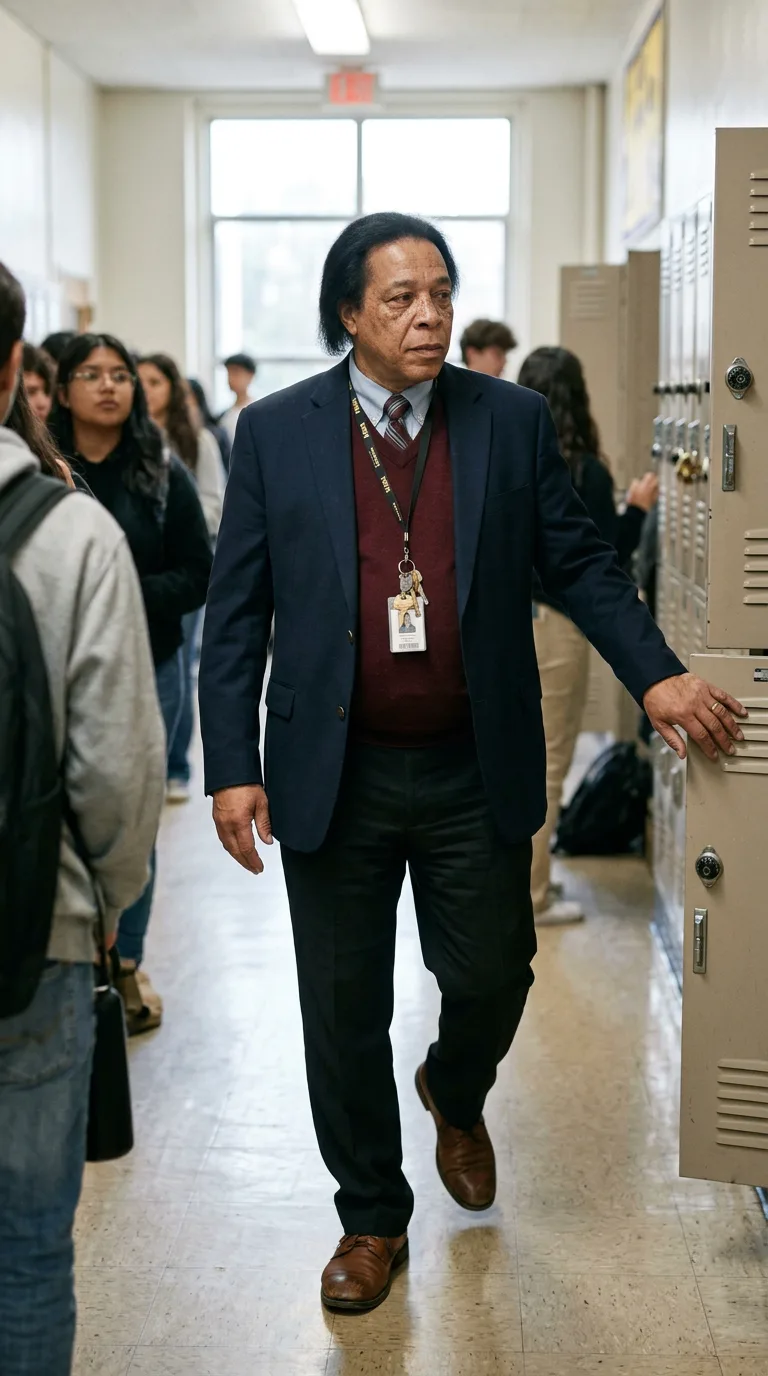
Rarest thing about him: School principal — common, 1 in 311
Season 1seed 1559830573 · engine v11
Character card
lineage BSDLDH
His body-swap story
@lonnie.faraday rolled the wheel on and woke up as Lonnie Faraday — their first
The screen has been blue-white in your face for an hour, maybe more, the kind of evening that doesn't have a shape to it, just the scroll and the thumb and the small dead hours after work with nothing in them. You have wanted this for longer than you can date — the idea of it, waking up behind a stranger's eyes, not a story about it but the thing itself — and tonight there's a page that says it can be bought. You don't believe it. You pay anyway. There's a wheel, badly rendered, spinning too long for something that's about to change everything. Then it stops.
No countdown. No falling sensation. One instant you are nowhere, made of nothing, and the next you are standing in a hallway that smells like pencil shavings and radiator dust, your hand — his hand — on a locker door, and the metal is cold enough to feel like a fact. Lockers are banging up and down the corridor. A kid laughs somewhere close. The weight of a body is on you all at once, a low gut, tired knees, shoes that have broken in exactly to these feet, and the locker door doesn't swing shut the way it should — it catches, and the hand has to do it again, slower, checked, like it's never done this before. It has done this ten thousand times.
The keys on the lanyard swing and tick against a laminated badge, and that one small motion opens him up like a door left on the latch. Lonnie. The name arrives with the jingle of the keys, his keys, brass and dull steel and one with a worn rubber head he's had forever and never replaced. A whole school arrives with it — thirty-one years of it, first as a young teacher who couldn't control a room, then as somebody who could, then as the man whose name is on the door at the end of the hall. The keys remember hands shaking the first week with the big ring of them, remember a boy named Darius who used to get sent to the office for nothing and who Lonnie made sure never got sent for nothing again, remember how heavy they got as more doors were given to him to be the last word on.
The blazer is next — navy wool, a little tight across a stomach that was never flat and stopped pretending to try around year fifty. There's a memory in the sleeve, this morning, hours and hours from now where you stand but only minutes ago from where he was: standing in the bedroom with the closet open, a wife's voice from the bathroom asking if he's taking the car in, him answering around a yawn, pulling the sweater — maroon, soft from washing — over his head first, then the blazer over that, buttoning one button because that's the one that's ever buttoned. His wife's name comes with the wedding band, snug and plain on the left hand, worn so long the finger has a groove that isn't going anywhere: Carol. Thirty years, good ones mostly, the kind of marriage that isn't a story anyone would tell, just two people who like the sound of each other in the next room.
The tie is a cheap stripe he's had since a conference in Sacramento, and it tells him, tells you, about his throat clearing before a parent meeting, about the particular dread of budget season, about a speech he gave at a graduation that got a laugh he wasn't expecting and liked more than he admitted. The freckles across his nose itch faintly in the fluorescent light — they always have, since he was a boy in a different city, and his mother used to say the sun signed its name on him. He is clean-shaven this morning, the jaw smooth under your palm when it rises without you quite telling it to, out of a habit of checking, and there's a flash of the razor, the bathroom mirror, Carol's voice again, something about dry palms outside and water in the courtyard that never runs long enough.
Under the clothes the body itself keeps talking: the stiffness low in the back from standing all these years on linoleum, a softness at the middle that he has stopped being ashamed of, the particular ache behind the right knee going up stairs. And the leg — his left leg has started bouncing without him, heel tapping some rhythm that has nothing to do with the hallway, a tic so old it isn't nerves anymore, just weather. It is two in the morning where you came from and the middle of a school morning here, and that gap sits strange and unexamined in him, the way it would in anyone whose whole day is already most of the way gone.
You feel all of this arrive in no time at all — a breath, maybe two — while the hand finishes closing the locker, slow, correct, the motion checked like a man double-stepping down a familiar staircase after missing one riser.
Then you look down at the hand on the cool metal. Not his anymore. Yours, for now, freckled in a way no hand you've ever had has been, the band catching fluorescent light.
You say, to no one, to the moving river of kids who don't look twice at their principal talking to his own fingers: "Okay. Okay — there you are."
Somewhere behind your eyes, already, is the wheel, and the not-knowing of when you'll spin it again.