Liam Estrada
Fictional. Generated by AI — not a real person, and no likeness of one is intended.
19, electrician in San Francisco · rolled by @colin.hasbrook · card — no film
History
who has worn him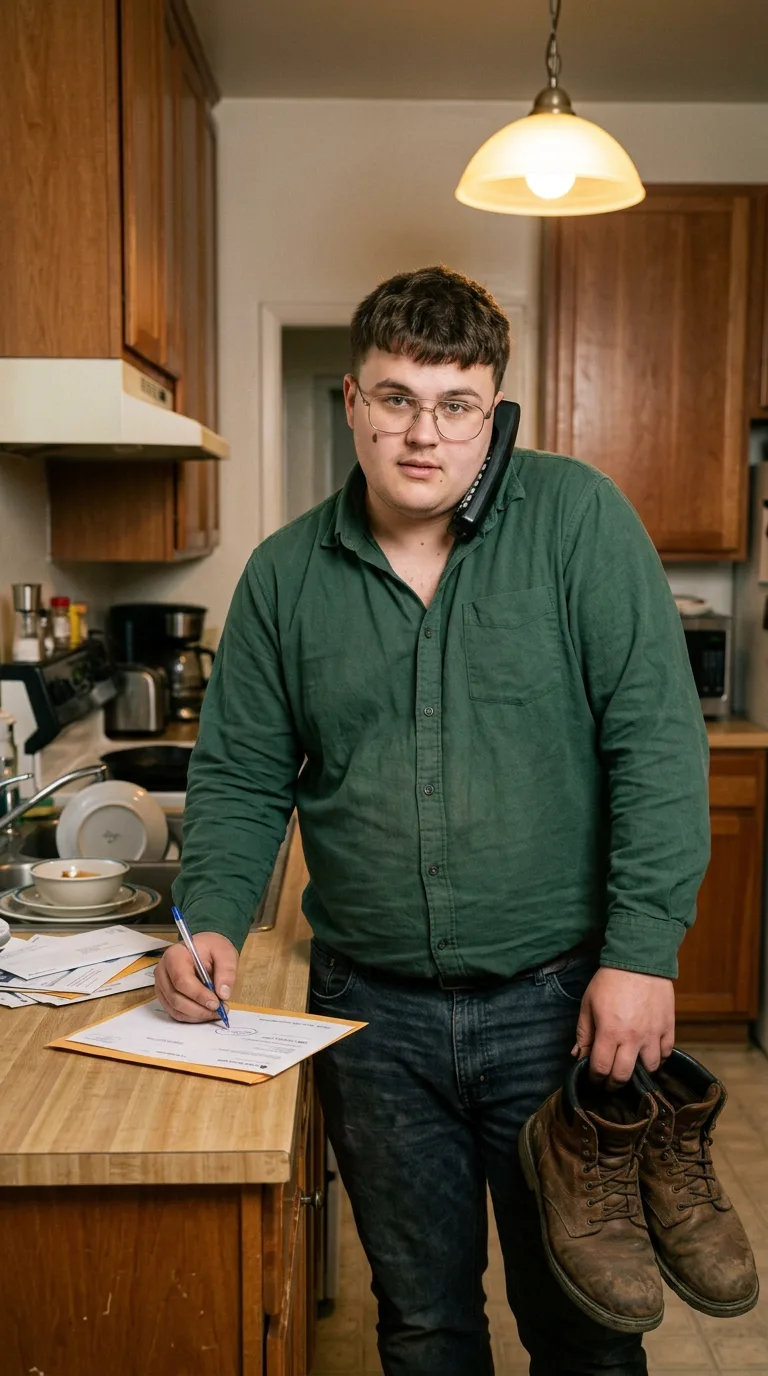
Rarest thing about him: Flips a lighter — rare, 1 in 50
Season 0seed 1826434965 · engine v10
Character card
lineage 2NZHHJ
His body-swap story
@colin.hasbrook, wearing Colin Hasbrook, rolled the wheel on and woke up as Liam Estrada, spent 50 minutes in him, then spun the wheel and woke up as Terrence Aubuchon
Twenty-two minutes is long enough to learn what you don't want.
Colin Hasbrook's hands are wrapped, or they were — you unwrapped the left one out of habit, some muscle memory that isn't yours, sitting alone in the back office of the gym with the heavy bags creaking on their chains out front. Skinny fat, twenty-one, freckles across a nose that's been broken and reset well. His knees ache already, a nineteen-year-old's job crammed into a body that took hits it shouldn't have. You spun expecting an upgrade from whoever you'd been before Colin, and instead you got a man who apologizes to his own students for hitting them too soft. Twenty-two minutes of that — the flinching, the softness, some part of him underneath still cringing every time a padded fist lands — and you're done. There's a card table in the corner with hand wraps and a jar of Vaseline, and your phone, propped against it, showing the site: vessel.cards, a wheel spinning lazy under your thumb. You don't decide so much as notice your thumb already moving.
The wheel turns and there is no in-between.
You are standing at a kitchen counter with weight you didn't have a second ago, more of it, settled low and solid, feet planted wide the way a heavy man's feet learn to stand. A phone is wedged against your shoulder, plastic warm from your own skin heat, hold music looping — a synth loop, tinny, the kind that promises someone will be with you shortly — and it loops back to its first bar right as your shoulder drops the receiver into your hand, mid-note, like you'd been about to do that anyway. A pen is between two fingers, resting on the second digit of a reference number printed on an envelope, and it does not move again. Overhead a single bulb in a cheap fixture throws yellow light down across dishes stacked wrong in the sink. Your other hand holds a pair of boots by the heel-loops, laces knotted, soles worn soft on the outside edge.
The shirt is what opens first. Green, flannel, sleeves rolled to the forearm — and there's a whole morning in it, folding out slow the way steam comes off a cup. He'd pulled this on today, this morning, standing in the bedroom of the in-law unit under the bay window, the light coming gray through the one high window at the top of the wall, because that's all the window there is when you live under somebody else's house. Button by button. He remembers — no, you remember, it comes to you as him, as the day's first small decision — choosing the green over the navy work shirt with his name patch because the navy one still smelled like yesterday's job, an attic crawl full of knob-and-tube that had chewed through four hours and his patience with it. The green one was for after. For paperwork. For the disability office on hold, for the truck payment envelope sitting there circled twice already in red before today's pen even touched it.
The boots in your hand carry the last eight months of a body that works too hard for how young it is. Nineteen years old, heavy through the chest and gut in a way that isn't fat so much as unfinished, still filling out into whatever shape he'll hold at thirty. Your knees — his knees — don't hurt yet, not like Colin's did; this is a different kind of tired, a low ache along the lower back from bending under floor joists and ceiling joists both in the same week, forearms corded from twisting wire nuts by hand because the batteries died on the drill and the job wasn't going to wait for a charger. Calluses map the pads of both palms, thick along the first two fingers where he grips pliers a hundred times a day. There's a mole high on his cheek that his hand doesn't touch, has never once touched, that other people's eyes go to when they think he isn't looking — a girl at a hardware counter once, a foreman twice — and something in him flinches every time without ever showing it on the outside.
The countertop under your forearm remembers a whole apprenticeship: the licensed electrician he shadows, a man twice his age who calls him "kid" without unkindness, teaching him to read a panel like a sentence. It remembers church on Sundays with his mother two towns south, the smell of coffee in a fellowship hall, a faith worn easy and unquestioned like a coat you don't think about putting on. It remembers no girlfriend, not for a while, not for lack of wanting one so much as never quite getting to the part where he says something. It remembers a lighter, not his lighter for smoking — he's never smoked, never wanted to — but a lighter he flips end over end in his free hand at the end of a long day, no reason, just a thing his fingers do, found once in a job site drawer and kept because it felt good spinning through the knuckles.
The envelope under the pen is the truck. Not much to his name — never has been, not with rent on the garage unit alone eating a third of the check — and the truck payment is nine days late, and he's on hold with the finance company's automated line hoping for a human being who will let him push it two weeks, and that hope, small and stubborn, is the last full feeling that was ever entirely his.
You look down. The boots are heavy in a way you don't expect, real leather, real weight, and the hand holding them is broader than Colin's, blunter, a mole-shadow just visible at the edge of your vision high on your own cheek when you glance toward the dark window over the sink. You set the boots down on the counter, slow, and turn the hand over once, palm up, looking at the calluses like they're a language you're only now being taught to read.
"Okay," you say, to the empty kitchen, to the hold music still looping tinny against your ear. "Okay — not yet."
The phone is still live in your other hand. Somewhere on it, a person is about to pick up and ask how they can help you today, and you have no idea yet whether you'll still be here to answer.