Liam Dougherty
Fictional. Generated by AI — not a real person, and no likeness of one is intended.
19, grocery stocker in Philadelphia · rolled by @connor.waskiewicz · card — no film
History
who has worn him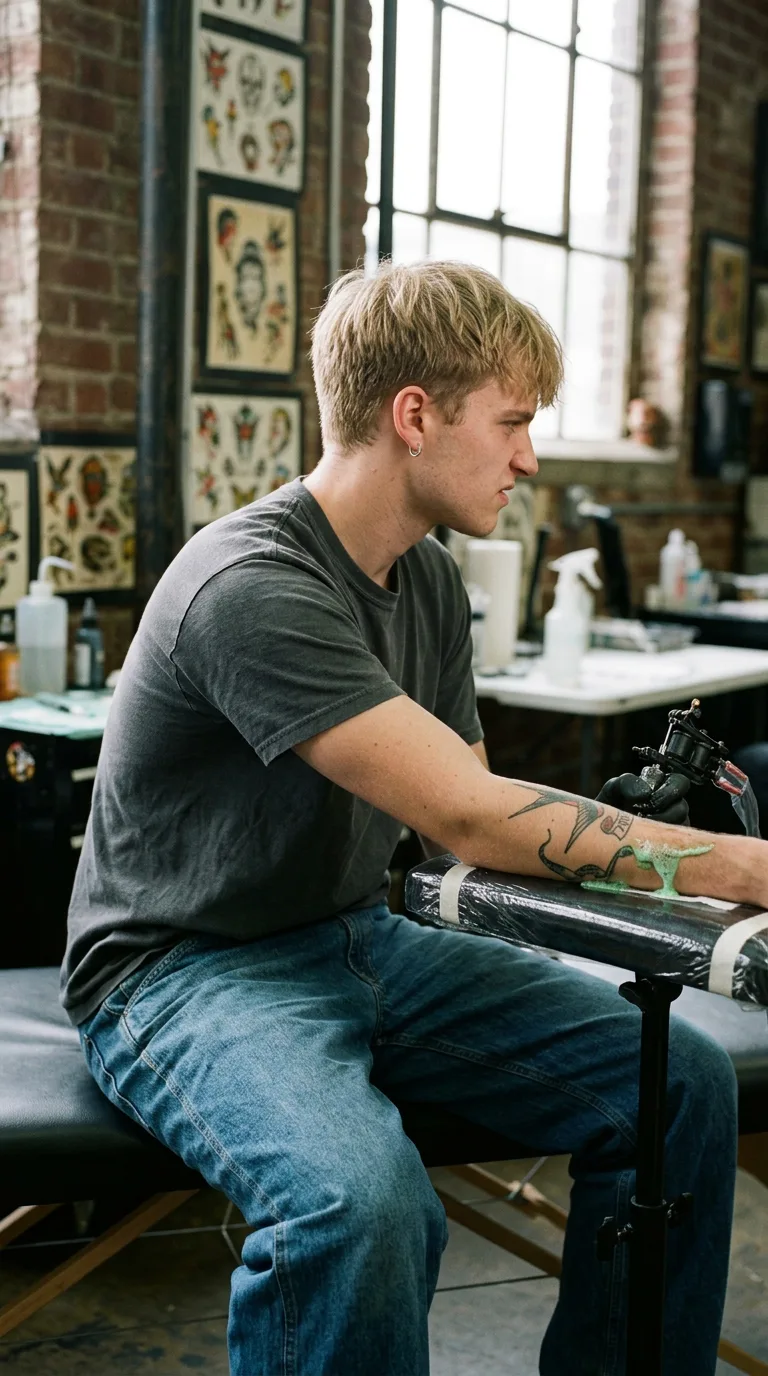
Rarest thing about him: Getting a tattoo — uncommon, 1 in 128
Season 1seed 1825225005 · engine v11
Character card
lineage 2NZHHJ
His body-swap story
@connor.waskiewicz, wearing Darnell Whitlock, rolled the wheel on and woke up as Liam Dougherty, spent 8 minutes in him, then spun the wheel and woke up as Ray Calloway
You are standing in a kitchen in Brooklyn, in Darnell Whitlock's good, heavy body, when you decide.
It is not the body's fault. His knees ache on the stairs and you like the ache. His red moustache catches the coffee, his freckled forearms are warm on the counter, and the laptop is open to a ticket he closed an hour ago. At one point you stood at his window for twenty minutes and watched a man across the street carry a ladder up and down, up and down. You wanted to be the man with the ladder. You wanted anyone to whom the afternoon was still news.
Darnell's thumb is already on the trackpad. Less than a minute of him, and you are tired of how well he fits. You click the wheel.
It turns. It slows.
The power drops. The buzzing stops. Then you are on a padded bench with your left arm braced on black plastic, and the machine is working at the inside of your forearm, and the pain is not happening to you. You turn your head toward it. A line of green soap pools in the crook of the arm and the needle moves through it like a sewing machine over cloth. Your jaw, which had been clenched, has come loose.
Whoever clenched it is gone.
The room comes in: brick, a tall window with white afternoon in it, flash sheets framed in rows, a sprayer bottle, a roll of paper towel. A man in black gloves bends over your arm. The gray shirt is soft with washing and sticks between your shoulder blades. The jeans are stiff at the knee. Under the bench your feet are in boots, and you can feel the heel of the left one worn on the outside.
The shirt goes first. You feel the cotton at your collar and it opens like a drawer. Dark, a quarter to midnight, a one-bedroom light still on down the hall. He pulls it from a pile on a chair because it is the only clean one, and he is nineteen and does not think about it, and his hand goes to his face, a thumb dragging down his jaw, checking. Smooth. He shaved at the sink in the dark so he would look like somebody who had slept. The shirt is the one she said she liked, the girlfriend, though she only said it once, and he keeps it for that.
Then the jeans, against your thighs. A different night: the hard front steps of a rowhouse, white marble worn into a dip in the middle by a hundred years of other people's feet, and he sits in the hollow with the cold coming up through his pants. First sun down the block, orange on the doorframes. He has come off the night shift and he does not want to go in. His mother's radio is on upstairs. He has $41,000 in an account no one knows the size of, and the number is the only thing he owns that is entirely his. He touches his face again. Eyes, cheek, mouth.
The boots. Three in the morning, the aisle of canned tomatoes, pallets of cases wrapped in plastic waiting to be cut. The box cutter on its lanyard. The gloves he always forgets. A cold floor under him, a squeak of the pallet jack, a long hum of lights. Nobody is there. He likes it so much he has never told anyone. He likes being the only person awake in a building full of food.
Your forearm flinches on its own, from habit. It does not hurt you, only him, and he has gone.
The tattoo artist says something. You do not hear it. You have the whole of the boy's body, six feet one, lean, with a ringing across the shoulders from lifting, a left earlobe with the small cool hoop in it, and under you a sting that is almost welcome. It is the first thing in a long time that has not been easy.
You look at your hand, the right one, lying loose on your knee. You turn it over. The palm is callused at the base of the fingers where the box cutter sits. You close it, open it.
Then you look up, and you say, to whoever is there, "Keep going. I want to see how it comes out."
The needle goes on. You do not know how long you will have these hands. It could be years. It could be before the ink is dry.