Leonard Whitfield
Fictional. Generated by AI — not a real person, and no likeness of one is intended.
55, stay-at-home dad in New York · rolled by @connor.waskiewicz · card — no film
History
who has worn him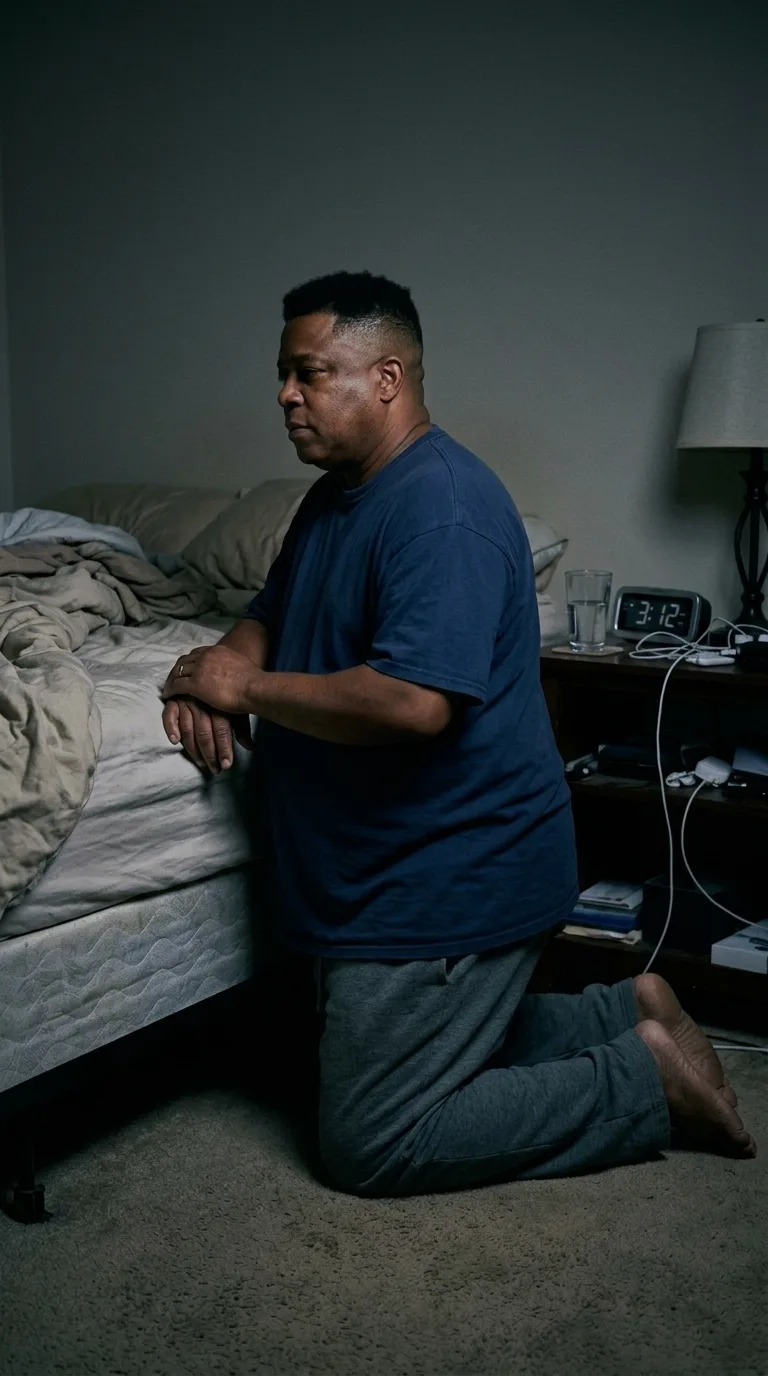
Rarest thing about him: Praying, not very seriously — common, 1 in 44
Season 1seed 1679293528 · engine v11
Character card
lineage 2NZHHJ
His body-swap story
@connor.waskiewicz, wearing Curtis Boudreaux, rolled the wheel on and woke up as Leonard Whitfield, spent under a minute in him, then spun the wheel and woke up as Ernesto Maldonado
You are standing in a barn you do not own, in a body that knows where every switch is. Curtis Boudreaux, sixty, hazel-eyed, freckled, with cattle breath in his lungs and a knee that has opinions about the cold concrete. The house behind you is asleep. The whole Houston dark is asleep. He has been yours for less than a minute, and already you are tired of how well he fits. He has nothing wrong with him. That is the trouble. Your thumb is on the phone, and the wheel is already turning in your head, and you do not say why. You do not say that you lay in Andre's skin a minute ago and heard a boy's father call through a wall, and that something in the sound would not leave you. You press the button.
Carpet under both knees. Cheap, dense, a little damp from the air conditioner. Your hands are folded against the edge of a mattress, and your mouth is still shaped around a laugh that is not yours. You were halfway to standing. You are not standing. You are down again, forehead against a bedspread that smells of detergent and sleep, and the digital clock on the nightstand throws its small green light on the side of your face.
Heavy. That is first. A heavy chest, a belly resting on your thighs, a back that has carried children and groceries and laundry up a stoop for years and says so along the left side. Fifty-five. The knees ache in a settled, familiar way. Your breath comes slow and wide.
The t-shirt is soft, washed thin, and it drags against your shoulders when you breathe. It gives you the morning, his hands, not yours: pulling it from the drawer in the dark so as not to wake her, the cotton cold, the collar worn to a rope. Then the ring. Your right thumb finds the band on your left hand and turns it, and a whole kitchen opens. A woman laughing at the stove with her back to him. Three kids shouting over cereal. The way he said her name like he was still surprised she had said yes.
The sweatpants, gray, the drawstring gone. A winter, a stoop slick with rain, a small child's boot in his fist, and the quiet pride of being the one who is home. Under it, something else: a boy at a machine shop door, Andre, grown, and a conversation that did not go the way he wanted. He prays about it. Not very seriously. He lets himself laugh at his own prayers, and that is how he gets to amen.
You know that boy. You wore him a minute ago. You know the cleft chin, the hands that make metal behave. You know what you did in his house. And this man's love for him rises through the carpet and the cotton and the ring, enormous and plain, with no idea who is kneeling here now.
You lift your head. The room is dim and humming. You turn your hand over. A plain band, a broad palm, nothing yours. Then you look up and say, softly, "Amen."
The clock changes its number. You do not know how long he lasts.