Leonard Paul Gruber
Fictional. Generated by AI — not a real person, and no likeness of one is intended.
56, assembly line worker in San Francisco · rolled by @oliver.benstead · card — no film
History
who has worn him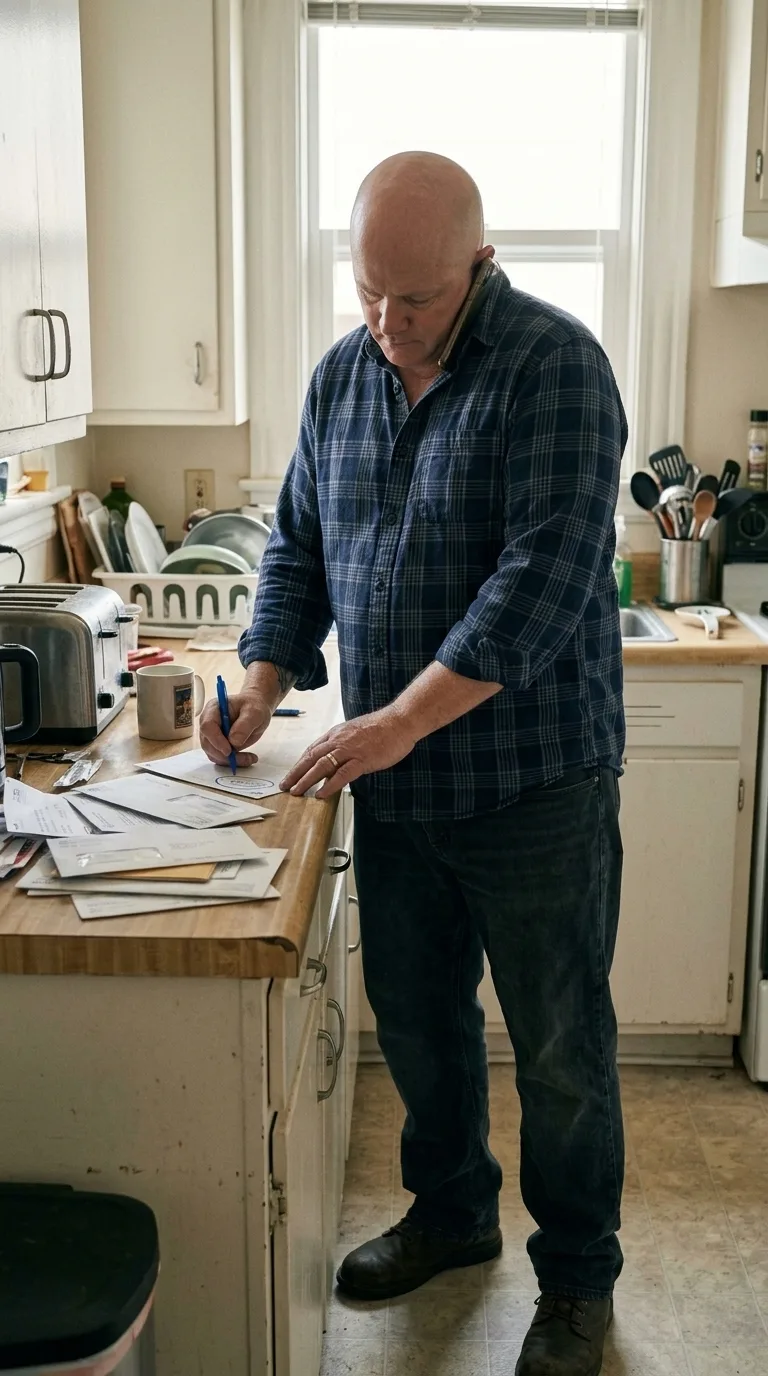
Rarest thing about him: Jewish — common, 1 in 73
Season 1seed 814468325 · engine v11
Character card
lineage ANU73D
His body-swap story
@oliver.benstead, wearing Marcus Dale Redcloud, rolled the wheel on and woke up as Leonard Paul Gruber, spent 1 minute in him, then spun the wheel and woke up as Nikhil Raj Patel
You are standing in a conference room on the fourteenth floor, in Marcus Redcloud's good wool, and the thing that sent you back is the ring finger of his right hand. It will not stop doing what it does. Every time the partners go quiet it taps the table twice, the way he has tapped it for fifty-three years, and you cannot make it stop. You have asked it to. He is fluent, and he is easy, and he has a voice that fills a room without being raised. Nobody in this building has ever once looked at him as if he were lying. You have been him for less than a minute of the real kind, the kind where the body is yours and not borrowed, and already you know that nothing in him is hungry. You ordered a coffee and it was exactly right. That is the whole trouble. You excuse yourself, and in the stairwell, with his phone in his smooth brown hand, you open the page with the wheel on it.
The wheel clicks around.
The hold music loops back to its first bar, and your shoulder drops a phone into your hand. The pen has stopped on the second digit. You are standing at a counter with your weight on the heels of two boots that were never taken off, and the smell is toast and cold coffee and paper. The window is white. The envelope under your left hand says the number is 4, 7, and then nothing. A recorded woman says your call is important.
His shirt is flannel, soft at the cuffs, and the cuff against your wrist opens the morning. His hands rolled these sleeves, twice each, because the left elbow has a click in it and the cold of the garage gets in there. He stood in the bedroom in the dark so as not to wake her, and she woke anyway, and said into the pillow, did you eat. He said yes. He had not.
The pen is chewed at the end. Your thumb goes to your mouth without asking and finds the nail already short, already ragged, and a whole year of it comes up with the taste of it: the waiting rooms, the lawyer's hallway, the ex-wife's voice on the phone saying Len, just listen, and the two kids, grown now and not calling enough, and the one who did call and asked for money he did not have. The envelope is a bill. They are all bills. The stack under your palm is a thick, shameful weight, and he has not told her how thick.
The ring is warm and a little tight. It was her mother's idea to engrave it, and he said no, and she did it anyway, and he has never once turned it to read it.
Your right eye wanders off toward the window. You can feel it, a small slackness, and with it the memory of a boy in a schoolyard, and the long habit of looking straight at people anyway so they would see he was.
There is a tattoo under the sleeve that you cannot see. Your arm remembers needles, a barracks, and a friend named Vance who is dead. Your belly rests against the counter's edge, your lower back aches the dull ache of a thousand door panels coming down at the same height, and your knuckles know the weight of an impact wrench, a weight like a second pulse. Where the cigarettes were, there is a hole shaped like a hand. He quit. He quit the drinking too, on a Tuesday, on purpose, and nobody clapped.
You look at your hands. They are thick and nicked and not yours, and the pen is still in the right one, and they are not shaking. Then you look up, into the white window, and you say, to nobody, in a voice with gravel in it, "Hello, Len."
On the line the music starts over again. You wonder how long this one lasts, and whether the wanting will find you here, in the cold light, before the number is finished.