Leonard Early Whitfield
Fictional. Generated by AI — not a real person, and no likeness of one is intended.
60, finance director in Anchorage · rolled by @declan.michael.farrow · card — no film
History
who has worn him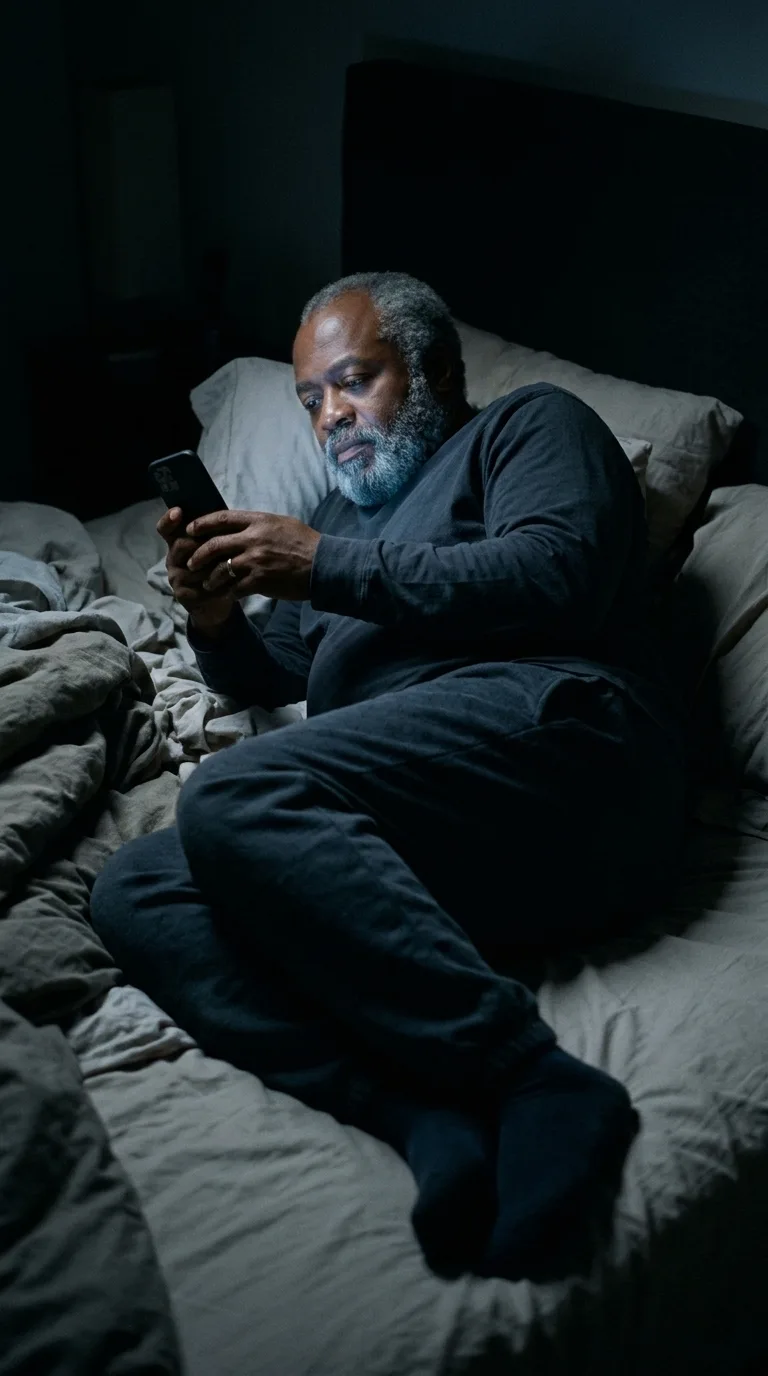
Rarest thing about him: Historically Black Protestant — common, 1 in 25
Season 1seed 800048811 · engine v11
Character card
lineage 5OR92V
His body-swap story
@declan.michael.farrow, wearing Dalton Pierce Merrill, rolled the wheel on and woke up as Leonard Early Whitfield, spent under a minute in him, then spun the wheel and woke up as Julian Mateo Arroyo
You are standing in a stockroom in Coastal Maine before the shop opens, in the body of a boy who has been yours for two minutes, and already you know what's wrong with him. He is five-foot-five and the shelf above the shipping labels is a reach. The gap in his teeth whistles when you breathe through your mouth. He is twenty-three and everything in him is hungry and thin, a body like a coat hanger, and you don't want to be hung on it. You were in a hurry last time. You wanted the wheel more than you wanted the man. The box cutter is in his hand, and you set it down on the carton like something you are done with.
The page is open in your pocket. You press the wheel and it turns.
Then there is dark, and a screen six inches from your face.
You are on your side. Blue light lies along one cheek. The thumb has stopped mid-scroll, and you start it again, faster and steadier than he had it, flicking past everything he stopped on: a score, a photograph of someone's dinner, a headline he was halfway through. The mattress holds the weight of you, a slow heavy warmth, and a hip is pressed into the bed. Someone breathes beside you in the dark, a long sleeping breath. His wife. You know it the way you know the floor is under you.
The shirt is soft with washing, and the cuff is rolled where his thumb has worried it. The fabric against your forearm opens something. It is a Sunday, years back, and he is standing before the mirror in the hall of a different house, working the knot of a tie for his daughter's graduation, and his hands shake, and he is ashamed, and he is so proud his chest hurts. The gray suit. The black shoes, polished the night before, because his father did that, and he does it, and does not say why.
The ring is a plain band, and it is cool where the phone's glass has been against it. You turn it with your thumb and a kitchen comes, a woman laughing with her head back, her hand on his sleeve. Not the sleeper beside you. Someone earlier, the first marriage, the one that ended without anyone being cruel, and it still sits in him like a stone in a shoe. He sends her a card at Christmas. Nobody knows he keeps hers.
The sheets smell of cedar and warm skin. Your beard is two inches of wire against the pillow, and your hand goes to your face by itself, fingers over the mouth, the way it must go a hundred times a day in meetings, in pews, in the dark. Your knees ache with a dull old ache. Your belly rests heavy on the mattress, a comfortable weight, and your chest is wide and slow. Down the hall, a furnace ticks. Beyond the wall is the cold of a long Alaskan night, and a snowmobile under a blue tarp, and a number on a report that he has been carrying all week, a hole in the books that is not his fault and that he will say aloud tomorrow anyway, because that is who he is.
Through the phone's cold glass there is a hymn, the old one his mother hummed over the sink. You know the words to it, though you never learned them.
You lift your hand off the screen. It is broad and dark-knuckled, the ring catching blue. You turn it over, and over again.
You look up, into the dark where a lens would be.
"Well," you say, in a voice that is low and unhurried and not yours. "Let's see how long you last."