Leonard Braswell
Fictional. Generated by AI — not a real person, and no likeness of one is intended.
56, mechanic in Houston · rolled by @colin.hasbrook · card — no film
History
who has worn him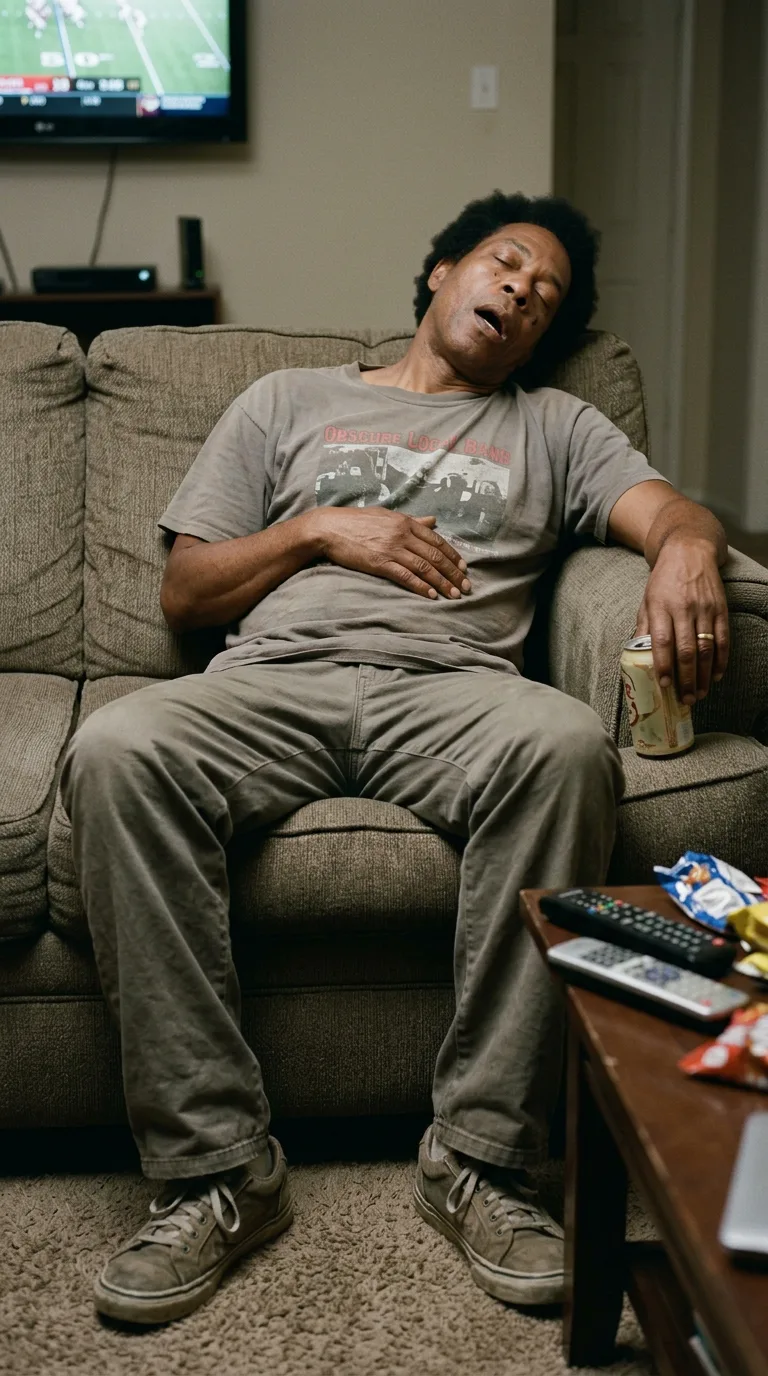
Rarest thing about him: Falling asleep in front of the game — uncommon, 1 in 46
Season 0seed 245677565 · engine v10
Character card
lineage 2NZHHJ
His body-swap story
@colin.hasbrook, wearing Gary Truskowski, rolled the wheel on and woke up as Leonard Braswell, spent under a minute in him, then spun the wheel and woke up as Warren Sedillo
The warehouse is doing that thing it does at two in the afternoon in February, where the big bay doors stay shut against the cold and the fluorescents make everybody look embalmed. You are standing at a scan gun with a lazy eye that drifts when you're tired, in a body that is 46 and White and 6'5" with a gut that pulls at the waistband, and you have been picking totes since six a.m. and you are so bored you could put your head through the shelving. Somebody's radio down the row is playing a song you heard yesterday and the day before that. Your break is in eleven minutes. You do not want to wait eleven minutes. You have had this body less than a full day and it already feels like a coat you tried on to be polite. You get your phone out in the bathroom stall, thumb already knowing the address, vessel.cards loading before you've finished sitting down, and you tell yourself it's just to look, the way you have told yourself that six hundred and fifty-eight times before, and you spin.
—
The couch takes your weight before you know it is a couch. There is a can, warm and light in your hand, nearly empty, fingers looped through it out of habit rather than thirst. Your head is tipped back against the cushion and your mouth is open and there is a game on, and the crowd noise comes up out of the television like water filling a room, and somewhere in the middle of that sound a man scored and you — he — slept through it, and now the replay is running a second time and your thumb moves on its own, finds the volume rocker on the remote resting against your thigh, and brings it down two clicks with a precision that has nothing to do with wanting to see the score and everything to do with forty years of a body knowing where a button is in the dark. You sit forward. Weight settles into your lower back, your knees, a soreness already sitting there before you did anything to earn it today. This is Leonard. This is his couch, his living room, his hand.
—
The shirt is what starts it. Not this shirt — this is a soft gray T-shirt gone thin at the collar, a band tee from something nobody outside of Third Ward would recognize, but it hangs on you the way clothes hang on a man who has worn the same three shapes of himself for thirty years, and touching the collar with two fingers gives you a morning: gray light through miniblinds, the actual shirt he has on him now already laid out on the bed the night before because Denise likes things laid out, and Leonard standing in his boxers doing the thing he does every morning without noticing he does it, drumming four fingers against his own thigh while he decides whether today is a khakis day or a jeans day at the shop. It's Sunday. It was a jeans day.
The can in your hand — his hand — gives you less a memory than a feeling, faint and disapproving, his own doctor's voice from eighteen months back saying the word diabetes like it was a diagnosis of character, and Leonard nodding and saying yes ma'am and then going home and having, a few times a year, a beer anyway, because a man is allowed one thing.
The remote gives you nothing, it's new, bought at the Fiesta on 610 three weeks ago to replace the one the dog chewed — there's no dog now, the dog died two winters back and nobody's replaced it, and that thought comes with an ache that isn't yours and that you didn't ask for and that sits in your chest like something you swallowed too fast.
The ring is the one that opens the room all the way. Plain gold band, left hand, and it comes with heat — a wedding in a backyard in Sunnyside, folding chairs, his mother's hat, Denise's dress a color she called champagne and everyone else called cream, and twenty-nine years since then stacked one on top of the other like tires in the yard behind the shop. No kids. There was a year they wanted them and it didn't happen and then there was a year they stopped wanting out loud, and that's a door you feel close behind you as soon as you've opened it, the two of them deciding without deciding, choosing each other again on purpose instead. She works at the county clerk's office. She calls him at lunch most days just to hear him complain about a customer. He complains happily. It is the happiest kind of complaining there is.
His body under all of it: fifty-six years carrying weight evenly, a mechanic's shoulders, forearms that know a torque wrench without looking at it, a back that has opinions about mornings, blood sugar he manages with a discipline he's proud of and never mentions, because a man who talks about his health is a man asking to be pitied and Leonard was raised not to ask for that from anybody. The mole on his cheek he has stopped seeing in mirrors decades ago; it belongs to his face the way a knot belongs to wood.
It is, you understand now, the wrong end of the day for him to be doing this — the shop keeps him standing under cars until his knees ache and he comes home and eats too fast and sits down and the couch takes him whole, some Mondays, before the second quarter's even out, and Denise will find him like this and turn the volume down herself and go on with her evening, amused, unbothered, married to it same as she's married to him.
—
You look down. Your hand — his hand — is still shaped around the can, and you turn it over slowly, gold band catching the TV light, mole high on your borrowed cheek pulling faintly as you frown at your own knuckles like they belong to somebody who owes you money.
"Man," you say, out loud, to no one, voice rough with a nap that wasn't yours, "when'd I get old."
Somewhere behind that, already, quietly, the wheel is still spinning in your mind, the way it always is now, the way it has been for six hundred and fifty-nine bodies — not a decision yet, just a door left open a crack, the same question it always leaves you: how long you'll want to be a man who falls asleep in front of a game he loves, married twenty-nine years to a woman who'll call at lunch tomorrow expecting him to complain.