Kyle Dean Tsosie
Fictional. Generated by AI — not a real person, and no likeness of one is intended.
28, dishwasher in Atlanta · rolled by @declan.michael.farrow · card — no film
History
who has worn him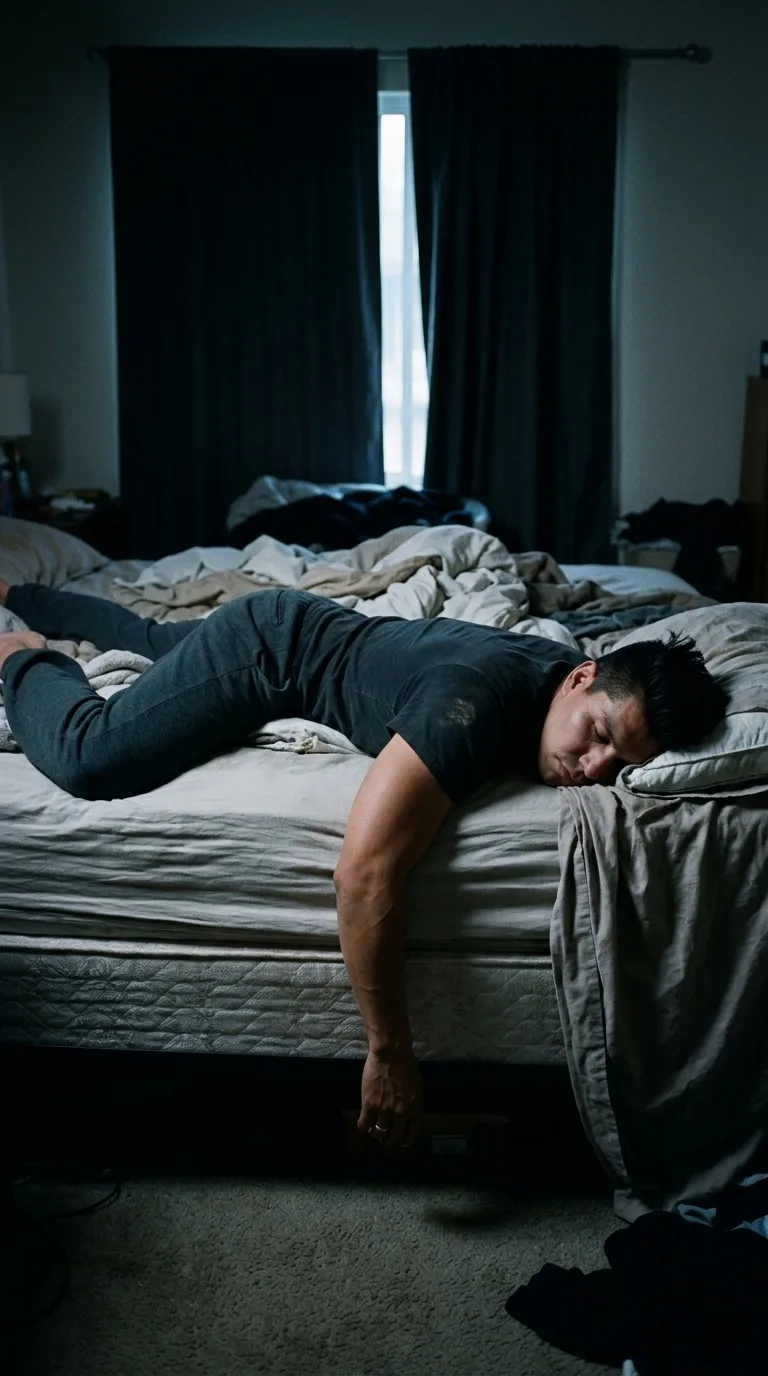
Rarest thing about him: Dishwasher — common, 1 in 417
Face-off rating 1500 · not ranked yet
Season 1seed 1084994469 · engine v11
Character card
lineage 5OR92V
His body-swap story
@declan.michael.farrow, wearing Farid Nassar Haddadin, rolled the wheel on and woke up as Kyle Dean Tsosie, spent under a minute in him, then spun the wheel and woke up as Mauricio Ibarra
You are standing in a kitchen that smells of someone else's coffee, and you have been Farid Nassar Haddadin for less than a minute. The skinny, silver-haired engineer is a good body. The knees are quiet and the moustache is a comfort under your thumb. You do not know why you are still looking at the page with the wheel on it. It glows blue on the laptop above the sleeping house. His wife's reading glasses are folded by the keyboard. The clock on the stove says nothing you want to read.
The truth is small. Twenty minutes ago you opened his phone, thinking you might as well, and there was a voicemail from a daughter who wants her father to call back, and the voice in it was waiting for someone to be him. You are not him. You do not want to be asked. A man like this has people, and people expect a voice. So you pay. You spin. The wheel clicks through its colors and slows.
Then there is no kitchen.
There is a mattress under your whole front, a pillow wet at one corner against your cheek, and your right arm hanging off the edge, heavy as a sandbag. Your breath is ragged and then, in one pull, it is even. The streetlight comes through a gap in the curtains and lays a stripe across the carpet. The air is thick; the summer is still in the walls. Your arm draws itself up. Your body rolls onto its back, and your hands fold at the chest like a man laid out. He has never once slept like that. You didn't choose it. It is just how you arrive.
Now the touching begins.
The sheet is tangled around your calf, cotton gone soft from washing, and it gives you a flash: his wife's foot pressing his shin in January, and her laugh in the dark when he says the heater is broken again. It is warm and plain and entirely his. The ring is under your right thumb, a plain band, a little loose from the heat. It gives you a bigger thing. A church basement, folding chairs, a minister's hand on his shoulder, a vow said too fast because he was shaking, and her whispering "breathe." He is proud of that day and embarrassed that he is proud.
The shirt against your back is the dark gray one he sleeps in, the collar stretched. It hands you the morning before the shift, which in him is the afternoon. He pulls the shirt over his head in the bathroom. Then the work pants, the stiff ones with the dirty knees. He laces the boots sitting on the edge of the tub, left and then right, always left first, a superstition from his grandfather that he has never explained to anyone. He checks the apron on its hook. The black rubber gloves are cold and slick inside. His hands know the shape of the sprayer handle before his mind does. Down at the dish pit the racks come out of the machine steaming, and the heat cooks the skin of his forearms to a bright, tight pink. He does not mind it. He is good at it. Nobody sees how good, and that is the one sore place in him, because they keep calling him the dishwasher, and he has been at that sink eight years.
Your shoulders feel it now: the long ache from lifting racks, a hot, honest tiredness in the deltoids and the lower back. The legs are strong and short, built low to the ground. The jaw under your fingertips is smooth, and the cleft in the chin is a deep dent you find with your thumb. He shaved it before bed. He always does, because his wife likes the way it feels.
The carpet under the dangling foot, earlier, had given you one more thing, and it comes back now: his grandmother's kitchen, a radio, her hand pressing a spoon into his, and the word she said for it. You cannot hold the word. It slides off. It was never yours, and it is gone before you can reach for it.
Somewhere down the hall a floorboard ticks. The wife sleeps nearby, or she is not here tonight. You don't know yet, and you can't ask.
You lift your hands from your chest and hold them in the stripe of streetlight. Strong. Square. Scarred only by use. The band sits on the left. You turn them over, palm and back, palm and back. They are warm. They are not yours.
You look up at the dark ceiling and say, low and steady, "Okay. You're mine now."
The house does not answer. Your pulse is slow and borrowed. And under it the other question has already started up, quiet as the wheel: how long, and when will the wanting come back for you?