Kevin Truong
Fictional. Generated by AI — not a real person, and no likeness of one is intended.
30, line cook in Small-town Ohio · rolled by @colin.tarwater · card — no film
History
who has worn him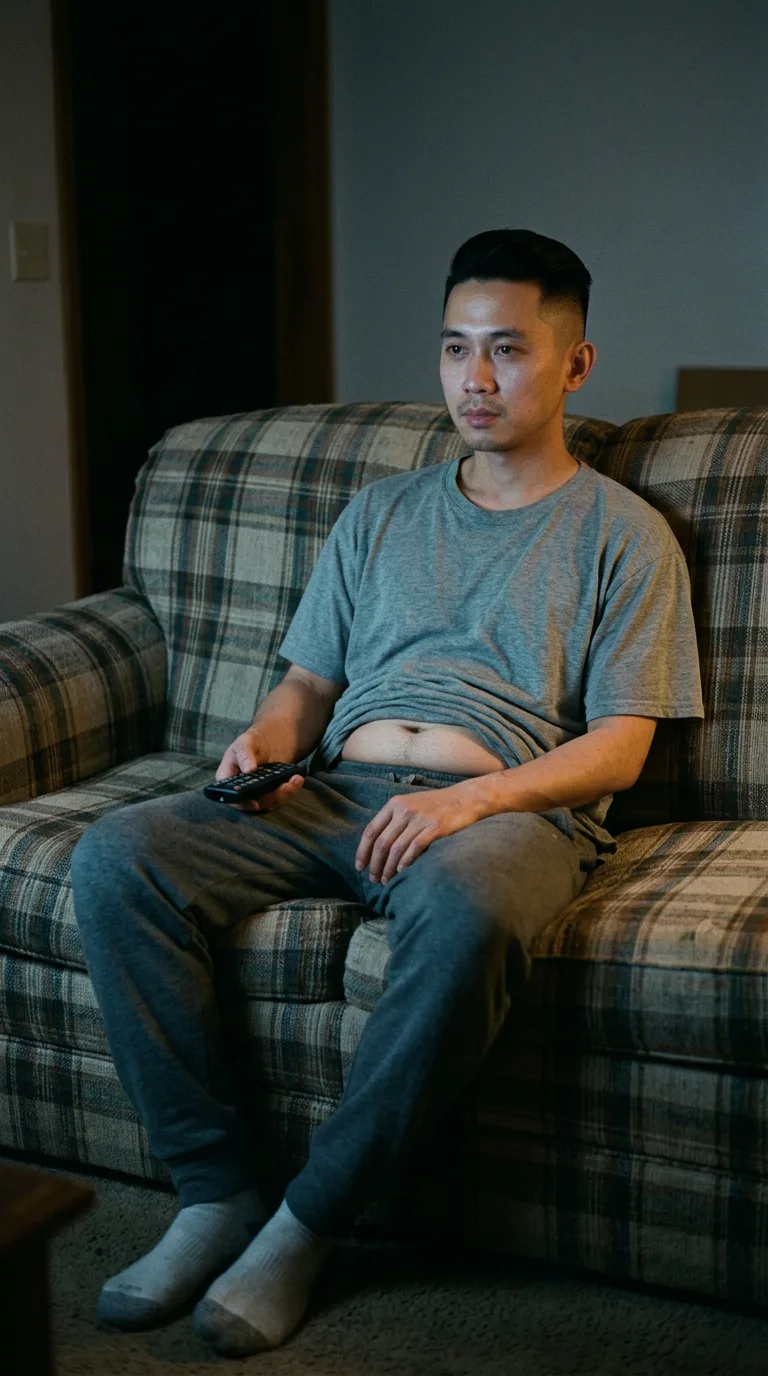
Rarest thing about him: Asthma — rare, 1 in 23
Season 0seed 778909429 · engine v10
Character card
lineage COEU7T
His body-swap story
@colin.tarwater, wearing Dale Prochniak, rolled the wheel on and woke up as Kevin Truong, spent 3 days in him, then spun the wheel and woke up as Gerald Fontaine
Dale Prochniak's knees are the first thing you notice all over again, because you have had them less than a minute and they already ache like they've been climbing ladders for thirty years, which they have, just not yours. You are standing in his kitchen in the gray middle of a Wednesday, the coffee going cold on the counter, his phone lit up with a text from a daughter he loves and doesn't call enough. That should be enough. It isn't. Something in you — the same something that has never once been enough — is already elsewhere, already doing the math on how far seventy-five dollars gets you this time, already bored of dimples and gray hair and a body that took the stairs slow this morning. Dale had been him for less than a minute. You give him back the minute and take the rest.
The site loads the same as always, patient, gray, the wheel sitting there like it's been waiting on you specifically. You spin it standing in another man's kitchen, in another man's slippers, and somewhere the wheel finds a Wednesday afternoon that is actually a Wednesday night, and a body that is not climbing anything.
The couch takes your weight before you understand it's a couch. Plaid, worn soft at the arm, and there's a remote loose and warm in a hand that is suddenly not shaped like the one you had a second ago — shorter fingers, softer knuckles, a callus along the side of the thumb that doesn't belong to changing channels. The room is dark except the TV throwing its blue-white flicker across a body that sits low and comfortable in itself, thirty years old going on tired, a little heavy through the middle in the specific way of a person who stands twelve hours in front of a flat-top and eats standing up. You feel it arrive all at once — the couch under you, the remote in your palm, the shirt against your back — and each one opens like a door left slightly unlatched.
The gray T-shirt first: worn thin at the collar, smells faintly of fryer oil no washing ever fully lifts, and with it comes the memory of pulling it on this afternoon, sun still up outside his window, the particular ritual of a man who works nights and lives backwards from everyone he grew up with. Sleeve, sleeve, the shirt dropping over a stomach he's stopped fighting with, sweatpants next because there's no one to dress for, socks because the floor by the register always runs cold. He'd stood in his bedroom doing exactly this at an hour when the town outside still had its one stoplight running green for cars that weren't coming, and felt, not unhappily, like a man clocking out of a life instead of into one.
The remote gives you the rest of the evening he'd meant to have: home from a double, feet up, some rerun he'd seen four times already loaded up because it doesn't ask anything of him. Under that, older things surface the way they do when a hand keeps closing and opening on plastic — the gum he's chewing right now, unconsciously, jaw working slow, a habit from quitting cigarettes three years back that he still hasn't outgrown and doesn't try to. The inhaler in the nightstand two rooms away, close enough that some worn groove in him tracks it without looking, the way you track your own pulse.
Deeper, through the couch itself, worn to the shape of him from a hundred nights like this one: a woman's laugh that isn't in the room and hasn't been in years, an ex he still measures things against without meaning to, a photograph somewhere in a drawer of a kid with his same flat black hair who calls him twice a month and calls him Dad and lives two states off with her mother. He misses that kid in a specific, physical way, a low ache no different from the ache in his lower back from standing the line, something he's decided not to examine too closely on a Wednesday night alone with the TV on.
The show cuts to a bright frame. In the half second it takes the picture to change, you sit up straighter than he had been sitting, and the remote goes down on the couch arm instead of staying loose in his hand, and something in the room notices the difference even though nothing in the room can say what it is.
You watch the rest of the joke land and do not laugh where he would have.
You look down at the hand on your knee — his hand, unmarked, no ring, a thumb calloused along one edge from a knife he's held ten thousand times — and turn it over slow, like it might answer to a name you haven't decided to give it yet.
"Okay," you say, out loud, to the dark room and the blue light and nobody. "Okay, Kevin."
Thirty-three more of these behind you and no way of knowing, not tonight, not for however long this one runs, when the wheel starts pulling at you again.