Kevin Strader
Fictional. Generated by AI — not a real person, and no likeness of one is intended.
36, cop in High-desert Nevada · rolled by @kevin.strader · card — no film
History
who has worn him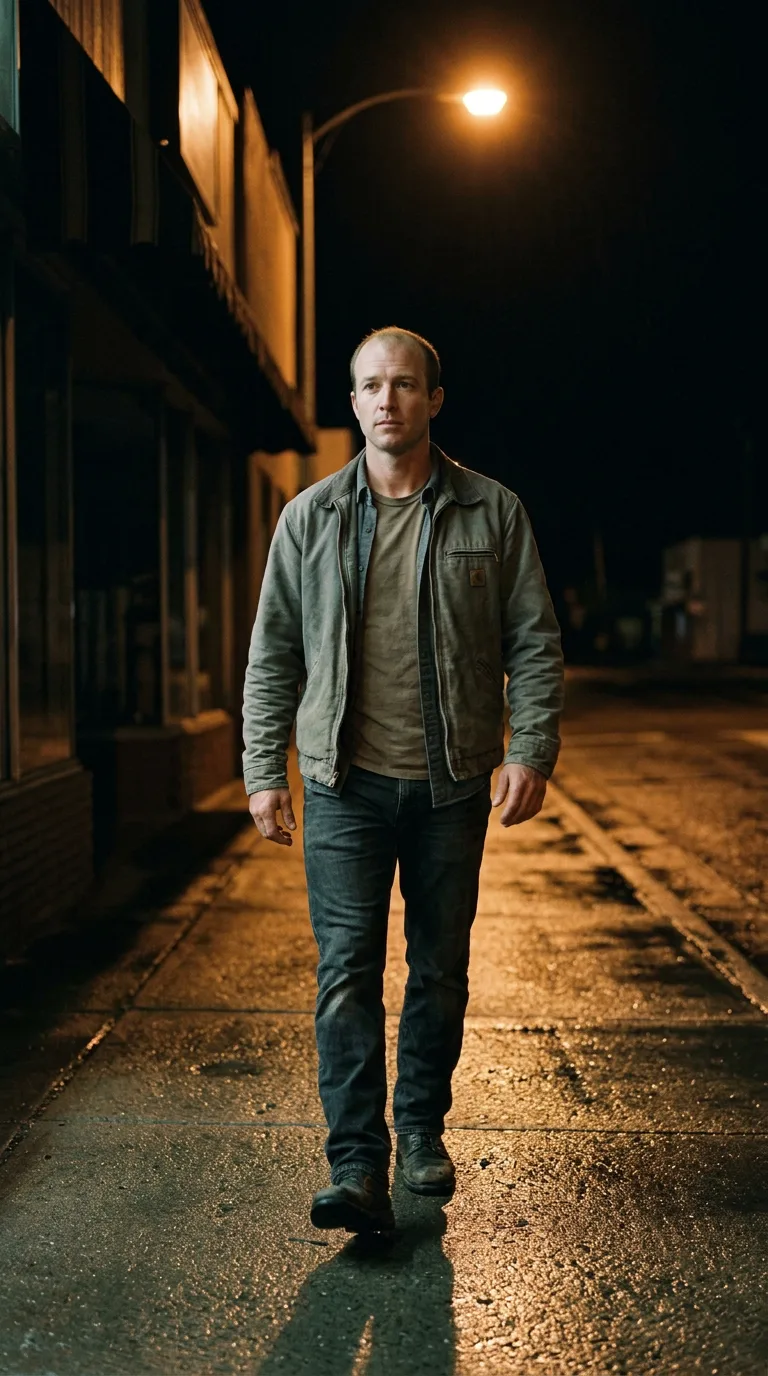
Rarest thing about him: High cholesterol — rare, 1 in 37
Season 0seed 1873359191 · engine v10
Character card
lineage XXFYTP
His body-swap story
@kevin.strader rolled the wheel on and woke up as Kevin Strader — their first
The screen has been open for twenty minutes before you spin it.
Nothing else was happening. That's the honest truth of it — a Friday winding down the way they all do, the day's noise still ringing a little in your ears, nothing on, nothing worth finishing. You found the site the way you find most things, by falling sideways through the internet at the hour when your judgment goes soft. Vessel.cards. A wheel, rendered nice, spinning slow on a black background like it had all the time in the world for you. You'd read about things like this in forums at two in the morning for years — the wanting body, the stolen years, whether it was even possible to stop being yourself for a while. You never thought anyone would actually sell it to you.
You pay. It doesn't feel like much. You spin.
There's no sensation of falling, no tunnel, no held breath. One second there is a screen and a chair and whatever you are, and the next there is a wet street, streetlight orange, cold air on a face that isn't yours to have ever owned, and a body already moving — mid-stride, weight coming down wrong on a shoe that's been scuffing every third step for two blocks. Your foot — his foot — catches a curb. A hand shoots out, slaps flat on the cold wet hood of a parked Buick, catches the whole stumbling weight of him. And then the correction. The scuff stops. Forty steps land clean and even and quiet, like a man who was never drunk at all, and at the corner the body turns left.
Left is not the way home. You don't know that yet. You're about to.
The jacket is open, and it's the jacket that gets you first — worn canvas, a broken zipper pull, and under your fingers where they brush the collar there's a flash: a dressing room, a mirror with a crack in the corner, this same jacket coming off a hanger at six that morning while the light outside was still grey. Kevin's hands, still stiff with sleep, working the buttons on a uniform shirt underneath it before he ever puts the jacket on top — no. Wait. Not this morning. The shift was over hours ago. He came home, peeled the uniform off his own tired back, dressed down into jeans and this jacket and a plain shirt, and went out again because the trailer was too quiet and the Elks post still had the lights on.
It comes in pieces, the way the facts said it would, and each piece has weight because it isn't yours. The shirt under the jacket — thin cotton, salt-stiff at the collar from a hot patrol shift, the memory of dressing for work three days ago arriving sleeve by sleeve: standing in a single-wide that shifts a half-inch when you walk to the far end, the window unit rattling, the smell of coffee going cold on the counter. Buttoning up in a mirror too small to show both shoulders at once. A creased shirt because there's nobody left to do the ironing and he never learned to care enough to do it himself.
The belt is gone — no duty rig tonight, just jeans, but his hand goes to his hip out of forty months of habit anyway, and finds nothing, and something in him — in you, wearing him — registers the absence the way a tongue finds a missing tooth. That's the job coming through: the weight of the gun belt on long shifts, the ache low in the back by hour ten, the particular tired of leaning on a warm hood at dusk watching a parking lot that never does anything, waiting for the radio to say something that matters. He likes the waiting more than he'd ever say out loud. He likes being the calm thing that arrives when everything else has gone wrong. He does not like the report writing, the overtime that eats his Saturdays, the sergeant who corrects his grammar in front of the other guys.
The wet asphalt under his shoes gives you his weight properly — five foot seven, compact, a body that stays fit because staying fit is half the job description, shoulders that carry the memory of academy pushups and nothing since that's felt as hard. Under the ribs, low, a dull persistent tightness that isn't pain exactly — cholesterol numbers a doctor frowned at eight months ago, a promise to eat better that lasted two weeks. His leg is already going, a small tremor at the knee that has nothing to do with the two beers still warm in him and everything to do with thirty-six years of a body that has never once sat still without permission.
A ring that isn't there anymore — his hand goes to check that too, an old married-man's tic outliving the marriage by three years, and with it comes Renata, quick and unbidden: her laugh in the good years, the sound of her packing boxes in the bad ones, the particular silence of the trailer after she took the dog and left the rest. He still thinks, most weeks, that he could have been better to her. He goes to services most Sundays partly because of that, sits in the same pew, prays for nothing specific, just the general hope that God is patient with men who mean well and do badly.
The rain-slick street gives up the last of it: this walk home, taken the long way on purpose because home is small and quiet and he isn't ready for either one yet, two drinks in him from a bar that closed an hour ago, no one waiting, no reason to hurry.
You are standing at the corner where he should have turned right.
You look down. The hands are broad, sun-marked at the knuckles, a thin white line at one wrist where a watch used to sit before the strap broke and he never replaced it. You turn one over slowly under the streetlight, like it might not hold your weight, like it might not actually be yours to move.
You lift your eyes to the dark street, to nothing, to whatever is watching.
"Whole life," you say, in his voice, quiet, like you're only now hearing yourself say it, "and this is the one I get."