Kevin Muldowney
Fictional. Generated by AI — not a real person, and no likeness of one is intended.
23, athletic trainer in Boston · rolled by @kevin.muldowney · card — no film
History
who has worn him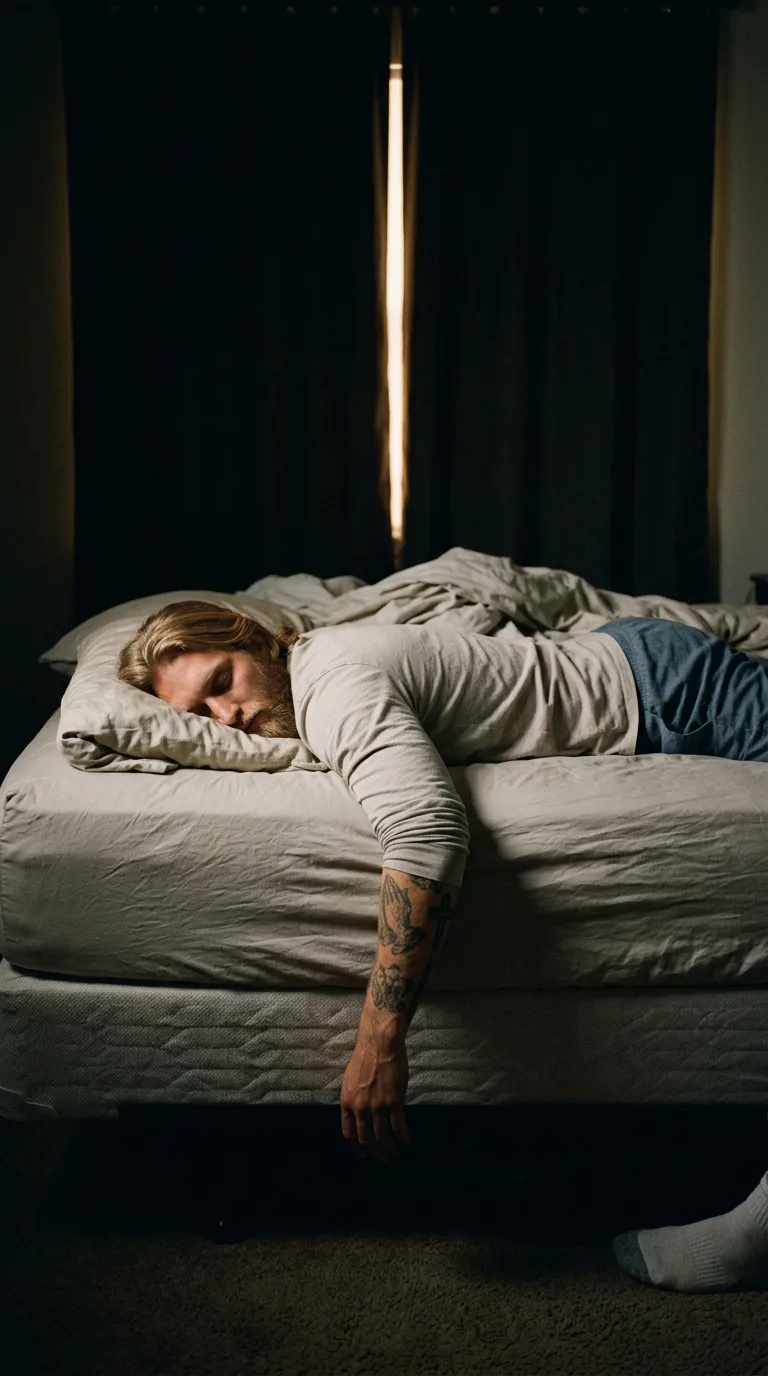
Rarest thing about him: Athletic trainer — uncommon, 1 in 2,454
Season 1seed 99813420 · engine v11
Character card
lineage 3YM26D
His body-swap story
@kevin.muldowney rolled the wheel on and woke up as Kevin Muldowney — their first
The screen is the only thing in the room that matters, and it has been that way for longer than tonight. Early morning, nothing started yet, the kind of gray hour where the day hasn't earned its name. You've had the tab open for an hour. Vessel.cards. A wheel, rendered clean and slow-spinning on a field of black, like a roulette table built for something else. You have read every thread that exists about wanting to be someone else, wanting to wake up behind a different face, and you have never once believed any of it could be real until a page loaded that didn't ask you to believe anything — it just asked for payment.
You pay. Your thumb finds the spin. The wheel goes.
It stops on nothing you could have predicted, because there was nothing to predict — no options shown, no names, just the promise underneath the mechanism. And then there's no transition at all, no falling, no tunnel of light: there's a mattress under a hip that isn't yours yet, a pillow smelling of somebody else's sweat, an arm hanging into cold air past the edge of a bed. Boston, though you don't know that yet as a word, only as a texture — radiator heat, a car alarm two streets off, a storm door somewhere below rattling faintly on its hinge in wind.
His breathing, which had been ragged — the shallow catch-and-drag of a man who fell asleep too fast on a stomach half-full of something — goes even in one pull of air. The hanging arm draws up off the floor like a diver being reeled in. The body rolls onto its back, unbidden, hands coming to rest folded on the chest, a posture this man has never once slept in, not once in twenty-three years, and would find, if he were still in here to find it, faintly funereal. He isn't. There's no one left in here to mind.
You are lying on your back in the dark, and you are enormous. That's the first thing, before any name or any story: the sheer length of him, six-foot-two of frame that takes a full second longer to feel out than a smaller body would, weight distributed in muscle that has done actual work, shoulders wider than any doorway you've walked through as yourself, because you have never walked through a doorway as yourself. Somewhere at the edges, a beard — you feel it before you understand it, a warmth and a weight along the jaw that isn't hair so much as insulation, two inches of it, joined up into the mustache in one continuous line. You've never had a face that came with instructions.
The sheets are still warm on one side. That's the first thing that touches him and gives something back — a flash, half a second, of pulling these exact sheets tight on a Sunday because his mother is coming to visit and he doesn't want her seeing the place look the way it actually looks — gone before you can hold it, but it leaves a residue, a knowing that this room has a landlord who never fixes the radiator, that the building creaks like a ship, that there are two more units above and below him and he can hear the Ramirez kid's cereal bowl hit the floor most mornings through the ceiling.
The blue jean shorts are still on him, waistband loose at the hip, and touching that waistband — his own hand grazing it as the arms come down off the chest, because a folded-hands posture doesn't last on a body this restless — brings back a whole evening: a shift that ran late, an ankle he taped for the third time that week on a kid who should've come out of the game an hour before he did, the particular exhausted satisfaction of driving home with the radio off because his own thoughts were finally quiet. He works nights, or nights enough — some seasons the games run to ten, eleven, and by the time he's iced somebody's knee and packed the kit and driven the empty roads home it's the deep, black part of the night that has no name, and he sleeps through what other men call morning. That's why this room is dark and dead-quiet at an hour when, somewhere far off in a life that isn't a fact and isn't yours to invent, a screen was glowing gray with the first hour of a Wednesday.
The long-sleeve shirt is a different key entirely. It's thin, soft with age, and the second your — his — arm bends to scratch at the beard, the sleeve drags against a forearm and the tattoos underneath light up like touched nerves: the cross first, small, inked at nineteen in a shop in Dorchester with a guy from his parish who did it half-price because they'd grown up two pews apart; then the praying hands, done later, after his grandmother's funeral, because he needed something on his own skin that meant she was somewhere and he was Catholic enough, still, three decades in, to need that stated in permanent ink rather than just believed. Mass most Sundays. Confession maybe twice a year. A drink, a real one, once or twice a month with the guys from the training staff, loud and easy and gone by Tuesday.
There is more, and it keeps coming, unhooked and out of order, each thing he's touching handing over a piece: the fanny pack slung across chairs, not on him now but remembered by the ghost of its strap-weight across his hip on sidelines, the water bottle's condensation on his palm during a August two-a-day, the roll of tape unspooling under his thumb with a sound he could do in his sleep, could do half-asleep, has done half-asleep. Single. No one in particular; a few names that come up without weight attached, without ache — nothing that costs him to remember, which is its own kind of fact about a man. No kids. Good money, better than he ever expected out of a job that mostly means kneeling on turf — enough that the apartment with the bad radiator is a choice, not a sentence, a triple-decker he likes for the porch and the price and the walk to the field.
His hand, on its own, without you steering it, comes up and drags once across his scalp — an old motion, older than any memory attached to it, just a thing his body does the way other bodies clear their throats — and mid-drag you feel the whole rest of him at once: the mole high on his cheek that he's stopped noticing in mirrors, the ache low in one knee from years of kneeling on hard ground for other people's injuries, the strength sitting coiled and unused in forearms built for hauling gear bags and steadying a linebacker's full weight on one arm.
Then the hand stops moving on its own, because you've caught up to it, because it's yours now to lift.
You bring it up in front of your face — his face — in the dark, and turn it over once, slow, watching a stranger's knuckles catch the thin blade of streetlight coming through the gap in the curtain.
"Okay," you say, out loud, into the empty room, in a voice that isn't the one you don't have. "Okay."
Nobody answers. Nobody's going to. You don't know yet if this is an hour or a season, whether the wheel calls you back tonight or leaves you Kevin Muldowney long enough to learn every crack in this ceiling — and you don't have to know. Not yet.