Kevin Matsuoka
Fictional. Generated by AI — not a real person, and no likeness of one is intended.
20, store manager in Eastern Kentucky · rolled by @kevin.matsuoka · card — no film
History
who has worn him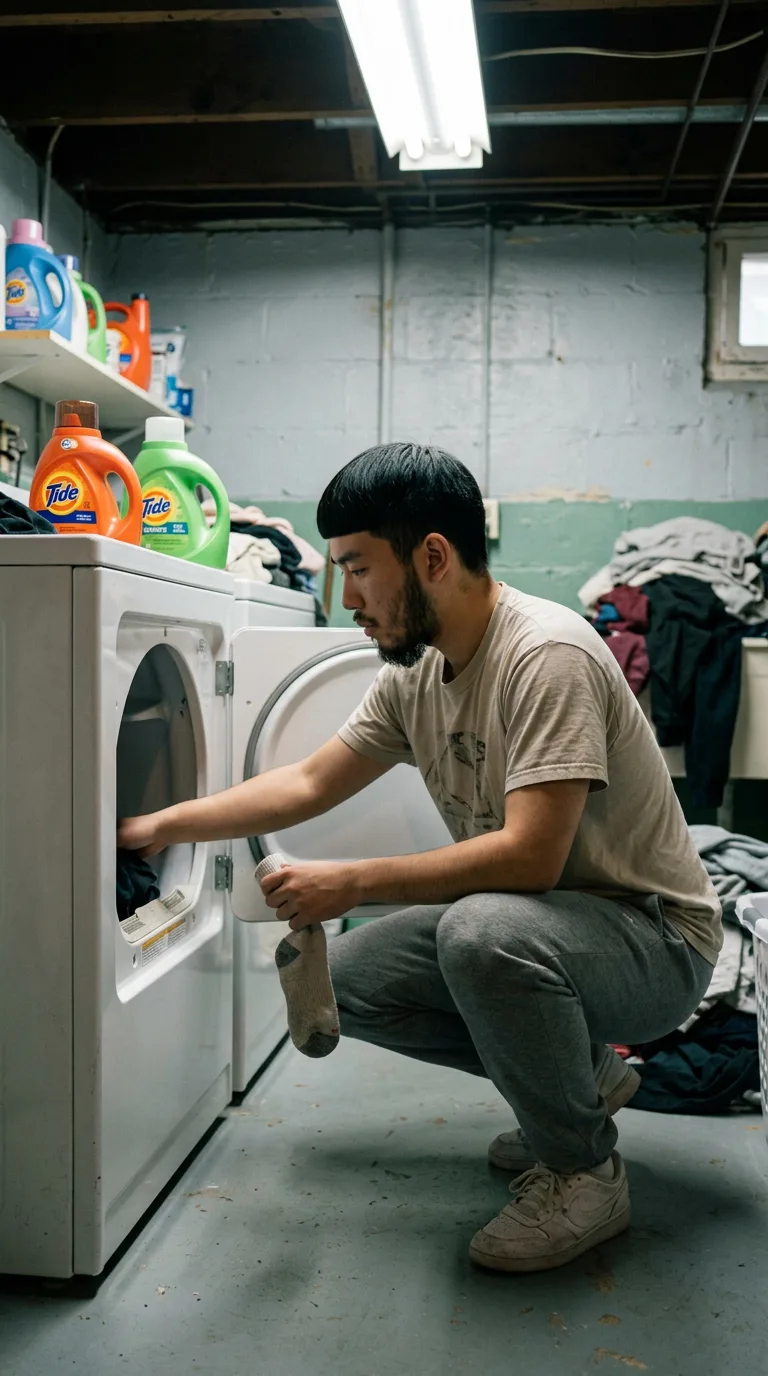
Rarest thing about him: Cigars only — common, 1 in 30
Season 1seed 1985291723 · engine v11
Character card
lineage 3KI7RH
His body-swap story
@kevin.matsuoka rolled the wheel on and woke up as Kevin Matsuoka — their first
The site loads slow on whatever you're using, the wheel spinning up pixel by pixel like it doesn't trust its own graphics card. You have read every thread. You have watched every movie with a body-swap premise, even the bad ones, even the one with the dog. You have wanted this since before you knew it was a thing to want, a hunger with no object until tonight, dull and gray and nothing on, when you found a page that says it isn't fiction. You almost close the tab three times. You pay anyway. Middle of the morning where you are, nothing outside worth looking at. You spin.
There is no falling, no tunnel, no light. There is a sock in your hand, damp-warm and gray, and a dryer drum still turning behind a pair of knees that are not yours and are now yours, and a fluorescent tube somewhere above buzzing at a frequency that gets into your teeth. You are crouched. You are small — smaller than you expected to be anybody — compact and balanced low on your heels without even trying, like the body already knows how to crouch and has done it ten thousand times. Warm cotton smell, detergent, the mildew-damp of a basement that has never fully dried out since it was built. You reach in with the other hand and start pulling the load into a basket, and your arms do it faster than you would have, like they've got the motion loaded in already, a program running under you.
Then his shirt — the one still hanging off a hook of memory, sleeve by sleeve — gives you a Wednesday morning three weeks back, him sliding into the light blue oxford in the gray dark of a bedroom, top button first, the collar stiff because he irons it himself on a towel on the kitchen counter because the one time he took shirts to the cleaners in Hazard it cost more than he made that whole shift. The tie next, navy and burgundy stripes, the same half-Windsor knot his father taught him from a video since nobody else was around to show him, tied too tight at first, loosened with two fingers hooked under it like you're doing now even though your hands are just holding a sock. Keys on the belt loop, the little lanyard with the earpiece he clips to his collar when he's on the floor so the overnight stock crew can reach him — Kevin, we got a pallet jam on aisle nine — because he took the overnight manager shift eight months ago for the ten percent differential and now his whole life runs backward from everyone else's, up at four in the afternoon, asleep when the sun is loud.
The basement keeps giving you more the longer you stand in it. The shelf of Tide bottles, orange and green, bought by the gallon because there's always a load, because his mother is sick two days a week and can't stand long enough to do her own, and he does hers with his because it's one trip instead of two and nobody has to ask. The window up near the ceiling, the one that looks out at ankle height onto the yard, the cable footbridge visible if you duck down, slung low over the creek that runs brown after rain, and how he used to walk it as a kid holding the handrail with both hands and now crosses it one-handed, phone in the other, because fear is a thing you outgrow in a town this size whether you want to or not.
A key on the ring gives you the store — fluorescent-lit, pallets stacked chest-high in the main aisle before the doors open, the smell of cardboard and floor polish, the particular ache behind his eyes from doing inventory counts at two in the morning three nights running. The beard that won't fill in gives you every mirror he's stood in front of deciding whether to shave it off, deciding not to, because it's his and it's trying. The mole on his cheek gives you nothing, just the weight of being looked at for it once, a girl in high school who called it a beauty mark and meant it kindly and he never forgot the kindness of it.
The sweatpants, the old white sneakers — these are for home, not for the store, and wearing them gives you the particular exhausted peace of a body that has learned to do chores on no schedule a normal person would recognize, folding corners square because his mother taught him that too, because sloppy folding was the one thing that actually got a rise out of her, soft-spoken woman, and he'd rather die than disappoint her over a towel.
He is twenty. He is tired in a way that lives in the lower back and the backs of the knees, a tiredness that is mostly just time zones fighting his own body. He is not unhappy. He has never once in his life said that out loud to anyone, but standing here, holding what's left of his warm laundry, you can feel that he is not unhappy, and it sits strange in you, a feeling you didn't bring and can't entirely wear.
You pull the last shirt free, fold it against your — his — chest, and look down at your hands. Small, square-knuckled, a little dry from powder detergent, a thin white scar-less ordinariness to them that belongs to nobody famous and nobody you've ever been.
You say, to the empty basement, to the hum of the light: "Okay. Okay, that's — okay."
And somewhere behind that, already, quietly, not yet a decision: the wheel, waiting to spin again, whenever it decides to.