Kevin Marsh
Fictional. Generated by AI — not a real person, and no likeness of one is intended.
32, warehouse picker in Las Vegas · rolled by @connor.waskiewicz · card — no film
History
who has worn him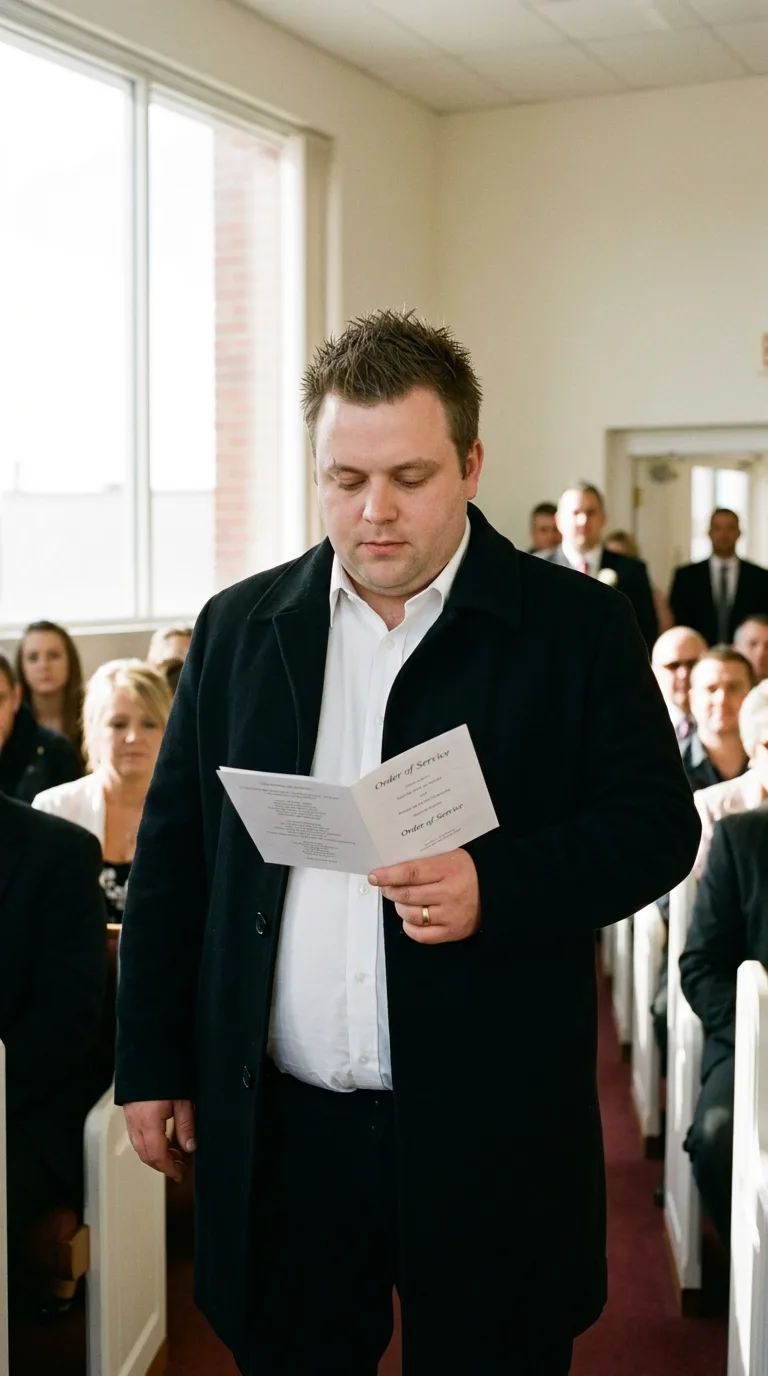
Rarest thing about him: At a funeral, at the back — common, 1 in 112
Season 1seed 1326927413 · engine v11
Character card
lineage 2NZHHJ
His body-swap story
@connor.waskiewicz, wearing Tyler Brandt, rolled the wheel on and woke up as Kevin Marsh, spent under a minute in him, then spun the wheel and woke up as Dave Lindqvist
You are leaving Tyler Brandt because of the burn. It is a small one, across the inside of his left forearm, a pale shining stripe from the flat-top he leaned on at six this morning, and it will not stop talking. It is Tuesday and the sun is already hard on the windshield. Nothing is wrong with him. His knees are fine, his back is fine, his beard itches the way a beard does. He is a body that works, and you have worn him for less than a minute, and in that minute you found out that he can make a plate look like someone loves it. You found that out, and then you wanted something that could not be cooked. You do not say that to yourself. You say the arm hurts. You open the page. The wheel is already turning, and you were already paid up.
The organ stops mid-note and the room stands, and you stand with it, a half-beat late, knees locking.
Wool across the shoulders. A folded paper in your right hand, its crease soft from being folded and unfolded. The air is warm and smells of floor wax, lilies and other people's perfume. Light comes hard through a tall window on your left, and the heads in front of you are dark, bowed, still.
The coat comes first. Your left hand smooths it down and finds the buttons, and the wool says: borrowed. Kevin's brother-in-law's, a size too tight across the back. Kevin stood in a hallway holding his breath so his wife could do the top button, and she laughed, and he did not. A cold hall closet, a hanger swinging. The coat has been in it since a wedding eleven years ago.
Your thumb goes to the edge of your nail and finds nothing there to bite. It is already gone to the quick. The habit comes up through the bone like a tide: the dock at the warehouse, the scanner strapped to the wrist, the long aisle of racking, the forklift beeping somewhere out of sight, and his teeth working at the corner of a thumb while the pick list scrolls. He has done that for twenty years. He quit cigarettes four years ago and the hands never forgave it.
The paper. Order of Service, a name you do not know in a typeface made to look kind. The memory beneath it is his mother's: St. Anne's, the cold stone font, his father's hand on the back of his neck, a smell of wet umbrellas. He knows when to kneel without thinking. His body is already bending to it, a tiny dip at the knee, and it is not you doing it. Nobody has asked you to.
The shirt is stiff at the collar, ironed last night. He ironed it himself, badly, at the kitchen counter at an hour when the apartment was still dark, because she was asleep and he did not want to wake her. Then he stood over the board a moment longer than the shirt needed. You are not told whose funeral this is. You are told only that he did not cry in the car and that he is waiting for it now.
The ring on your left hand has worn a groove into the finger. Under it is a kitchen with a yellow light, a woman's back at the stove, the radio low. "You don't have to come," she said. "I do," he said, and neither of them said why. You have the sentence and nothing around it.
Your weight sits low and wide, a heavy man's balance. The shoes pinch at the small toe. His stomach presses the belt, the breath comes shallow under the coat, and the lower back carries a dull ache that has an address, the fourth floor of the racking, the same twist, ten thousand times. Thirty-two years old and already he knows the bad hour of every joint. There is money, a lot of it. You feel that too, quiet, like a full tank, and it has done nothing for him. He still wears what he was given.
The voices rise for the hymn, and a woman near the front is crying without sound.
You lower your eyes to your hand. The knuckles are broad and the nails bitten ragged. The ring is plain gold. Across the right brow a scar parts the hair, and when you lift your face you feel it pull. You turn the hand over. It is warm. It shakes a little, and you do not know whose shaking that is.
Then you look up, past the bowed heads, and you say it low, almost into the paper: "Okay. Okay. Hello, Kevin."
The hymn goes on. Somewhere under it the question starts, as it always starts: how long, and whether the wanting will come back before the last verse ends.