Kenneth Maruyama
Fictional. Generated by AI — not a real person, and no likeness of one is intended.
44, bricklayer in Small-town Ohio · rolled by @kenneth.maruyama · card — no film
History
who has worn him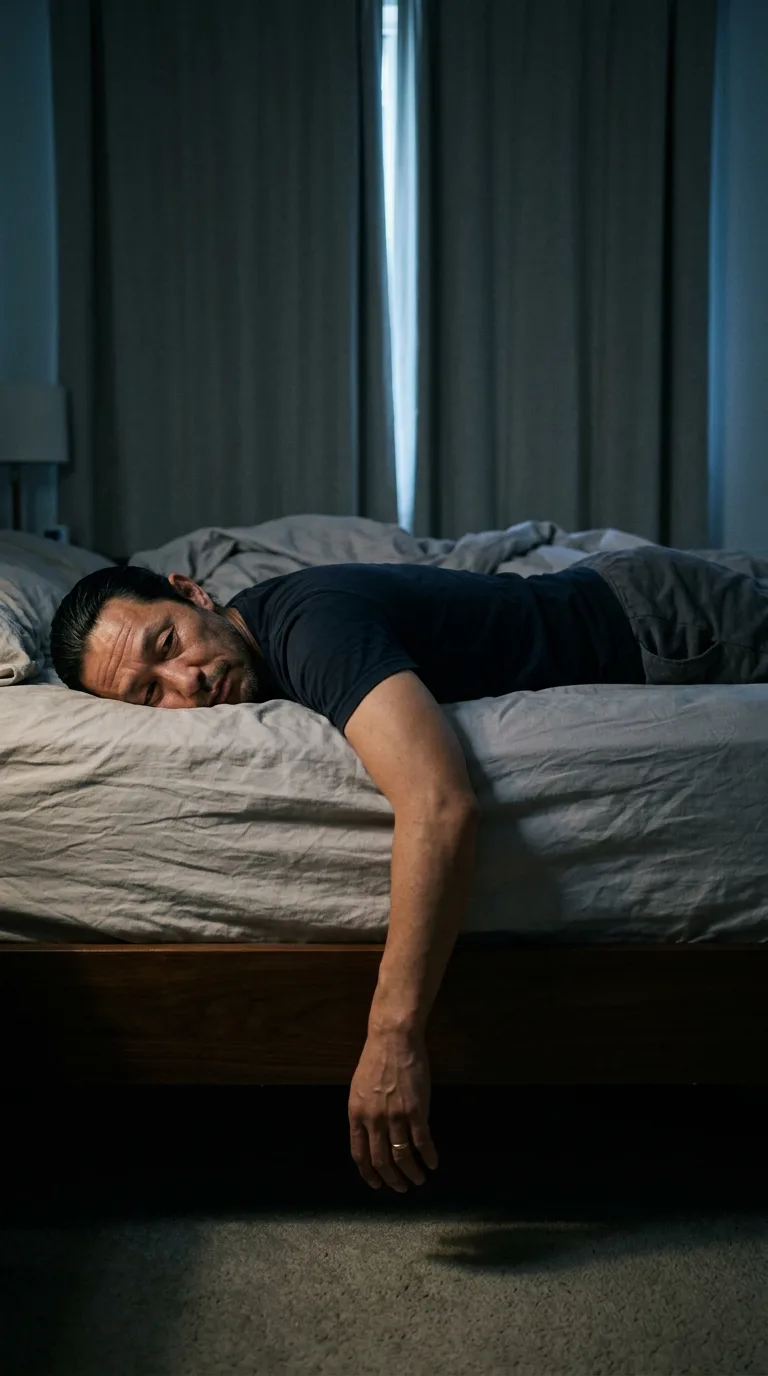
Rarest thing about him: Bricklayer — uncommon, 1 in 607
Season 1seed 1505835762 · engine v11
Character card
lineage QUNZJH
His body-swap story
@kenneth.maruyama rolled the wheel on and woke up as Kenneth Maruyama — their first
You are at the screen on a Saturday with nothing in it. The day is bright and flat, the kind that asks nothing of you. You have scrolled until the scrolling stopped meaning anything, and then there is a page with a wheel on it.
You have wanted this for as long as you can remember. The films, the stories, the threads at two in the morning about waking up as somebody else. You never believed any of it could be bought. You pay anyway, and you spin. The wheel ticks, slows, and stops.
Dark. A mattress under your chest, your cheek in a damp pillow, one arm hanging into the cold air off the edge of the bed. Your breath is ragged, and then it is even, and you did that, not him. A streetlight comes through the gap in the curtains and lies along the floor. The arm draws itself up. The body rolls over onto its back, and the hands fold on the chest like a man laid out. He has never once slept this way. You can tell, because the body complains: the shoulder wants its old shape, the ribs don't know this position.
The shirt is the first thing that speaks. Cotton gone soft at the collar, a navy T-shirt, and it gives you a morning you did not live. Pulling it over his head in a dark kitchen, the cabinet door that sticks, his wife's coffee cup already rinsed and upside down in the rack. Last winter he wore it under a flannel. He likes it because it has stopped being new. There is no thought in it, only the plain comfort of cloth that knows him.
The ring is next. Your thumb finds it, turns it, and a whole afternoon opens: a courthouse hallway, a borrowed jacket, a woman laughing because he had the wrong finger. The gold was cheap and he was embarrassed about it. She said she liked it. For twenty years she has not changed her mind, and he has never stopped being surprised.
Your fingers are moving against the blanket, a small clicking motion, thumb pressing down on nothing. A pen. He clicks a pen when he is thinking and does not know it. A hundred estimates on the tailgate of a truck, the pen clicking, the number never enough. Under it sits the smaller worry that money is a wall he keeps laying and never finishes. He owns almost nothing. The truck is not paid off.
The palms are rough, with ridges where the trowel handle sits, and the knuckles ache in a dull, familiar way. The knees speak next, a deep complaint from years of kneeling on block. His lower back is stiff. His belly is soft over strong arms, a body that works hard and never got lean from it. His left eye drifts outward a little when he is tired, and tonight it is tired. You feel it float, and the dark room tilts slightly with it.
The sheet brings a quieter memory. Two small children on this bed on a Sunday, a leg thrown over his stomach, cereal crumbs. He lay still so they would sleep. In the memory he is thinking of the Buddha on the shelf downstairs, a little brass thing his mother gave him. He doesn't pray much. He sits sometimes in the truck before work and lets his breath be his breath. It is the only hour that is entirely his, and you have just walked through it.
The house is silent. Down the hall are his children, and beside you a woman breathes in her sleep. You don't know her, and the body does. Something in the chest leans toward her without being asked.
You lift your hands into the streetlight. The ring, the scarred knuckles, the faint crust of mortar still under a nail. You turn them over, palm and back, and you say, quietly, to the dark:
"Okay. Okay. It worked."
The wheel is still there, somewhere, waiting. You wonder how long this one lasts, and whether the wanting comes back by morning, or in an hour, or in four minutes.