Kenneth Alan Mahoe
Fictional. Generated by AI — not a real person, and no likeness of one is intended.
49, janitor in Honolulu · rolled by @connor.waskiewicz · card — no film
History
who has worn him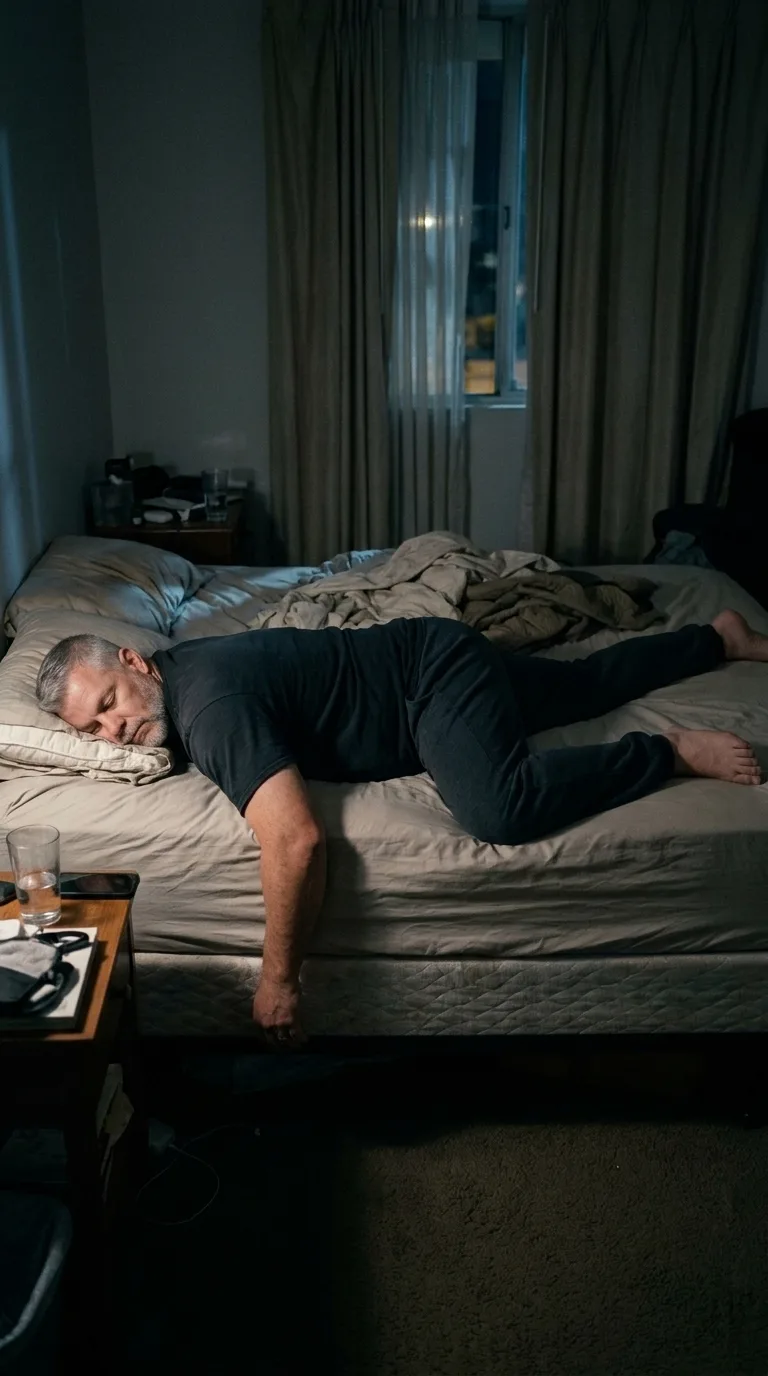
Rarest thing about him: Honolulu — common, 1 in 44
Face-off rating 1500 · not ranked yet
Season 1seed 711425066 · engine v11
Character card
lineage 2NZHHJ
His body-swap story
@connor.waskiewicz, wearing Samir Haddad, rolled the wheel on and woke up as Kenneth Alan Mahoe, spent under a minute in him, then spun the wheel and woke up as Rubén Castañeda Ibarra
You are standing at a kitchen window in Dallas, in the dark before the shift, and Samir Haddad's thumb is worn smooth against a coffee mug you have held for less than a minute. Steam on the glass. The crane waits out there, a red light at the top of the sky. Everyone would say he is a good body: heavy in the shoulders, steady, the goatee scratching when you swallow. But his knees already know the ladder up to the cab, and they are telling you about it in advance. Nine hundred rungs a month, the knees say, and you think: not this. Not hours alone at height, being careful. You wanted to be someone small and quiet, someone with a mop and a long empty hallway. Mostly you wanted to be anyone whose morning had not been decided. You set down the mug. The page with the wheel is already open. You press.
Then there is a mattress under your whole front, and your cheek is in a pillow gone damp with your own breath. Your breath is ragged, and then, in one pull, it is even. Your arm hangs off the edge and the blood has left it. Streetlight comes through a gap in the curtains and lies across the carpet like a dropped belt. You draw the arm up. The body rolls over by itself, onto its back, and your hands fold at your chest. Somewhere in the muscle there is a sense that this is wrong, that he has never once slept this way. That is the last thing of his that you can feel as his.
The sheet under your fingers is a cheap cotton, softened by a thousand washes, and it gives you a flash: a Sunday, a laundromat on a street of bright shops, him folding it alone with the corners matched, careful, because there was no one to tell him he didn't need to be. Not sad. Just his. The shirt on your chest is a soft black T-shirt with the collar gone slack, and that opens a morning: him pulling it on in this same dark, a different dark, the bed still warm, his stomach settling over the waistband of these pants as it has for ten years, a small private truce with it. Pillow, cool side. The mattress is lumpy on the left, where he never sleeps. Why does he lie on the right? Because that was how he kept a space, once, a habit from some other life that did not leave a person behind. You do not find her. There is only the habit.
The carpet's grit is under your heels when you shift. A glass of water sweats on the nightstand and you feel him setting it down: always at night, always half full, because he wakes dry-mouthed since he quit smoking. Eleven years. The craving surfaces through your palate like a coin under water. Your jaw remembers the dimples, deep even now, in sleep, even in the dark; people at the school tell him he looks pleased when he is only tired. You know the corridor then, a flood of it: floor wax, chalk, the long light of five o'clock going out down the lockers, the keyring that rides his hip and sings. He is good at it. He is proud of it in a way he would never say, proud of a floor so clean it holds the ceiling lights like water. Two hundred thousand in the bank, more, a house on posts he owns outright, red dirt, the roof rusting handsomely. Nobody knows. He drinks hard twice a month and drives home at dawn on empty roads and sits on the steps. Your back aches in the lumbar, an honest ache, the kind a floor gives you. Your hands are thick, cracked at the knuckles, and they know how to wring a mop without being asked.
You lift them into the streetlight. Turn them over. They are strangers' hands, and they are yours.
"Okay," you say, in a voice with gravel in it, and the dimples show before you decide. "Okay, Kenneth." And underneath, the question that never leaves: how long. Until you want again, and you will, and you do not know when.