Keith Lindqvist
Fictional. Generated by AI — not a real person, and no likeness of one is intended.
42, drywaller in Los Angeles · rolled by @owen.prescott · card — no film
History
who has worn him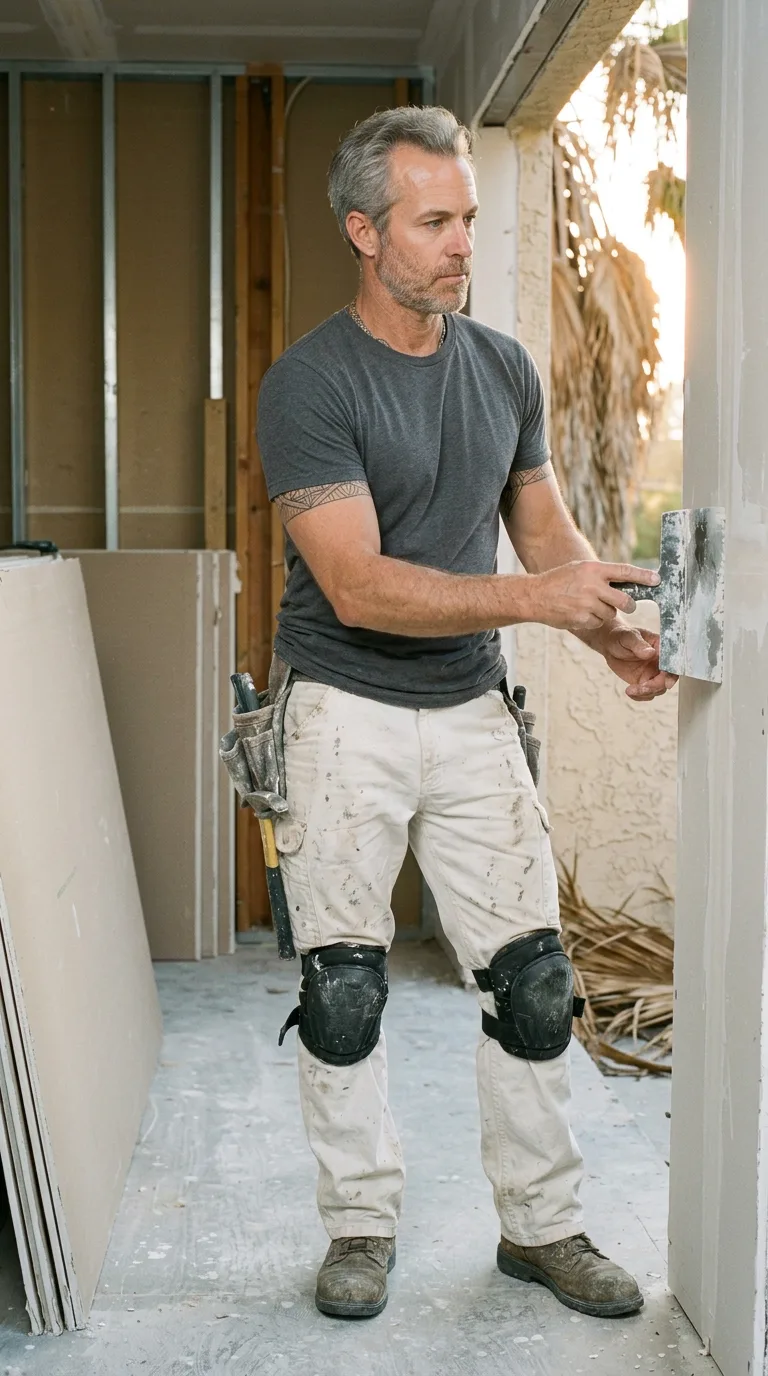
Rarest thing about him: Drywaller — common, 1 in 562
Season 1seed 103617937 · engine v11
Character card
lineage 5OR92V
His body-swap story
@owen.prescott, wearing Darius Whitmore, rolled the wheel on and woke up as Keith Lindqvist, spent 1 minute in him, then spun the wheel and woke up as Hector Almaraz
You are standing in a kitchen in El Paso with a coffee going cold, in the body of a man who has been yours for three minutes, and you are already bored of his hands. They are good hands. That is not the trouble. The trouble is that Darius Whitmore's phone buzzed on the counter and it was his mother, and the name on it opened something in his chest, a whole Sunday of her cooking, and it was warm and it was his, and none of it was yours. You stood there like a guest in a stranger's grief at being loved. You put the phone face down. You did not want to be loved by proxy. You wanted to be carried off somewhere with no one waiting for you to call back. So you open the page with the wheel on it, and you pay, and you spin, and the gray eyes you are leaving watch the colors blur on the screen.
Then the kitchen is gone.
There is a knife of flat steel in your right hand, held against a seam, and your weight is on the balls of your feet. The air is chalk and cold dust and a little dry palm smell coming through an open wall. Your hand has already made a move without you, a stroke sideways that comes out wrong, a hitch in it. You do it again slowly, and it is right. Then ten more, each one checked, because you do not trust this stranger's rhythm yet.
The shirt comes first. Cotton, soft from washing, hanging off your shoulders. And through it, his morning: a dark room, a lamp, the shirt pulled off the back of a chair, one arm and then the other, his thumb catching the neck hole, a quiet pleasure in clean cloth before the dust gets to it. Then the pants, stiff with old mud, belted by feel, knee pads strapped on one buckle at a time, the left one always first. A man who does not hurry. He sat on the edge of the bed to lace the boots, and the left knee ached in the way it does at forty-two, a small hot coin under the cap.
The knife handle is worn smooth where his fingers go. It gives you a job years ago, a kid half his age laughing at how slow he was and how clean the walls came out, and the pride was dry and private. Your thumb goes to your mouth without you, and the edge of the nail is already ragged under your teeth. You catch it and the taste of plaster is bitter. Memory: a church basement, a folding chair, a hymn he did not mean but sang anyway, because the sound of the room held him. Memory: a man's laugh in a kitchen, and then the door, and nobody. He is not sad about it. He is simply alone with his tools and his small savings and a quiet he has made his peace with.
Your back is warm under the fabric, a stiff geometry across the shoulder blades that you cannot see but feel, lines pressed into skin like a drawn map. Your lungs are wide. Your forearms are tight and you are strong, steadier than the boy you were an hour ago.
You lift your hand off the wall and look at it. The knuckles are white with dust. You turn it over. Then you look up, at nothing, at the light through the broken wall.
"Okay," you say, in a voice that is low and flat and not yours. "Okay. Hello."
And somewhere under the dust, under the ache in his knee, the question starts up again, quiet, like a pulse: how long before you want something else.