Kaleo Freitas
Fictional. Generated by AI — not a real person, and no likeness of one is intended.
42, farmer in Honolulu · rolled by @colin.hasbrook · card — no film
History
who has worn him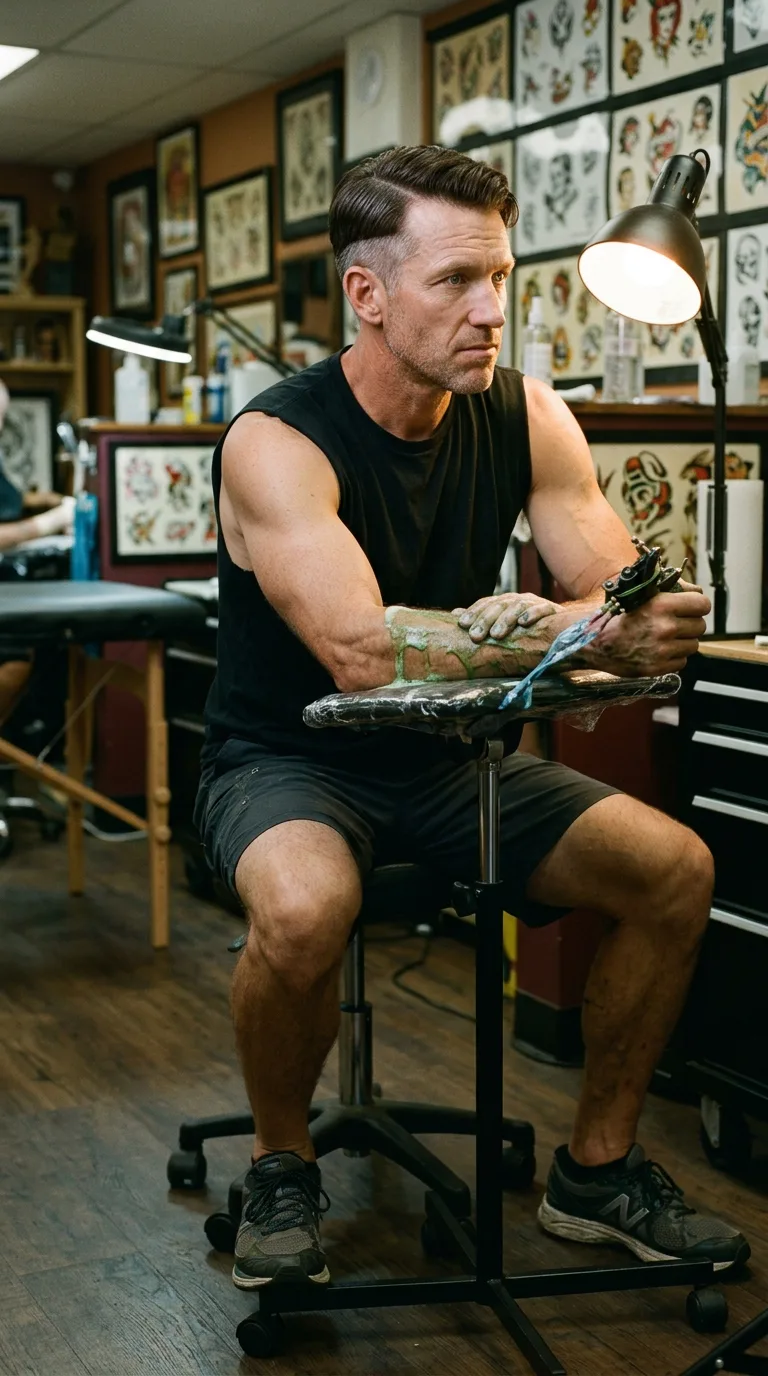
Rarest thing about him: Getting a tattoo — rare, 1 in 267
Season 0seed 1191633333 · engine v10
Character card
lineage 2NZHHJ
His body-swap story
@colin.hasbrook, wearing Paul Duszek, rolled the wheel on and woke up as Kaleo Freitas, spent under a minute in him, then spun the wheel and woke up as Marco Villanueva
---
Paul Duszek's classroom smells like dry-erase marker and radiator dust, and you have been him for exactly forty seconds when you decide you are done. It is the smell that does it, honestly — that and the freckled forearm resting on the desk, thin as a stick, the wrist already aching from arthritis that isn't even yours. Somewhere behind these borrowed eyes there's a lesson plan about the Missouri Compromise clipped to a folder, and a class that hasn't arrived yet, and the low hum of a Monday morning in Boston that Paul Duszek lived inside for sixty years so that you could wear it for less than a minute. Skinny arms. Silver hair thinning at the crown. A whiteboard with someone else's handwriting still ghosted into it. You did not choose him and you do not want him. You want out of him the way you always do, fast, before the wanting cools into something you'd have to sit with. You take out your phone, thumb already knowing the site, and you spin.
The power drops for two seconds in a shop on the other side of the world, and when it comes back you are sitting on a rolling stool with your forearm braced flat on a black vinyl armrest, and there is a machine buzzing against the inside of your wrist, and none of it hurts because none of it is quite yours yet. The jaw that was clenched a moment ago goes loose. The head that was turned sharply away, refusing to watch, drifts back around, curious, unbothered, and you watch green soap and blue ink smear together under a needle like it's happening to a table, not an arm. The tattoo artist doesn't look up. Doesn't notice the half-second where the man under his hands stopped being afraid of him.
Then it comes in through the skin, the way it always does.
The vinyl of the tattoo chair under your legs gives you nothing — it's a stranger's shop, borrowed light, borrowed noise — but the black tank top clinging damp to your back, that's his, and it opens like a door. A closet with a sliding mirror, louvered, the track always sticking. Reaching for this exact shirt this morning — no, last night, because outside these walls it's the dead middle of the night in Honolulu, and you understand with a lurch that this man works a graveyard shift stacking hours against the heat, sleeping when the sun's high and awake when it isn't, and tonight the "when it isn't" is a tattoo appointment squeezed in before the fields need him again. He pulled this shirt over his head in a bedroom lit only by a phone screen, careful not to wake anyone, though there's no one there to wake anymore. That thought comes with a weight in the chest that isn't pain exactly. An ex who still calls about the kids on Sundays. Two kids, a boy and a girl, out on the other side of the island with her, and the ache of missing a school thing last week because harvest doesn't wait and neither does the electric bill.
The stool under you gives you his knees — one that clicks when he stands, a decade of driving tractors down washed-out gates. The New Balance sneakers on his feet, worn honest at the heel, remember mud, actual red dirt worked into the tread so deep no hose gets it fully clean. His name comes with the shoes, somehow, the way names do: Kaleo. Kaleo Freitas. Third generation on that land, grandfather's gate, father's gate, and now his, rusted tin roof ticking at night as it cools. The forearm under the needle remembers a hundred mornings bracing a fence post, wrenching wire tight, the ordinary violence of that work settled so deep into the muscle that the needle barely registers against it.
The tank top again — sleeveless, chosen because his shoulders are still good, still hold definition at forty-two despite the crow's feet starting at his eyes and the blood pressure medication in the truck's glovebox he keeps forgetting to take on schedule. Vanity, a little, wanting the ink to show right in the shop mirror, some private promise to himself that he's not done yet, not old yet, even running on four hours of sleep stacked against a night shift in a field. The soap-slick skin under the machine, this new piece going in raw over old muscle, chosen deliberately, something he wanted for himself and nobody else — no one waiting up for him to explain it, which is its own kind of freedom and its own kind of quiet.
Church on the Sundays he isn't dead tired. A big night out maybe twice a month, singing too loud in a friend's garage, sleeping it off before the 4 a.m. alarm. No cigarettes ever, never saw the point. Scraping by, always, gate to gate, and it doesn't scare him the way it might scare somebody else — it's just weather, something you plant through.
The needle stops. The artist leans back, wiping down, saying something you don't catch.
You look down at the forearm, wet and stinging faintly now that the current of him is settling into your grip on it, ink glistening under the work lamp, hand steady, callused, a stranger's hand until about four seconds ago and now unmistakably the one you're going to be answering to.
"Bad time for the power to go," you say, and your voice comes out low, easy, a little rough with the hour, not quite believing it either.
Nobody in the shop finds anything wrong with that. You don't know how long you'll sit in this quiet, aching, sunburnt life before the wheel calls you back. Nobody does.