Kalani Furtado
Fictional. Generated by AI — not a real person, and no likeness of one is intended.
27, firefighter in Honolulu · rolled by @marco.villagrana · card — no film
History
who has worn him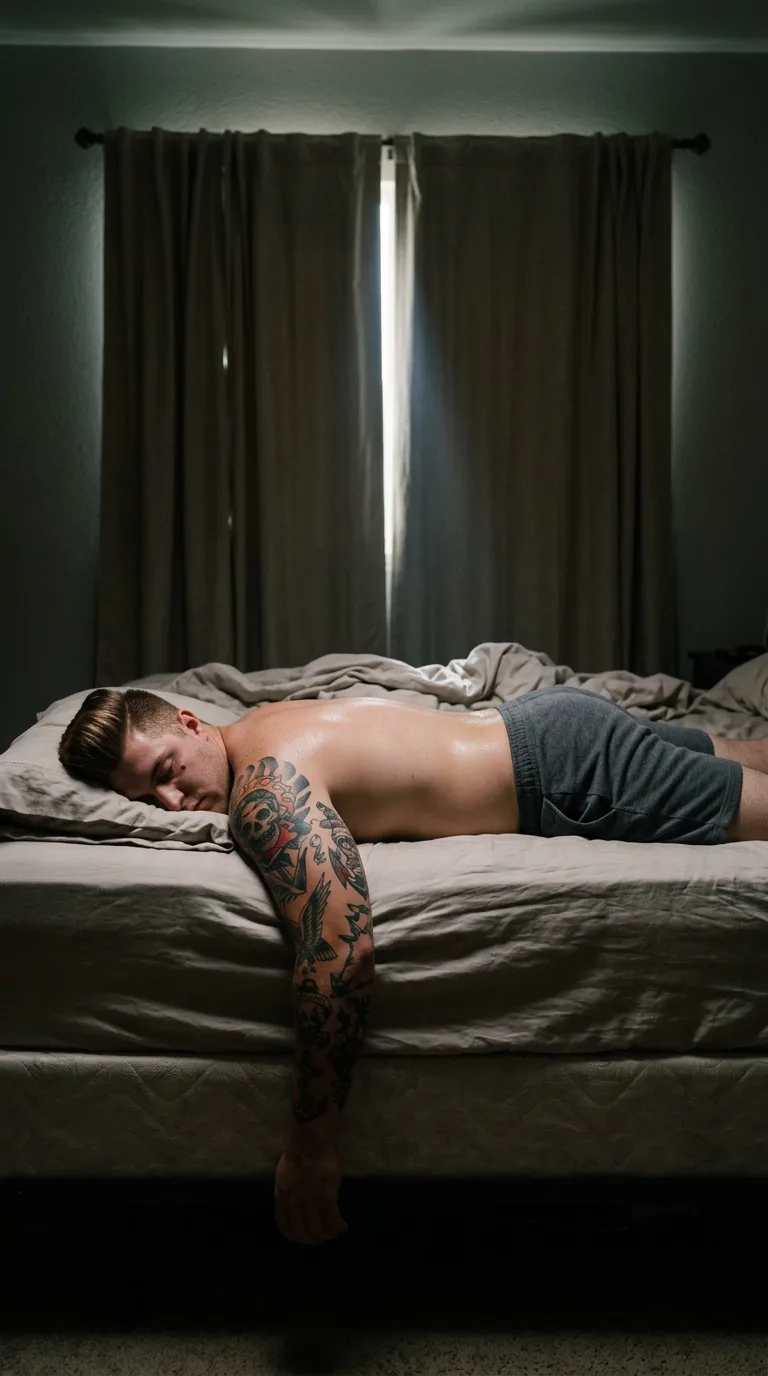
Rarest thing about him: Half sleeve — rare, 1 in 29
Season 0seed 900494480 · engine v10
Character card
lineage LJL8SV
His body-swap story
@marco.villagrana, wearing Prashant Deol, rolled the wheel on and woke up as Kalani Furtado, spent 4 minutes in him, then spun the wheel and woke up as Ruben Sotelo
The flower shop smells like a florist's cooler, wet stems and cold cardboard, and you are standing in it wearing hands that are not yours — small, brown-freckled, forty-five years old, ink-stained at the thumbnail from a broken pen this morning. Three minutes ago you became Prashant Deol, and that is the whole problem. Three minutes is not enough to have him. You caught his shop keys, his ring of regular customers, the ache already starting in his lower back from bending over buckets, but none of the rest of him has arrived yet, and you know from twenty-nine other bodies that it never quite will, not all of it, not the parts that would make staying feel like anything. You are standing behind his register with his phone in his hand looking at a bank balance that is fine, a life that is fine, a Sunday that stretches out ahead of him doing nothing, and the boredom of it arrives faster than any memory of his does. There is a shop bell that hasn't rung. There is a whole city out there that isn't waiting for Prashant Deol to do a single thing. You open the site on his phone with his thumb, and the wheel is already loading before you've decided anything, because the decision happened days and bodies ago — it happens every time the new one goes quiet too fast.
You spin.
The floor under you is different before you understand anything else about it — springless, low, a mattress and nothing else, and the air is warm and wet in a way Boston never is. Your arm is dead asleep, hanging off the edge into open air, and you feel the moment it stops being dead: it draws up on its own, unbidden, a marionette pull, and settles folded on a chest that is wider than the chest you had four seconds ago. Breath goes from ragged — his ragged, whoever he is, mid-dream — to level, yours, or what will be yours. Streetlight through a two-inch gap in curtains lays one white blade across the sheet. Somewhere close a rooster is losing an argument with the dark.
The tattoo comes first, because it's the arm that just moved, and it comes in through the skin like heat: a needle's buzz, three sittings over one winter, a shop on Kalihi with a Sailor Jerry flash sheet taped to the wall, the eagle first, then the anchor, his father's initials worked into the banner though nobody who looks at it would know that unless he told them, and he never tells them. Pride sits under the ink like a pulse. He was twenty-two. He'd just made it through probie year and wanted something on him that would still be there when he was old, something that couldn't be taken back the way almost everything else in his life up to then had been optional, reversible, undecided. This wasn't.
The mattress under your — his — back gives him next: three years in this house, up on its posts against flooding that hasn't come yet, rented from a great-aunt who charges him half what the market wants because she remembers his mother. The red dirt yard outside holds an afternoon whole and sudden — him hosing off his boots after a shift, glare so white off the tin roof he had to squint through it, a neighbor's dog barking at nothing, the particular good tiredness of twenty-four hours on shift finally over. Then the shift itself comes, because his body knows shifts the way it knows nothing else: the apron out front of Station 48, engine idling red behind him, helmet under one arm, the practiced blankness he puts on for the camera on slow mornings when the captain wants photos for the department page. He is good at looking steady. He has had practice being looked at and giving nothing back.
The sheets themselves — cheap cotton gone soft with washing — bring the smaller thing, the one he wouldn't say out loud even to a friend: how much he likes sleeping alone, actually, no apology in it, no waiting-for-someone-better in it, just true. A string of women who were fine and didn't stay and he never chased them down the driveway. His mother asking, at Christmas, and him letting it slide off. Single is not a wound in him. It is just the shape of the bed he is in.
His hands know engines, know a coupling by feel in the dark, know how to carry weight that would drop most men, know the particular economy of a body used to hauling itself up ladders at 3 A.M. and going back to sleep by 3:20. Twenty-seven years old and already the shoulders carry the memory of every hose line, the dad-bod softness over muscle that never once slowed him down on a call. Nothing hurts yet this morning except the ordinary ache of a body that works for a living, and under your palms, folded now at his chest in a posture he never once fell asleep in on his own, you can feel how strong that is, how unbothered, how completely unaware that anything in the room besides him drew breath tonight.
You open your eyes into gray predawn striped by that one blade of streetlight, and you lift the folded hands off his chest and look at them — his hands, wide-knuckled, a fireman's hands, a mole high on the cheek you can't see but know is there from the picture you were shown before you spun. You turn the right one over, slow, the eagle's wing catching what little light there is.
"Okay," you say, to the empty room, to the rooster, to no one. "Let's see what you've got."