Julian Esteban Carrasco
Fictional. Generated by AI — not a real person, and no likeness of one is intended.
33, mail carrier in New Orleans · rolled by @danny.reyes · card — no film
History
who has worn him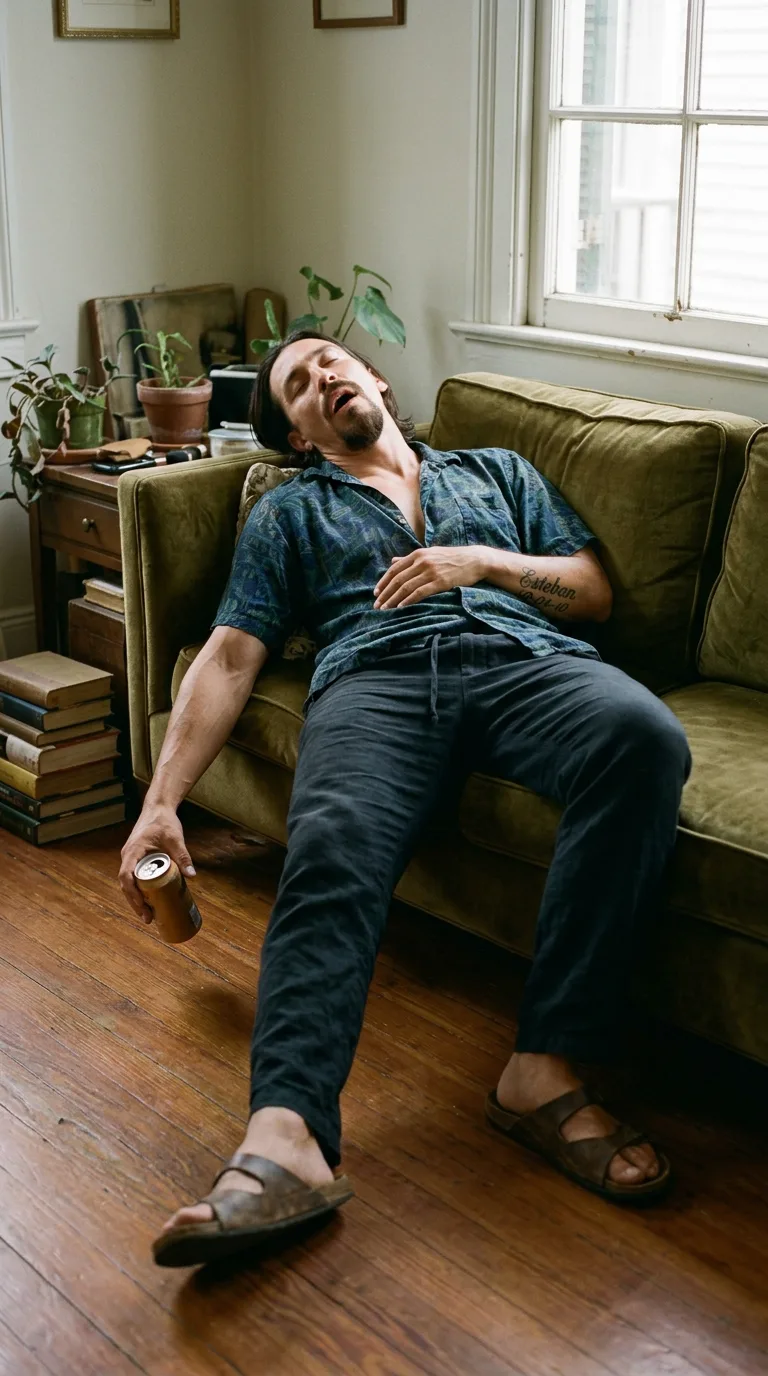
Rarest thing about him: Mail carrier — common, 1 in 400
Season 1seed 1047900895 · engine v11
Character card
lineage QCQIOJ
His body-swap story
@danny.reyes, wearing Danny Reyes, rolled the wheel on and woke up as Julian Esteban Carrasco, spent under a minute in him, then spun the wheel and woke up as Rubén Salazar Ochoa
You are Danny Reyes, twenty, and your knees are good. That is the problem. Everything in him works. You are standing on a half-built porch in a Dallas noon with a nail gun cooling in your fist, the sun hot on the back of a neck that has never once burned, and you have been him for forty-six days and twenty-two hours. The freckles on your forearms have stopped surprising you. The crew is eating out of coolers in the truck bed. Nobody asked you anything. Somebody laughed at something, and you didn't feel it.
It isn't that he's bad. He is fine. He is a body that gets up, and you are tired of being handed a thing that gets up. You thumb the page open on his phone with sawdust in the creases of the screen. A wheel. You pay, you spin, and the nail gun is still ticking as it cools when you let go of it.
Weight. A couch gives under you, old velvet, and it is warm where the sun lies across your legs. Noise: a crowd, a roar sliding down into a groan, a man's voice saying the goal again, slower. Your mouth is open and dry. A can is sweating in your left hand, nearly empty, warm as a held thing. The room smells of paper and soil and the ghost of something fried. You are on the second replay. You sit forward without deciding to, and your thumb finds the volume on the remote and turns it down one notch, exactly, with a precision your blood does not have. You watch the ball and not the score.
Then the room starts giving him up, through whatever you touch.
The shirt first, a loose short-sleeved print, soft from washing, open at the collar. The cotton drags on your shoulder and you get the morning: his fingers on the buttons, only the middle two, because she had said once that the top ones made him look like he was going to a funeral. He stood at the bedroom window and heard a truck downshift on the wet street. He felt rested, which he did not often feel. It was his day off, and a day off means a bag that isn't on his shoulder, the strap-ache gone from his left side for the first time all week.
The pants, linen, thin, drawstring knotted in a bow he tied without looking. Under them his calves are hard, a walker's calves, built by a thousand porch steps. Eleven miles on a bad day. You feel the long tendon behind each knee, the habit of the body wanting to be upright and moving, annoyed at being horizontal.
The sandals, the leather molded to his feet, his heel in a groove somebody wore for him. He bought them secondhand off a table and was embarrassed by how happy they made him.
Then the can. Cold gone, aluminum thin under your thumb. He drinks a few times a year. Today it was one, for the game, and it has made his head slow and kind. A flash: his father's kitchen, the radio, the same team losing in a language you half understand. It is his, it hurts a little, and it is not yours.
Then your own forearm, resting on your stomach. The ink is there when you turn it. ESTEBAN, and under it a date. The skin around it remembers the needle, a sting like hot thread, and a grief so old it has gone smooth. You don't know whose name it is to him. Brother, maybe. The feeling comes without a face. You press your thumb over the letters and it holds, and you leave it.
Somewhere in the house a floor creaks, a woman moving in another room, his girlfriend, and the sound is a loosening in the chest. Sunday. Safe. Behind that, thinner, a different woman, from before, a laugh in a car with the windows down. Not a wound anymore. Only a place he still passes.
The window is open and steam is lifting off the wet street outside, the sun already burning it away. Thick sweet air comes in, river and rot and jasmine. Shoulder-length hair is tucked behind his ears, and you feel the wet tickle of sleep sweat at the hairline. The goatee is rough against your lip when you wet it.
Eight dollars in the pocket. A lease. A good boss, a bad dog on Dauphine Street. All of it arrives like mail you did not sign for.
You lift your hand and look at it. Broad knuckles, a tan line from a watch he isn't wearing. A thumb that knows the remote. You turn it over, palm up, then back, and the letters on the other arm shine in the sun.
You look up at the room. The replay ends. The crowd is loud and meaningless.
"Okay," you say, in a voice lower than your own, a stranger's voice, one you are already wearing. "Hello, you."
Behind your ribs the quiet has started again. It is small and patient, the old question. How long does this one hold? When does the wanting come back, and will you still be him when it does?