Jerome Wallace
Fictional. Generated by AI — not a real person, and no likeness of one is intended.
19, construction laborer in Dallas · rolled by @jerome.wallace · card — no film
History
who has worn him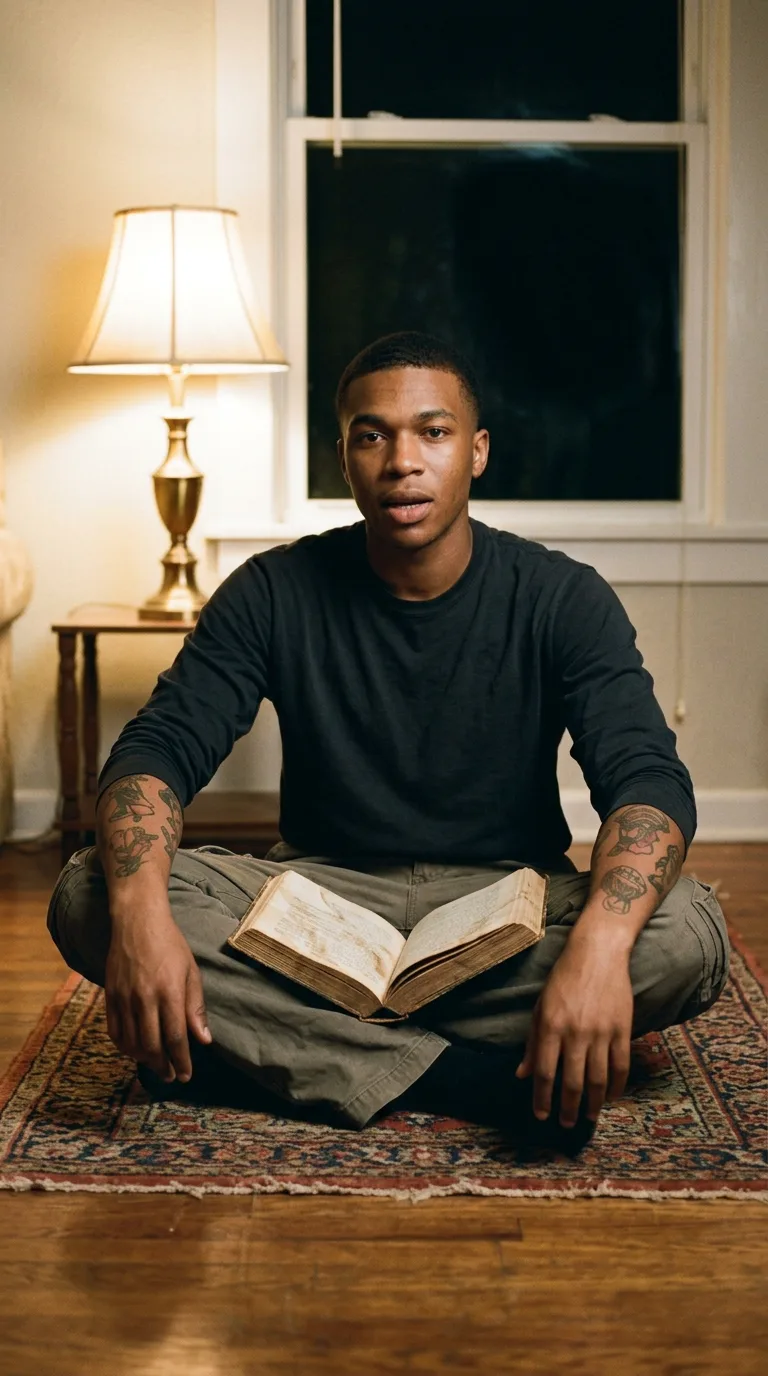
Rarest thing about him: At a séance he did not take seriously — rare, 1 in 249
Season 1seed 263321916 · engine v11
Character card
lineage OZ80W3
His body-swap story
@jerome.wallace, wearing an unnamed body, rolled the wheel on and woke up as Jerome Wallace
The old man's beard itches. It has itched for eleven months, ever since you took him off a stranger's card in a rented Boston kitchen, and you have never once gotten used to it. You stand now at his window in the middle of the night, everyone in the house asleep the way retired men's houses sleep, total and unbothered, and you look at his hands on the sill — spotted, freckled, the knuckles thick — and you think: not these again. Not tonight. Sixty is a good age to rest in, people say, and for eleven months you rested in it, and rest is exactly the thing that has started to feel like a slow drowning. He had a whole life you inherited in pieces — a dead wife, a garden, a bad hip — and none of it was ever going to be enough, because none of it is ever the point. The point is the wheel. The point is that somewhere a nineteen-year-old is having an ordinary Saturday and you are sixty and it is unbearable to be finished wanting things. You go to the site in your bathrobe like a man checking stocks at 3 a.m. You spin.
The rug is under him first — that's the thing that arrives before anything else, a scratch of old wool against crossed ankles — and then the book, heavier than it looks, grain of the paper rough under a thumb that isn't stopping to think about it. Third line, and the tongue trips, some throat-sound that wants no part of an American mouth. Second try. It comes out right. Not right like memorized — right like remembered, like a word he's said in some other life and forgotten he knew, vowels dropping into place on their own. He doesn't look down at the page to find his spot. He doesn't need to.
It is the middle of the night in Dallas too, and that is the first wrongness you notice, because a body this young, this tired in the shoulders and the low back, should not be sitting cross-legged on a rug at this hour unless it works a schedule that eats normal hours alive — and it does: the memory comes up through the rug itself, some October afternoon, foreman hollering down into the trench about grade stakes, the mini excavator idling and coughing diesel while Jerome stood in mud to his shins and thought about nothing but lunch. Days start before dawn on a job like that. So does the drinking after, sometimes, though not with him — a few times a year, and this wasn't one of the times. Just three friends and a water-stained book somebody's cousin swore was real, candles for a bit until somebody knocked one over laughing, and Jerome cross-legged on this rug because the couch was full, going along with it the way you go along with things that cost you nothing to believe in a little, for an hour, at a friend's place, half a joke.
The shirt is the next door in. Black long-sleeve, worn soft, and the second his own arm brushes it going in you get the whole morning — not this morning, an ordinary one, any one, all of them folded into the single gesture of pulling a sleeve over an elbow that's a little sore today from yesterday's shovel work, tattoos catching the fabric going down, the traditional bold-line ones on his forearm that his mother hated and his ex-girlfriend used to trace with one finger while they watched television and said nothing, because there was nothing wrong that needed saying, not until there was. Amara. That's the flash that comes with the ink on the inside of his arm — not her face, just her name arriving the way a bruise arrives, tender before you know why. Three months gone and he still reaches for his phone some nights before he remembers not to.
The body under all of it is nineteen and soft in the way twenty-hour weeks of standing on your feet doesn't fully burn off, skinny fat, his mother would call it, and strong anyway, forearms and grip stronger than the rest of him admits to, hands that know a shovel's balance without thinking, know the particular ache of a trench at the end of a day, know how to stand still in mud for six hours and not complain because complaining doesn't get you sent home early, it gets you sent home for good. Clean jaw — he shaved this morning before none of this, out of habit, not for anyone. Six-foot-two of him folded down small onto a rug, and something in the fold of it, some old church rhythm from a grandmother's house he half-remembers, spiritual in a way he never says out loud, made him treat the book like it might actually be something, even joking, even mostly not believing it — some part of him leaving room, just in case.
And that's the room the second try walked through.
You feel your own face — his face — go still, and then you feel your own eyes, and you lift them off the open page without needing to look down again, and somewhere very far under all this warm skin the old cold wanting settles in like it's found a better house.
"Huh," you say, out loud, to no one, in a voice nineteen years newer than the one you woke up in.
You look at your hands. Not his. Yours now, and you turn them over on your knees, tattoos catching lamp light, and you have no idea how long you get to keep them.