Jerome Castellanos
Fictional. Generated by AI — not a real person, and no likeness of one is intended.
42, call center agent in Houston · rolled by @jerome.castellanos · card — no film
History
who has worn him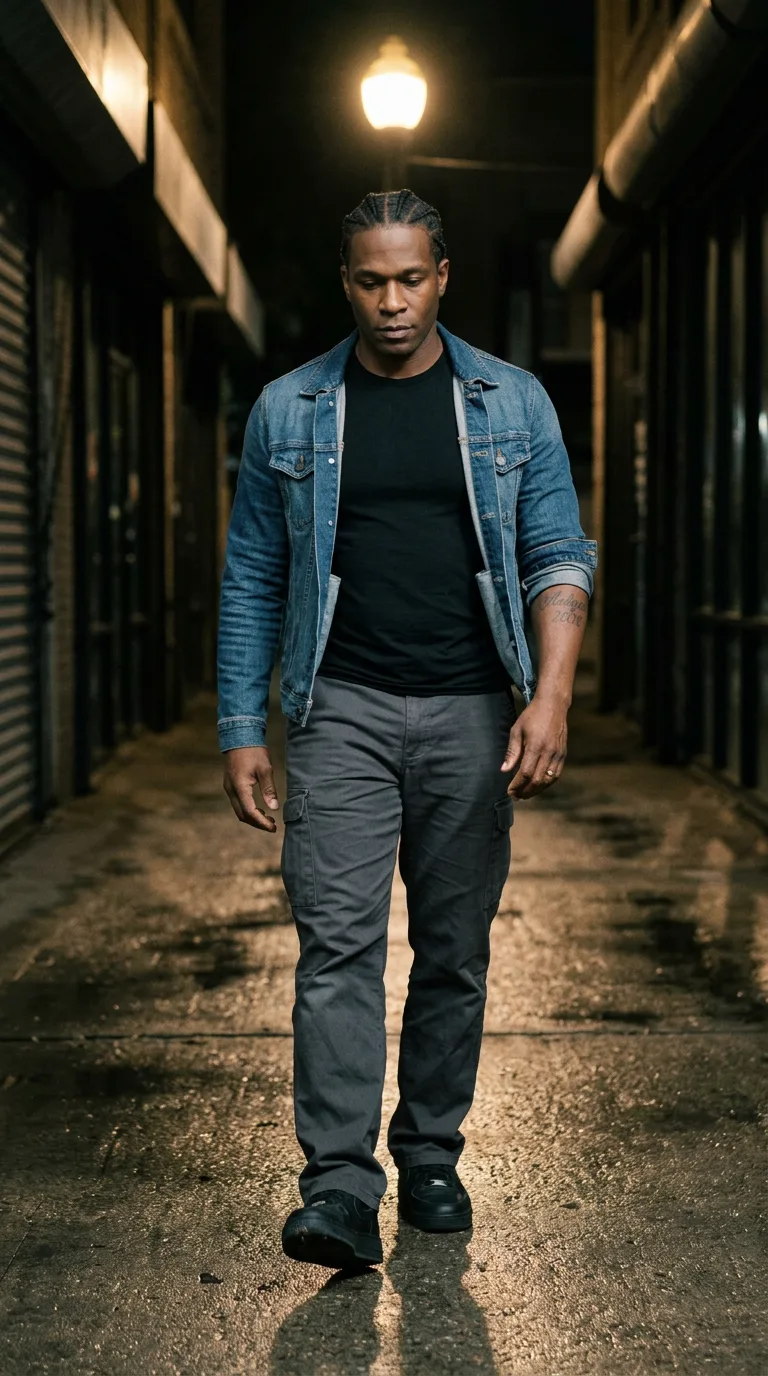
Rarest thing about him: Cornrows — uncommon, 1 in 285
Season 1seed 2123130127 · engine v11
Character card
lineage 2ZISA9
His body-swap story
@jerome.castellanos rolled the wheel on and woke up as Jerome Castellanos — their first
The afternoon has that particular Saturday nothing-ness where the light through the blinds stops meaning anything, and you've scrolled through everything there is to scroll, and you land again, like you always do, on the site. You've bookmarked it twice and told yourself you deleted it once. Vessel.cards. A wheel on a page, rendered a little too plainly for what it claims. You have wanted this since before you could explain why — the idea of a different weight to carry, a different pair of eyes to look out of, someone else's Tuesday instead of yours. It has always lived in the part of you that reads the thread at two a.m. instead of sleeping. Today you pay. Today the wheel spins. You tell yourself it won't work, right up until it does.
There is no travel. There is no door. There is a streetlight sodium-orange overhead and wet pavement under a shoe that is already catching, already skidding on a scuff of concrete — and then it is your skid, your catch, a hand that is not yours slapping flat on the cold hood of a parked Malibu to keep a body from going down. The night air is thick and warm, Houston-humid even this late, and it smells like somebody else's rain. The stumble stops being a stumble. Forty steps come out even, unhurried, the shoe no longer dragging, and at the corner you turn left, away from wherever he was going.
The jacket is open and the denim is heavy in the humidity, and that's the first thing to come through: the collar against the neck, worn soft at the seam, and with it — his hands, buttoning it that morning, in a bathroom with the fan broken and buzzing, late for a shift nobody wants, his wife still asleep with one arm thrown over the space where he'd been. *You look tired,* she said without opening her eyes, not a question. He said he always looked tired. That's marriage, nine years of it, something that doesn't need to be looked at to be known.
The shirt underneath, black, worn thin at the shoulder blades — that gives up the call center, the headset weight that isn't there right now but that his neck remembers anyway, a permanent little ache on the left side from leaning into the phone instead of trusting the mic. A supervisor named Pham who times bathroom breaks. A guy two cubicles down who prays before every shift, out loud, soft. Jerome doesn't pray like that anymore, not since his mother passed, though he still mouths the words at his own mother's church on the Sundays his wife drags him, which is most of them.
The denim jacket's cuff brushes the tattoo and it opens like a struck match: *Kadeja 2008*, a woman he loved before he knew what loving somebody meant, cost him, left him stranger than he started. Not the wife. The one before. Some nights he still does the math on what year she'd be turning what age, still wonders what she's doing, though he'd never say her name out loud in his own kitchen. The ring on the left hand is cold and a little loose — he's lost weight this year, more than he meant to, more than the beer should allow given how much of it he drinks, and he drinks a lot, has for years, quietly, in the garage, in the car, in his own head during calls he's already forgotten by the time he hangs up.
The shoes — it's his feet first, how the left sole is worn soft at the outside edge, a walk that's carried him home drunk more nights than he'd admit to the woman waiting for him, who is asleep right now, who doesn't know yet that two-fifteen came and went without him. Somewhere behind the eyes there's the bar, the stool, the bartender who knows his order without asking, the long wet walk home he takes on purpose because it postpones something — not a fight, nothing so clean as a fight, just the quiet in that bedroom that's gotten heavier this year, the question neither of them is asking out loud about why there's no child in that house and whether there ever will be.
His hands know the headset cradle without looking, know the keyboard shortcuts, know how to sound like he means *thank you for calling* the four hundredth time. They do not know how to stop finding his mouth — a nail between his teeth even now, a habit from a childhood that comes back in a flash too quick to hold: a kitchen, a different woman shouting at a television, a boy already learning to chew instead of speak.
You stand in the smell of wet asphalt and the particular cologne he didn't reapply before leaving the bar, in a body forty-two years strong and starting, almost imperceptibly, to go soft at the middle, legs that know exactly how far the walk is and don't want to do it, and a mind — his, mostly gone now, but still warm in the clothes like a hand recently withdrawn from a glove.
You stop walking. You lift both his hands up in front of his face, turn the left one over, watch the ring catch the streetlight.
"Okay," you say, to nobody, in his voice, and it comes out rougher than you expected, used-up, a stranger's gravel. "Okay."
You don't know how long you get to keep saying things in it.