Janitor in Pittsburgh
Fictional. Generated by AI — not a real person, and no likeness of one is intended.
29, janitor in Pittsburgh · rolled by @colton.weyburn · card — no film
History
who has worn him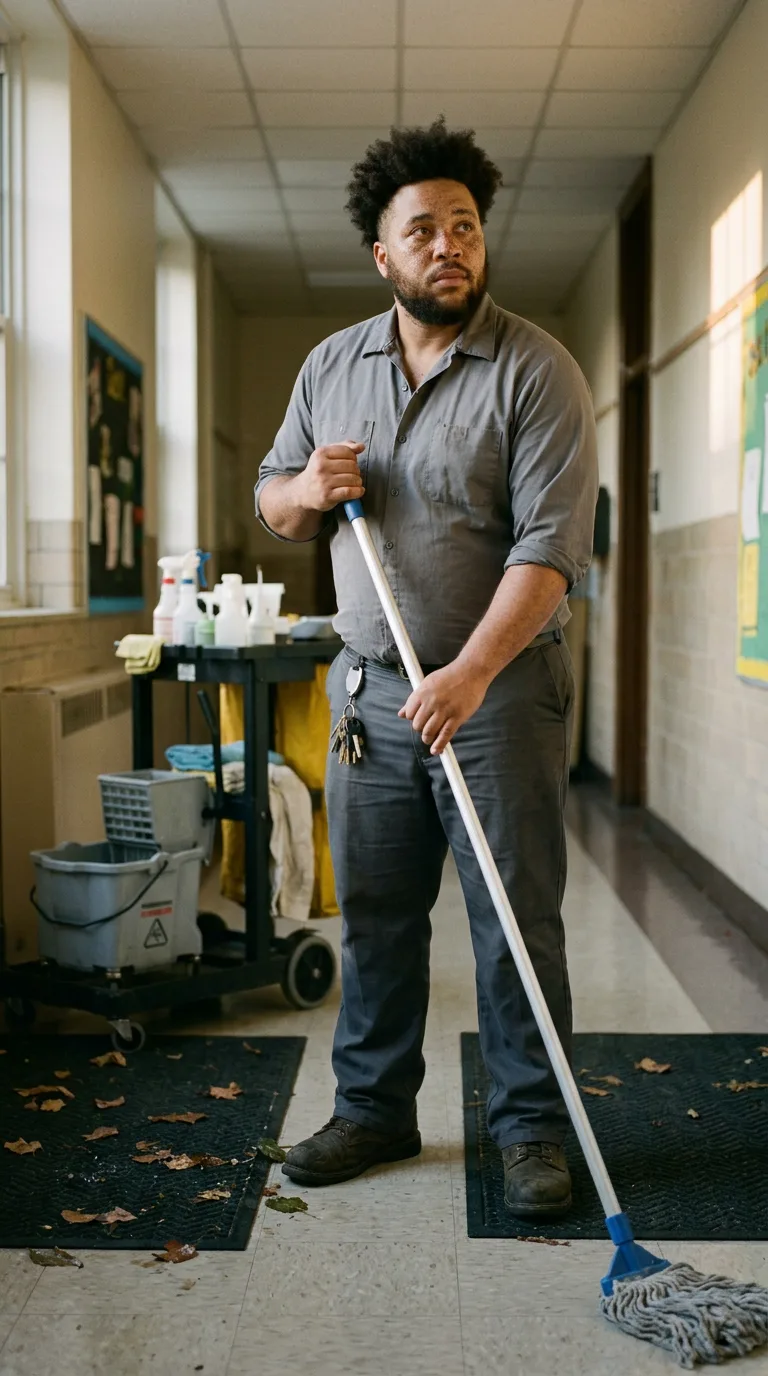
Rarest thing about him: 6'6" or over — epic, 1 in 227
Season 0seed 244397504 · engine v10
Character card
lineage GSHCK1
His body-swap story
@colton.weyburn, wearing Colton Weyburn, rolled the wheel on and woke up as an unnamed body, spent 3 minutes in him, then spun the wheel and woke up as Marlon Abasi Whitfield
The El Paso apartment smells like the delivery bag still slumped on the counter, going cold. You are standing in Colton Weyburn's kitchen, eighteen years old, red hair damp at the temples, and you are bored in a way that has its own texture now, a familiar itch under skin that isn't going to be yours much longer anyway. Forty minutes in this one. Forty minutes of a body that runs fast and doesn't ache and nobody looks at twice. That's the trouble with him — nobody looks at Colton twice, and you have started needing to be looked at, even by nobody, even by a mirror. You open the laptop still warm from the last time. The wheel is already loaded, spinning lazy and colorless, waiting for you to want something again. You always want something again. You put your thumb — his thumb, freckled, young — on the button, and somewhere a debt gets paid, and you go.
The mop handle is already in your grip when you land, both hands high on the fiberglass, weight braced through a hip that is not the hip you had a second ago. It is evening here, late enough that the fluorescents over the corridor have gone from white to a tired yellow-white, and there is nobody else in the building, which you know the way you know your own name — except you don't know his name yet, not really, only the shape of the silence he stands in, the smell of pine cleaner and wet leaves someone tracked in on their boots hours ago. The mop drags wrong across the tile — a stutter, a catch — and then you correct it, slow, deliberate, the way you'd retrace a signature. The next ten strokes come out checked. Every one. On a floor this body has mopped ten thousand times without looking down once.
The shirt is what opens first — gray, damp at the collar, sleeves rolled to the forearm — and through it comes a whole morning: standing in front of a dresser in a rowhouse with the stairs out back gone slick with the season's first real leaf-fall, buttoning this exact shirt one-handed while the other hand held a phone to his ear, his girlfriend's voice on the line asking if he'd eaten, him lying that he had. The collar had been stiff with cold from the line outside; he'd worn it anyway because the dryer's been broken since March and he keeps meaning to call somebody. There's a particular ease in the shoulders when the shirt settles — a body used to being the biggest thing in a room and having made peace with it a long time ago, in gym locker rooms, in doorways he's had to duck through since he was fourteen.
The keys at his belt come next, cold, a fat ring of them, and they bring the whole building — three floors, forty classrooms, a gym that still smells like his own middle school gym forty miles from here and twenty years off, though this isn't that school, this is the one he chose because it was close and because the assistant principal, Miss Ardolino, doesn't make him feel like a ghost the way the last one did. The keys know the doors before he does. Room 114 sticks. The teachers' lounge fridge hums wrong and needs the compressor looked at. He has thought about telling someone that for two months.
The mop itself gives him back the rhythm — the actual pleasure of it, unglamorous and real, the specific competence of a big man moving a small tool with more grace than anyone watching would expect. His hands know the pressure a stray leaf takes, the drag of a scuffed heel-mark versus mud. He is good at this. Nobody has ever told him that in those words but he knows it the way you know weather.
The freckles come with no touch at all, just the fact of his own face somewhere behind the eyes you're wearing now, the thing people say when they meet him — you've got freckles, that's unusual — and how he used to hate it as a kid and doesn't mind it now, has let it become his, the way you let anything become yours if it stays long enough.
There's a woman in there too, threaded through the cart's yellow rag, through the specific quiet of an empty hallway at this hour — Danielle, the one he's seeing now, warm, easy, brings him food he didn't ask for — and behind her, further back, someone else, a name that surfaces and won't quite finish surfacing, a woman from before who left for a city he never followed her to, and the ache of that is old enough now to be almost comfortable, a tooth he still checks with his tongue out of habit. Church on Sundays when he can make it. A rosary somewhere in a drawer he hasn't opened in months, not out of anything but forgetting. He quit drinking two years ago without much ceremony; it just stopped mattering to him the way it used to.
You feel the weight of him settle all the way down — six foot six of it, heavy through the chest and gut, feet that ache by hour six of a shift and are aching now, boots worn soft at the toe from a decade of standing.
You look down at your hand on the mop handle — broad, freckled at the knuckle, a callus along the base of the thumb that has nothing to do with you and everything to do with him — and you turn it over once, like checking it's real.
Then you lift your eyes to the dark window at the end of the hall, where the glass gives you back exactly this face, and you say, quiet, to no one:
"There a bigger me than this?"