Ismael Rivas
Fictional. Generated by AI — not a real person, and no likeness of one is intended.
34, trucker in San Francisco · rolled by @everett.dabney · card — no film
History
who has worn him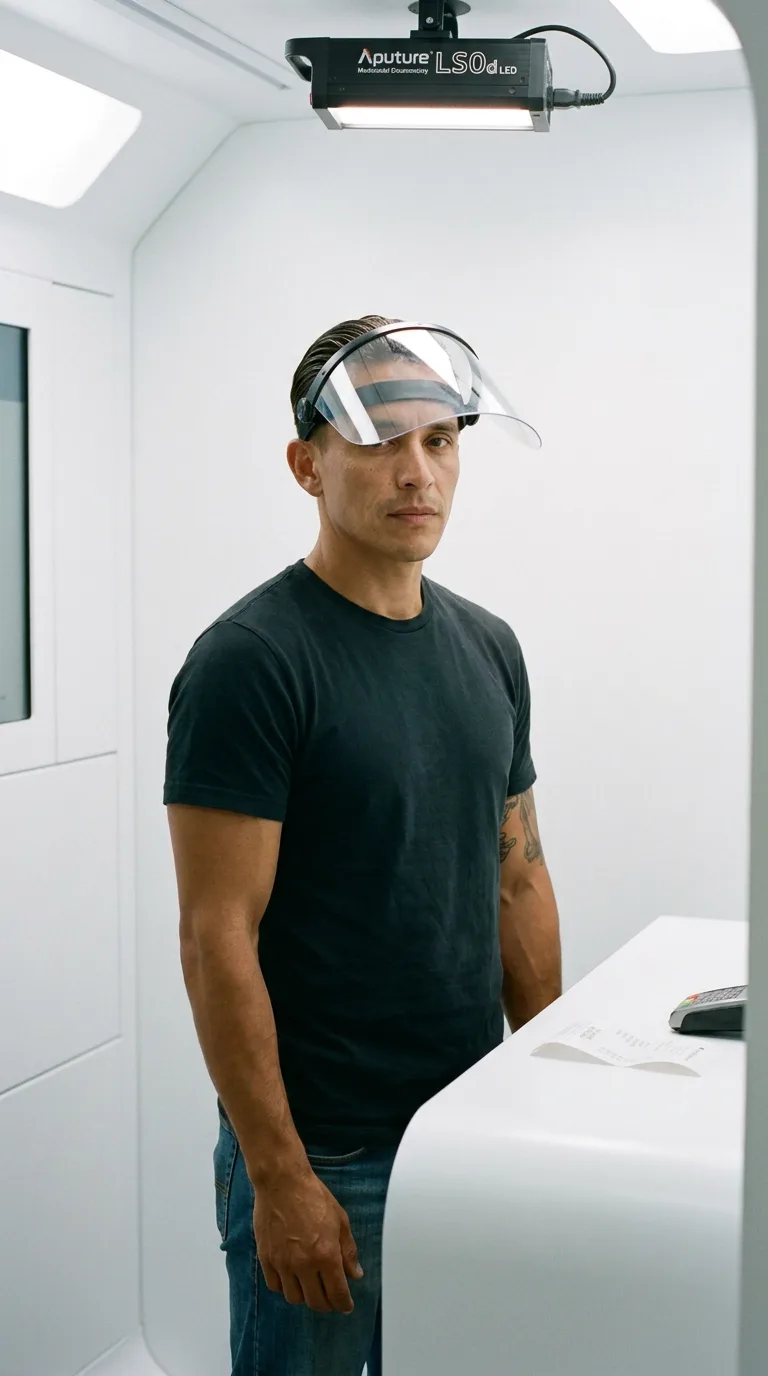
Rarest thing about him: Can't stand still — rare, 1 in 51
Legacyseed 1415424731 · engine v8
Character card
His body-swap story
---
You beat him by eleven seconds once, on a straight run down the 5, and he has never let you have it.
That's the whole history, if you want it small. Eleven seconds and nine years. Both of you owner-operators, both of you hauling produce north out of the Valley, both of you at the same scale house at the same hour with the same cup of gas station coffee going cold in the holder. He drives a cleaner truck. He always drove a cleaner truck. You would find him at Buttonwillow at four in the morning with a chamois in his hand, wiping down chrome no one was going to look at, and he'd lift two fingers off the rag like a blessing and you'd want to put your fist through your own windshield.
You hated him for the wrong reasons. You have had a long time to catalogue them. He got the Safeway contract you bid on. He got it because he showed up in a pressed shirt with his hair combed straight back like a man going to a wedding, and you showed up in the shirt you'd slept in. You told yourself for two years it was luck. It wasn't luck. He is better at being looked at than you are, and that is a skill, and you never learned it.
So you rented him.
The rental is legal now, which is the part that still feels obscene. There's a company. There's an app with a soft green logo and a slider for duration and a page of terms you scrolled past with your thumb. Bodies for hire, hours or days, waivers signed on both ends. Ismael listed himself — of course he listed himself. Twenty-five to seventy-five in the bank and a girlfriend and a rig with three years left on the note; the money is real money to a man like that. You did not choose him off a grid. You went looking for his name the way you used to go looking for his truck in a lot, and there it was, five foot five, athletic, thirty-four, dark hair, brown eyes, and a photograph in which he was not smiling but was clearly aware of the camera. Rated highly. Punctual. Of course.
One hour, you selected. You had a plan for the hour that embarrasses you now. You were going to walk into his body and stand in front of a mirror and look at the face that has looked at you like that for nine years, and say something to it. That was it. That was the whole ambition. A man pays four figures to be able to insult himself accurately.
The clinic is white the way a new refrigerator is white. Everything curved, no corners, no dust, cold light coming down out of a bar fixture that hums a note just under hearing. They put you in a chair in one pod and him standing in another and they said the transit is instant and you will feel a drop, like a stair you didn't know was there.
There was no drop. There was a lift.
The visor comes up off your face — off *his* face, off the face, off this face — and the plastic swings clear of your eyebrows on a smooth little arm, and the first thing is the light. It is directly overhead and unkind and you feel it on a scalp that is not your scalp, hair combed back flat and slick and cooler than hair should be. The second thing is your arm. You did not lift your arm. It lifted. The right hand had come up to chest height and turned itself over, fingers spreading, and it was doing this because it always does this — because his hands cannot stand still, because there is a motor in this body that runs whether anyone is at the wheel or not — and you had a full second of pure animal horror thinking *he is still in here with me.*
He isn't. It's just his body. His body fidgets. You are going to have to learn that.
Third thing: the tattoo. You can see it on the upper arm, the edge of it under the sleeve of the black T-shirt, a cross and two hands folded in prayer, the linework gone soft and blue-green with age. You'd seen it a thousand times across a diner table and never once looked at it. You look at it now from the inside and understand that he got it young and for someone. There is nothing in this body that tells you who. Possession gives you the meat and not one gram of the man. You have his hands and his lungs and his bad left knee and the ache low in the back that he must carry through every ten-hour haul without mentioning it to anybody, and you have no idea what he calls God, or whether he does.
The attendant's hand comes into the frame at the counter's edge, cuff white, and offers you the receipt.
You take it. Fine motor control lands late; the paper crackles. You look down at it because you are supposed to look down at it, the way you look at a weight ticket, without reading.
Then you read it.
It has your name on it.
Your name. Your legal name, the one on your CDL, first and last, printed in that thin thermal grey. RENTER. And under it a line that says the term, and the term is not one hour.
You read it twice. The second time you read it slowly, the way you'd read a load number to a dispatcher, out loud in the mouth, and the mouth is his, and it forms your name in his voice — a lighter voice than yours, more air in it — and the sound goes into these ears and stops.
Somewhere three meters away in another white pod, a visor is lifting off your own face. He is sitting up in your body. He is being handed a receipt with his name on it. He is reading it twice.
*For good.* No return leg. No term on it. The two lines you scrolled past with your thumb.
And here is what arrives, standing in a truck stop of a room in a body that is five foot five when you are not, with the paper going soft in a fidgeting hand: he was never going to be beaten. That's the joke. That's the eleven seconds. You could not out-drive him and you could not out-bid him and you could not out-shirt him, so you paid money to climb inside him for an hour and say something cutting to a mirror, and you signed the thing without reading it, because you have never in your life read the thing, and that is the entire difference between you and him and always was.
He read it twice.
You lower the receipt. Both hands come up in front of you and you let them, and you turn the right one over — the palm, the calluses in the wrong places for your grip, a small nick healing near the thumb knuckle that you'll have to invent a story for — and the fingers go on moving, tapping, restless, a man's nerves running under a stranger's attention.
There's a girlfriend in a house in San Francisco with a bay window and a garage cut in under it, and a driveway so steep he must have learned to take it at an angle. She'll be up. There's a rig with three years left. There's a pill in a bottle in a bathroom cabinet you don't know the name of yet and will need to, because whatever this body has been carrying, it is yours to carry now, and it does not care that you're the one who won at Buttonwillow.
You lift your eyes.
You'll go home. You'll take the stairs down into that cold white garage light and you'll say her name wrong the first time and correct it, and you'll be careful, and you'll be good at it, because you have exactly one thing to do for the rest of your life and it is to be him better than he was.
Eleven seconds. Nine years. You finally caught him.