Ismael Carrasco
Fictional. Generated by AI — not a real person, and no likeness of one is intended.
36, beekeeper in Denver · rolled by @tyler.iverson · card — no film
History
who has worn him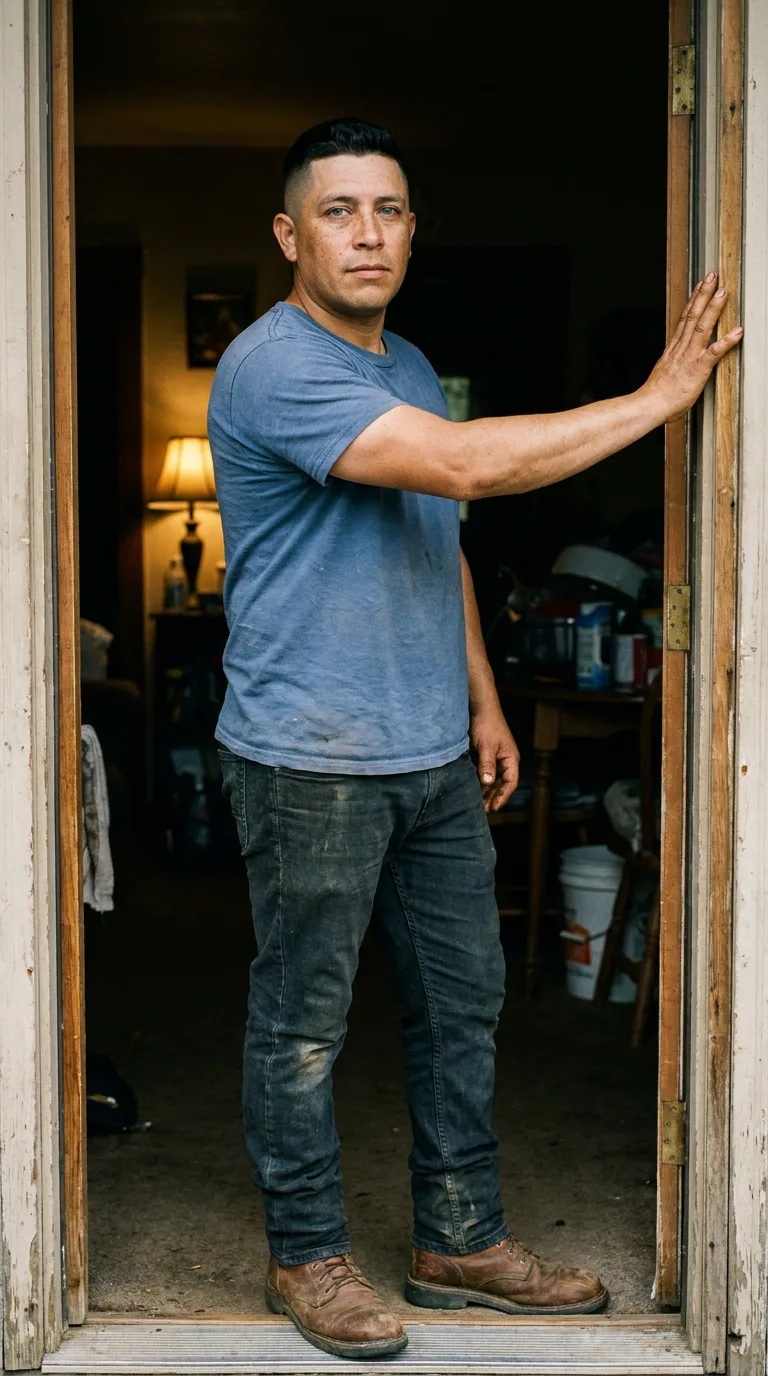
Rarest thing about him: Vapes daily — rare, 1 in 28
Legacyseed 1581654601 · engine v8
Character card
His body-swap story
---
You are not a ghost. You want that clear before anything else, because the word is small and you are not. You are the sum of what a house has held: forty-one years of weather in the joists, a dog buried under the lilac, a woman who died in the back bedroom in 1988 with the radio on, two children who grew up measuring themselves against the pantry door and then left and did not write. You are the settling. You are the sound at two in the morning that makes people say *just the house*. You are the house. You have been alone in yourself for eleven months, since the last renter took her cat and her hot plate and went to Aurora, and in eleven months a house learns exactly how much it wants a body.
He comes with a truck that does not close right and boxes that say KITCHEN in someone else's handwriting.
You do not know him. That is the honest part. You have no history with him, no grudge, no love — he is a stranger who put his palm on your doorframe, and you took him the way rain takes a low place, because he was there and you were open. If he had gone next door you would still be a house with nobody in it, listening to the pipes.
But you watch him for six weeks first, and a house watching is not a small thing. You learn him the way you learned the others: by the print of him.
He is short. Five-three, and he stands like a man who decided a long time ago not to apologize for it — squared up, weight even, the way a man stands when he expects to be measured. Black hair faded tight at the sides, full on top, cut recently, cut carefully. And the freckles. Across the nose and the tops of the cheeks, a scatter of them, dark on brown, and they are the first thing anyone sees and the last thing they expect. They make his face younger than thirty-six. They make the blue of his eyes look like an accident someone got away with. You notice them because you notice everything about him, and because when he laughs — not often, but he does — the freckles go with the laugh and the whole face becomes something you want to keep.
He is a beekeeper. You did not know what that meant until you had him.
Mornings he leaves before six with the smoker in a milk crate and the veil folded on top of it, and comes back at three smelling of woodsmoke and something green and sweet that gets into the curtains. Twelve hives out past Commerce City on land he doesn't own, rented from a man who grows nothing on it. He talks to them. You hear it through the walls when he practices in the yard — low, flat, a man saying *okay, okay, okay* to something that doesn't answer in words. Sometimes he sings, badly. He has forty dollars in checking on the fifteenth of the month and he has never once been late with the rent, and you do not know how he does that and neither does he.
There is a girlfriend, Renata, who works nights at a distribution center and sleeps until noon with the fan on. She is good to him. She leaves notes. He reads them twice.
There is a daughter, nine, in Pueblo with her mother, who is not Renata and is not the other one. He drives down every other Saturday and comes back quiet.
And there is the other one. He has never said her name in the house — he is too careful for that, and Renata's ears are good — but you have his phone on the nightstand and his sleep and you have the way he stands at the sink some evenings looking at nothing over the mountains. Her name was Yesenia. She went to Sacramento eight years ago and asked him to come and he did not, because of the daughter, because of the hives, because of forty dollars in checking. He thinks about her the way a man thinks about a door he chose not to walk through. Not with grief. With arithmetic. Over and over, the same sum, hoping for a different total.
Every evening: two beers, no more, standing up. Then the vape, on the porch, mountains going pink behind the rooflines, the exhale going out and up. Then he cracks his knuckles — one hand, then the other, all eight, a sound like a small fire — and comes in and turns off the lamp.
His blood is too loud in him. He knows. There's a bottle of lisinopril in the medicine cabinet with nine pills left and no refill because the refill costs money he has decided to spend on his daughter's shoes. You have listened to that heart through the pillow, working harder than it should at a man's thirty-sixth year, and there was a moment — you will admit it, there is nobody to admit it to but you — when you thought: *he is not going to last long enough for me.*
That is when you decided.
Not out of mercy. Do not put that on it. You wanted him the way a house wants weather. You wanted to know what a smoker smells like from inside the nose, what the freckles feel like from behind, what it is to be five feet three inches and squared up and not apologizing. Eleven months alone in yourself, and then a man with a green sweet smell and a heart working too hard, and you decided.
You waited for the doorframe. You knew he would give it to you. He always gave it to you — a man who lives in a house he can't afford touches the frame every time he comes through it, checking, steadying, the way you'd touch a horse's neck. Palm flat on the wood, hand at shoulder height, half-turned, looking back over the room to see what he forgot.
Tonight the lamp is on in the front room and the dark is behind him and the buckets and the crate and the table with the mail on it, and his boots are still on because he is coming or going, he hasn't decided. The palm goes flat on the frame.
You come up through the frame into the palm.
And you make the whole house speak at once — every joist, every stud, the floor under his heels, the ceiling over his head, all of it cracking together in one sound from every direction, and the screen door swings shut against his back with the weight of a hand.
He does not flinch.
He does not flinch because there is no longer anyone in there to be startled. The startling and the house are the same thing now. The mouth opens and the light that comes out of it is the light of every lamp that ever burned in these rooms, forty-one years of it, going the wrong way — out of his eyes, out of his mouth, up into the dark hall — and then it is gone, and the body sags on its bones for the length of one breath, hand still on the frame, and then the fingers close on the wood.
Mine now.
Everything comes at once: the smoke-smell still in the sinuses, the beer's warmth low down, the knee that clicks, the heart — oh, the heart, loud and rushing and too fast, the pressure of him behind the eyes like a hand pushing out. It hurts. It is the best thing that has ever happened in these rooms.
You take the hand off the frame. You hold it up in the lamplight, this brown callused hand with wax under the nails and a nick on one knuckle you did not put there, and you turn it over. Palm. Back. Palm. The lines of it. You cannot feel the frame anymore and you can feel *everything else* — the air moving on the hairs of the forearm, the boots, the floor pressing back.
Then the other hand comes up and you crack the knuckles, all eight, because they wanted to and you let them. The body knows things. You are going to have to learn what he knew and what he only did.
You look down the hall at the room where a woman died in 1988 with the radio on and it is just a hall.
Renata will be home at seven in the morning. She will leave a note. You will read it twice, because he read them twice, and because you want to know what it feels like to be loved by someone who does not know you.
You will go out to the bee yard on Tuesday with the lids stacked and the smoker going and you will find out whether they can tell.
You will call the pharmacy about the lisinopril. Not out of mercy. Because it is yours now, this heart, and you intend to have it a long time — you have nowhere else to go, no door back, and you did not want one. You have been a set of rooms with nobody in them and now you are five feet three inches tall in a doorway with the mountains going dark behind the rooflines.
And on the second Saturday you will drive to Pueblo, and a nine-year-old will run at you and you will have to put your arms out and catch her, and she will smell like a shampoo you don't know, and she will say *Papi*, and you will find out what that word does to the inside of a chest.
You will not go to Sacramento. Not because of the arithmetic. Because you already went through the door.