Isaiah Marcus Deveaux
Fictional. Generated by AI — not a real person, and no likeness of one is intended.
46, delivery driver in New York · rolled by @tyler.james.brannigan · card — no film
History
who has worn him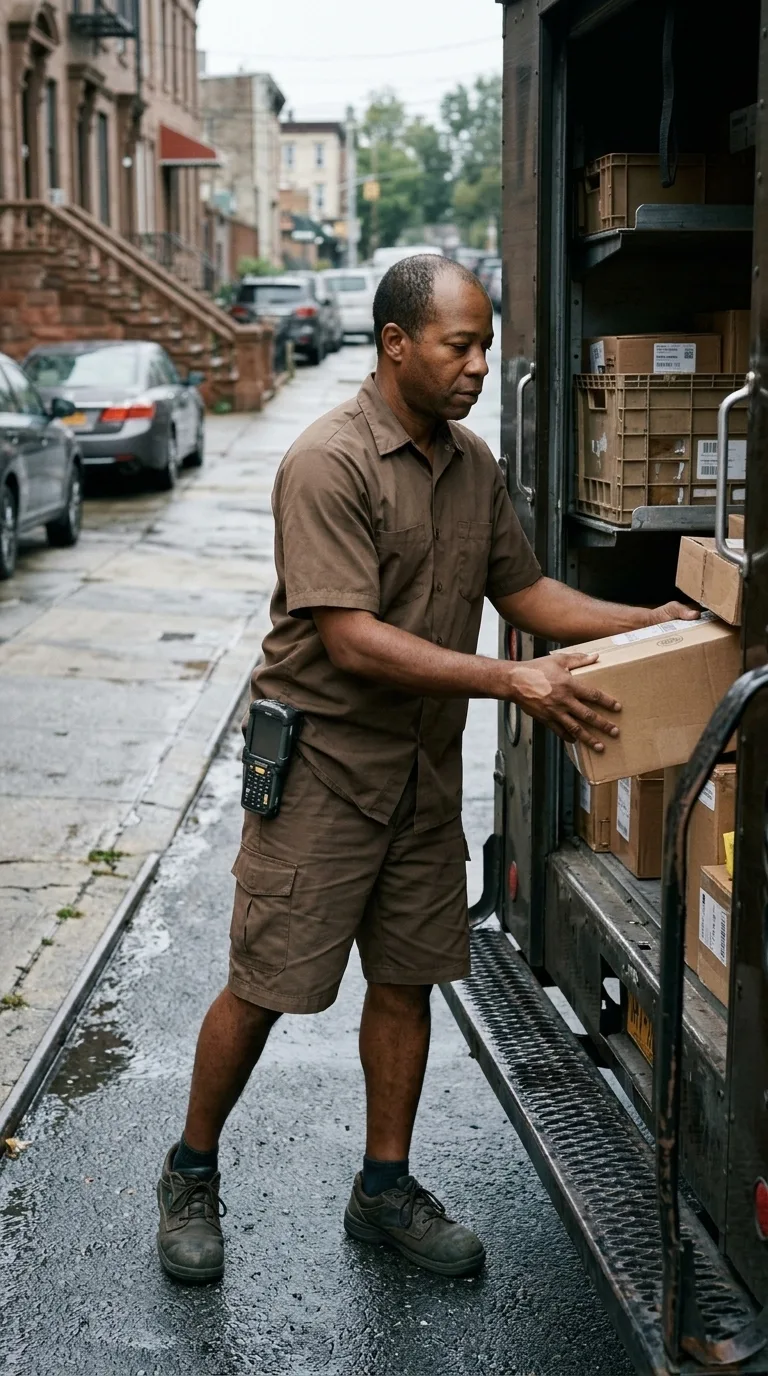
Rarest thing about him: Muslim — common, 1 in 42
Face-off rating 1500 · not ranked yet
Season 1seed 358184908 · engine v11
Character card
lineage EN1F2L
His body-swap story
@tyler.james.brannigan, wearing Evan Michael Rourke, rolled the wheel on and woke up as Isaiah Marcus Deveaux, spent under a minute in him, then spun the wheel and woke up as Armando Ruiz Cervantes
You are standing in a kitchen in Seattle before the light, in the body of a man named Evan Rourke, and you have been him for three minutes. The coffee maker ticks. His knees are good. His back is good. He is twenty-seven and nothing in him hurts, and that is the trouble. Somewhere between the second sip and the third you understood that you had spent a whole life of waiting to be handed something that worked, and it works, and you feel it like a held breath. On the counter his phone lights with a message from a woman whose name you do not know, and you do not open it. The wheel is already open in your other hand. You pay. You do not decide anything. You only stop pretending you aren't going to.
Then there is wet air, and weight.
You are at the open back of a van, and both hands are on a box. The box is the wrong way round: your right hand has gone for the corner where the label is not, and the whole motion goes sour for half a second. You set it back. You do it again, slowly, correctly. Rain is ticking on the steel above you. Sodium light is still hanging in the gutters, though the morning has the gray of late day. The street smells of wet brick and diesel and somebody's frying onions.
You reach for the next box, and the next. You check each one. Your hands do it for you, a man's patience laid down over ten thousand repetitions, and you are the only thing in the way of it.
The shirt comes first. Brown cotton, stiff at the collar, damp across the shoulders. Against your back it gives you a morning: a dark bedroom, a man sitting on the edge of the bed in socks, working the buttons from the bottom up because his fingers like it that way, the way he has done it for nineteen years. He prays before it is light, forehead to the floor of a narrow room, and the shirt still holds a little of the quiet that comes after. He is pressing the sleeves flat with his thumbs. Three phone photographs lean against a mirror, and he touches each frame on the way out.
The scanner on your hip is heavy and warm. Your thumb finds the trigger without being asked, and with it comes a number, a figure he carries like a stone in a shoe: the debt, the lawyer, the second-hand car, the school fees. It comes as arithmetic at four in the morning, and under it the dull tenderness of a man who does the sum anyway and then goes to work.
Your left hand has a ring finger with a pale band where the skin never tanned. You rub it with your thumb and the memory arrives whole. A kitchen, a woman's voice gone flat and tired, the ring slid across a table, not thrown. He did not argue. He only said her name once. Then there is a different woman, newer, a laugh on a stairwell, a coat left on his chair, and the way that ended too, gently, with both of them tired, a few weeks ago.
The rain has got into your boots. The left knee carries the day's stairs. Your shoulders are strong in the way of a body that lifts for a living, and your belly is soft and ordinary. At five foot four you are close to the ground and the shelves sit high, and he has learned the whole trick of leverage from the hips. There is no drink in this body and there never was. There is only the clean, dry feeling of a man who will not take the easy mercy, and the sweetness of a tea he has been saving for the end of the route.
Last comes the cardboard under your palms, the coarse tape, his daughter's handwriting on the corner of a parcel that is not hers, a joke she once drew on a box to make him laugh at a red light.
You lift your hand and turn it over. It is broad across the palm, creased, the pale band around the finger. It is not yours. It is the best-kept thing you have ever been given.
You look up, past the wet brownstones, and say quietly, "Okay. Let's see how long you let me."