Isaac Kainoa Rowell
Fictional. Generated by AI — not a real person, and no likeness of one is intended.
20, student in Honolulu · rolled by @declan.michael.farrow · card — no film
History
who has worn him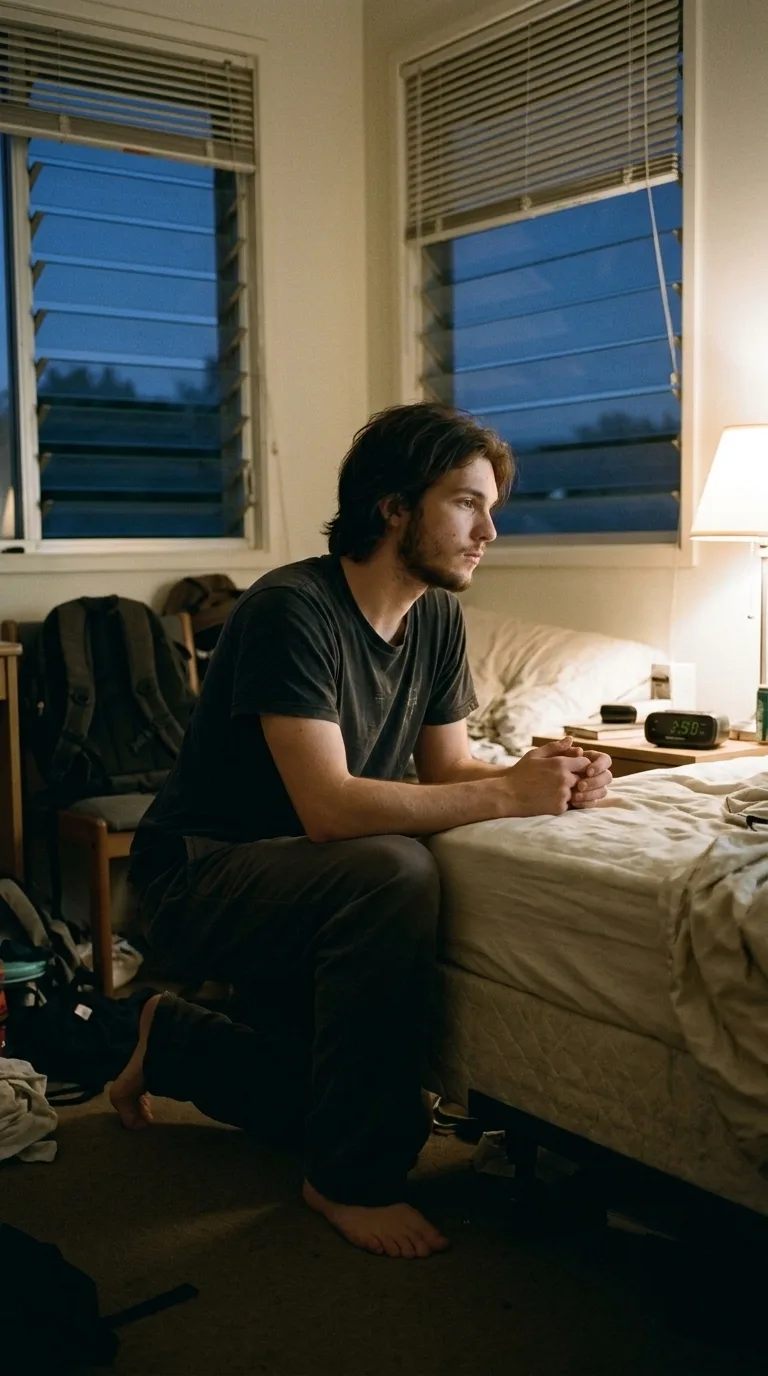
Rarest thing about him: Praying, not very seriously — common, 1 in 44
Face-off rating 1500 · not ranked yet
Season 1seed 1222997704 · engine v11
Character card
lineage 5OR92V
His body-swap story
@declan.michael.farrow, wearing Marcus Eldon Pryor, rolled the wheel on and woke up as Isaac Kainoa Rowell, spent 2 minutes in him, then spun the wheel and woke up as Gregory Hisao Lindqvist
The man you are wearing has a bad knee. You noticed it on the stairs an hour ago, a click and a catch, and you have been noticing it since. He is forty-eight, the room is quiet, it is Sunday night in a house that smells of his good coffee, and you are sitting on the edge of his bed with his reading glasses folded in his fist. He cannot sleep before a Monday. You do not have a Monday. You had him for less than a minute before the thought came: this is what it is to be handed the life of a man who bills by the hour and dreads it. His expensive silence is on everything. You could live inside it for thirty years and never once want anything.
That is the whole reason, and you will not say it more plainly than this. The wanting came back, the way it does, in the middle of nothing.
You open the page. The wheel turns under your thumb, and the shaved head in the dark window tilts, and then there is no window.
The floor is carpet. Your knees are in it, both of them, and there is a mattress edge under your forearms and a laugh stopped halfway in your chest. Someone said amen a half second ago and meant it lightly, and the lightness is still in your mouth like the taste of a gum you did not chew. You were rising. You have come back down. Your forehead is against a bedspread that smells of detergent and warm dust.
Before anything else, the body. Twenty years old. Everything in it is loose and fast and unspent. Your heart is going quick from the half-stand. The knees take the carpet and do not complain. There is a hunger in the stomach, a clean young one, and a rawness at the back of the throat, a dry scratch down in the chest, that a cigarette would answer. The wanting for it is already in your fingers.
Your fingers are folded. Your right thumb is pressing something that is not there, pushing down and releasing, a small click that belongs to a pen.
The t-shirt is the first thing that talks. Cotton, thin at the collar, washed gray. It was black when his mother bought it. His. The memory comes up through the fabric on your back: this morning, the shirt off the chair, one sleeve inside out, his arm pushing through and turning it right by feel. Then the jeans stepped into on one leg, the other leg hopping, the floor hot even through socks. Then the shirt again, earlier, in a different year, and a church parking lot, a girl laughing at what was printed on it before it faded.
Under your knees the carpet gives you the house. Posts under the floor, so you can feel the whole thing sway when the wind comes. The tin roof ticking as it cools. A red dirt yard outside that gets in everything, the cuffs of his jeans, the cracks of his heels, the bed. Light that was white at noon and is blue now through the slats. You catch the smell of rust and rain that has not fallen.
The bedspread under your hands brings her. A girlfriend, Leilani maybe, or the name is just near it, and the feeling arrives before the face: a warm clumsy gratitude, eager, not sure it deserves her. Her hand in the back pocket of his jeans on a bus. He prayed for her in this room an hour ago, and that is not the word he meant, he meant he thanked God, badly, rushed, one eye on the clock. He is not serious about it. He is faithful to it anyway, the way you are faithful to a street you grew up on. Under it, a smaller flash: a pack on the dash of a car, his pulling one out and a church friend looking away politely. That one he asks forgiveness for sometimes, mostly out of habit.
Money. A number in a savings account he checks too often. Not much, and more than his friends have. He is proud of it and ashamed of being proud.
You lift your head. The nightstand clock glows green, the numbers wrong for the hour you were expecting. Beside it a can, a book, a small black thing. You flex the hands, long fingers, a callus on the right middle finger from pens, the nails bitten. They are quick and thin and they are somebody's.
You turn them over. The palms are pink from the bedspread's weave.
Then you look up, and the room, blue and lamp-warm and untidy, holds still around you.
"Okay," you say, in a voice higher and rougher than the last one. "Okay. Hi."
The knee that clicked is gone. You have no idea how long this one lasts.