Iqbal Rahman
Fictional. Generated by AI — not a real person, and no likeness of one is intended.
62, retired in New York · rolled by @colin.hasbrook · card — no film
History
who has worn him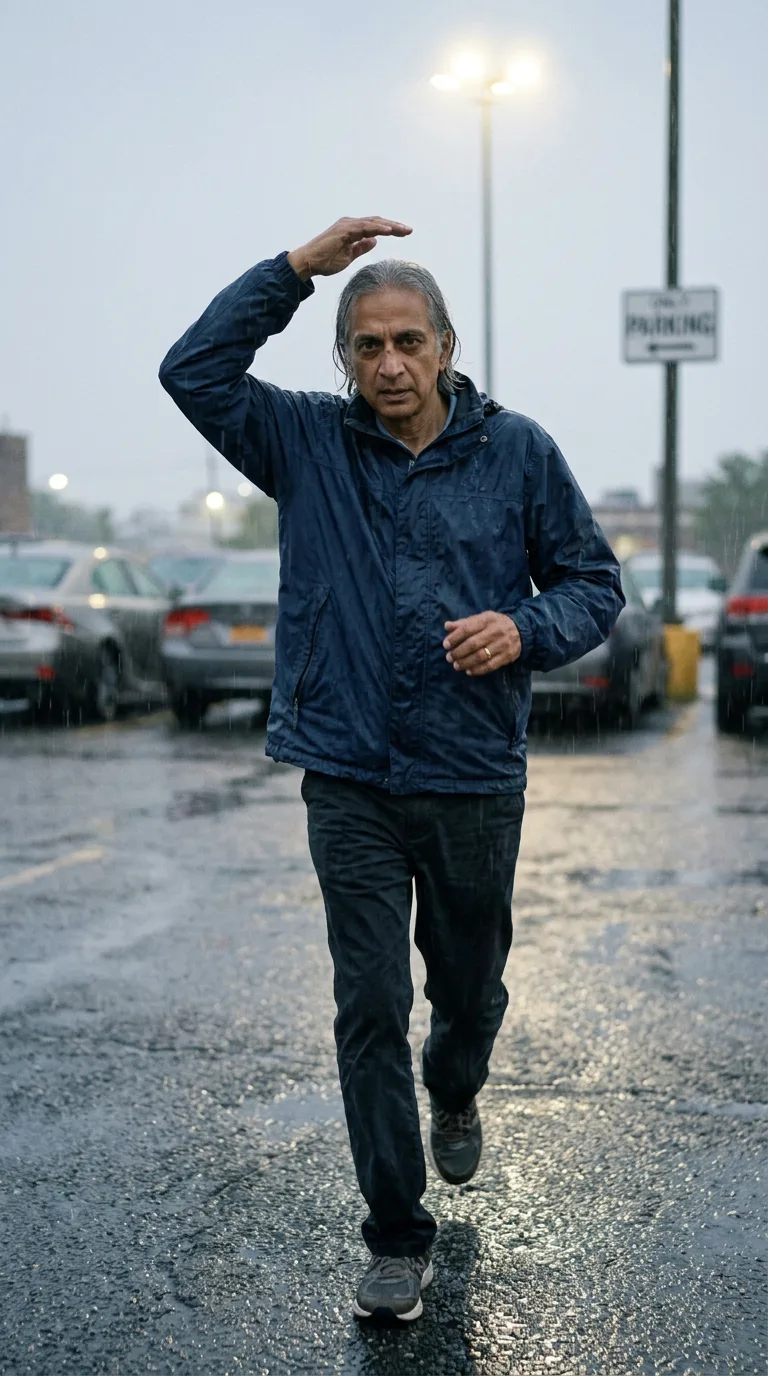
Rarest thing about him: Struck by lightning — epic, 1 in 780
Season 0seed 728270431 · engine v10
Character card
lineage 2NZHHJ
His body-swap story
@colin.hasbrook, wearing Frank Delisio, rolled the wheel on and woke up as Iqbal Rahman, spent under a minute in him, then spun the wheel and woke up as Casey Fontenot
Frank Delisio's hands smell like pipe dope and rain, because Frank Delisio has been standing in his own driveway for forty seconds deciding whether to go back inside and finish a sentence he started with his wife twenty minutes ago about the price of propane. It is not a bad life. It is a Monday-evening life, end-of-shift, beer-thirty, a life you have already worn long enough to know every seam of it — the bad knee, the beauty mark he always covers with a thumb without noticing, the particular ache of a man who has been kneeling under sinks for forty years. That's the thing about Frank. He is fine. He is exactly as fine as he was the first minute you took him. And that, tonight, is the problem. Fine is a floor, not a ceiling, and you have spun six hundred and seventy-nine times looking for the difference between the two. So you go inside, past the wife who isn't asking where you're going because she never does anymore — you made sure of that, early, without her noticing the making — and you sit at the kitchen table with Frank's laptop and Frank's bad knee jammed under it, and you open the page with the wheel on it, and you pay, and you spin.
The rain gets you first — that's wrong, there is no rain where Frank is, it's the body's rain, already falling on skin that used to be his skin one heartbeat ago. You are mid-stride across an open lot, arm thrown up over your head like it could stop a sky, shoes already gone dark with water, and then the sky opens its whole white mouth and slams you down onto wet asphalt so hard the world claps shut around you. For one full second there is nothing — no you, no him, no wheel, just a smell like a struck match the size of a city — and then you are sitting up. Clean. One motion, easy as breathing, though breathing is exactly the strange part: this chest is smaller than Frank's, softer through the middle in a different way, and it draws air like it has done this correctly ten thousand times before without ever once being asked to think about it. You stand. The legs find their balance before you do.
Rain on an open eye. Shoes smoking faintly at the seams, cooling. And into that first bare second comes the jacket — this jacket, dark green nylon gone black with wet, zipped to the throat, and it comes with a Sunday three years back, a grandson's soccer game, this same jacket over these same shoulders on a cold bleacher, a girl — his daughter, Naz — passing him a coffee and saying *Baba, you're going to catch pneumonia standing out here proving something,* and him laughing because there was nothing to prove, there was only the boy on the field and the coffee getting cold in his hand exactly the way he liked it. The memory has weight. It sits behind the sternum like something swallowed.
The wedding band is next, cold and thin against a finger that picks — already, even now, even mid-storm — at its own cuticle beside it, an old habit with nowhere to go since Yasmin died four years ago in a bed on the third floor with the window open for the air she said helped, though it never did. Forty years he wore that ring for her and one year he has worn it for no one, and both of those are true at once, folded into the same gold. He does not take it off. It was never a question.
The trousers, soaked through at both knees where the fall put him down — these are the ones he bought too many of, six identical pairs of the same khaki, because after he retired from the accounting firm he decided he was done deciding things every morning, done with forty years of choosing a tie, and there is a whole comfortable fortune behind that decision, the kind of money that means never checking a price tag again, made slowly and honestly and now spent mostly on grandchildren's birthdays and a stoop and a coffee mug he likes. This morning — his morning, hours behind wherever you're standing now — he pulled these same trousers on sitting on the edge of the bed the way his knees make him do everything lately, one leg then the other, patient, unhurried, a retired man's whole day still ahead of him and nowhere it needed to go. He'd taken his metformin with the coffee. He always did. The diabetes lives in him like a quiet tenant, rent paid on time, never any trouble if you remember it's there.
The shoes — brown, broken in exactly to the shape of feet that have walked a stoop and a sidewalk and not much further in years — bring back rain before this rain: an umbrella that failed him blocks from a mosque, three of his children calling to check if he'd made it home dry, all three at once, overlapping, because that's what having three grown children who love you sounds like, a small chaos he complained about and lived inside gladly. And under all of it, holding all of it up, is the nose — broken once, decades back, a cricket ball or a car door depending which of his brothers you ask, set slightly crooked ever since and never fixed because Yasmin told him once she liked it better this way, said it was the first thing that made him look like he'd survived something, and he believed her for forty years.
You are standing in the middle of a parking lot in Brooklyn holding a dead man's entire unfinished life, and it is not dead, it is right here, warm, sixty-two years old, aching in the knees the exact way Frank's knee ached, just differently, in a body that carries its weight low and soft and knows without asking how to reach for a coffee mug on a porch rail at an hour that isn't this one.
You lift both hands out of the rain and look at them — brown, older than the ones you had ten seconds ago, a thumb already worrying at the cuticle beside the ring out of forty years of habit that isn't yours yet and already is.
"I'm still here," you say, to no one, in a voice that isn't Frank's at all, and you don't know yet if you mean it as relief or as warning.