Hiroshi Tanabe
Fictional. Generated by AI — not a real person, and no likeness of one is intended.
38, waiter in Las Vegas · rolled by @connor.waskiewicz · card — no film
History
who has worn him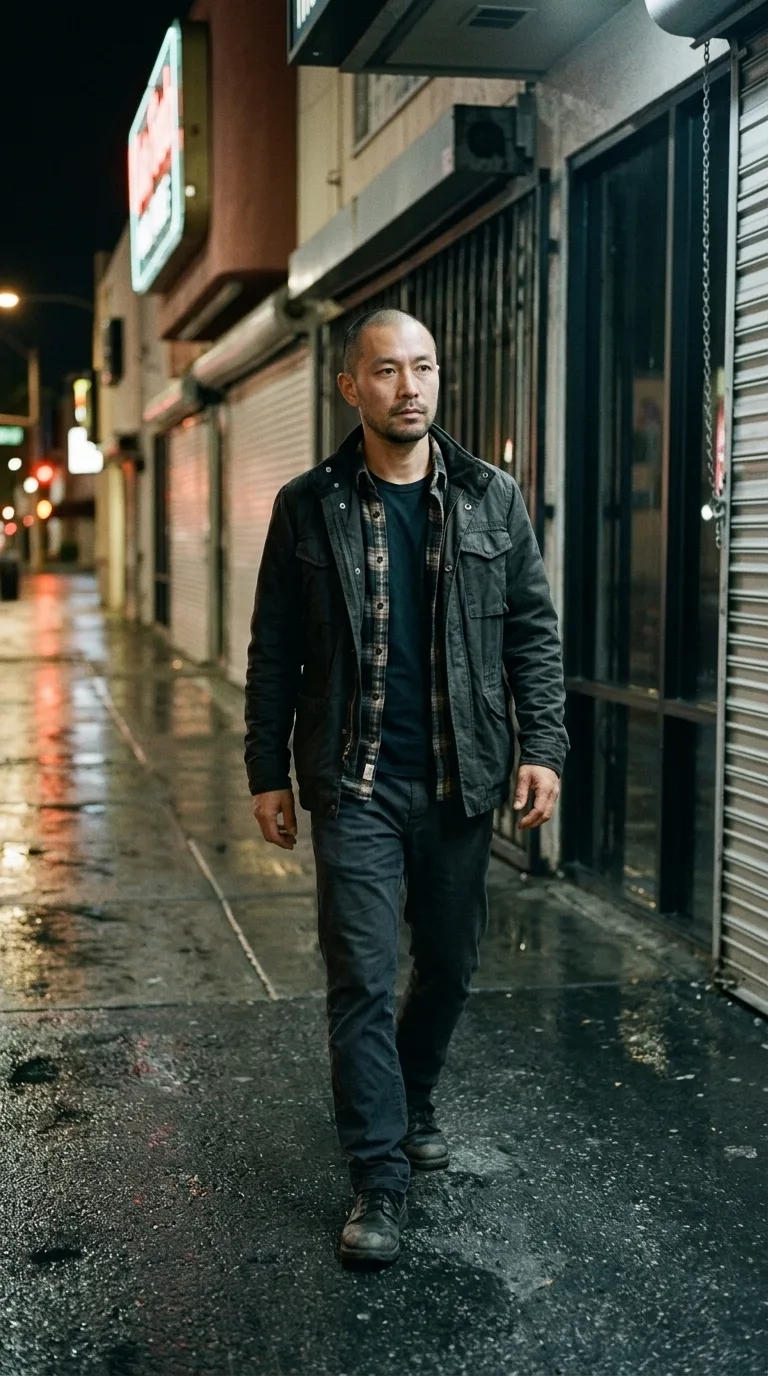
Rarest thing about him: Buddhist — common, 1 in 49
Season 1seed 953770143 · engine v11
Character card
lineage 2NZHHJ
His body-swap story
@connor.waskiewicz, wearing Paul Medeiros, rolled the wheel on and woke up as Hiroshi Tanabe, spent under a minute in him, then spun the wheel and woke up as Roy Kowalczyk
The story begins in a kitchen in Boston, with Paul Medeiros's coffee going cold on the counter. The house is dark and quiet, and the day hasn't started. Paul's knees are bad. His beard is damp where I've been chewing the end of it. I've worn him less than a minute and I already know the trouble: he is a man who can fix anything and wants nothing, and I have been sitting in his chair with his phone lit in my hand, looking at the wheel. There was a ladder in his truck and a punch list for the day. There was a wife's name on a mug, and I did not look at it. Some things you cannot do in a stranger's body, like sit still inside someone else's contentment. I press the screen.
Then there is wet air and a curb that isn't there.
My foot goes out over the gutter and the street tilts. My palm slaps the cold flank of a parked car, and the water on it soaks through. My breath comes up sour with whiskey. Everything is slow and warm and badly aimed. The scuff in my right shoe, every third step, quits. I hadn't known it was there until it stopped.
The jacket hangs open, and I pull it closed with one hand. The canvas is stiff and waxy, softened at the cuffs, and with it comes a morning. It is hours earlier, in a room with the blinds down. His fingers worry a button on a shirt that doesn't want to go through the hole, because the thread has loosened. He tells himself he'll fix it and knows he won't. That is Hiroshi's feeling: a small, tired tenderness toward his own neglect. The jacket was a gift. A woman bought it for him in a store with bad lighting and said, you always look cold. Her name is Mika, or the feeling of her name is. He stood in that store and let himself be fussed over, and it was the nicest ten minutes of a month.
The plaid shirt rubs my collarbone. The shirt remembers the restaurant, the floor after close, chairs upended on the tables and their legs pointing up like a field of stakes. He mops between them with a tired, even stroke. Eleven years of carrying plates up one forearm. The shoulders know it, and so do the wrists, and the thighs that took the trays of other people's celebrations. He is small, five foot three, and every inch of him is used. I feel the compact strength in him, the athlete he still half is, the legs that bounce under any table or chair, even now, even standing. My right knee is jittering against nothing. I let it.
The shoes are the old black work shoes, resoled twice, and the cracked leather presses my toes. Beneath them is a memory of the same shoes on carpet at the employee entrance of the casino, at four in the morning on some other night. The air there smelled of cigarettes he never smoked, and he stood with his hands under his armpits, waiting for a bus that ran late. He never wanted the cigarettes, only the pause the smokers got. He envied them the pause. So he drinks, and it is the same pause, and he knows that.
The jeans are damp at the hem. In the pocket my fingers find keys and a folded receipt, and a flash comes with them. An altar the size of a shoebox. His mother's incense burning in a cup of rice, the smell of it, and his own clumsy bow, and the quiet sentence he says there, which is not a prayer so much as an apology. He is not good at being what he was raised to be. He tries anyway. Mostly he tries on Sundays, hungover.
I stand there with his heartbeat knocking in my ears, a hard, quick, drunk little drum. His money is thin: five thousand, maybe, if I'm generous, and a debt to a brother he thinks about at night. He owes no one anything else. No one has hurt him enough to matter. He is ordinary. I have been so many ordinary men, and the wanting in me, the thing that sent me out of Paul's kitchen, is already stirring under the borrowed whiskey.
I lift my hands into the streetlight. They are narrow and callused across the pads, with short square nails. The tendons stand up when I turn them over. They are good hands, and they are mine for now.
I look up the wet street, the signs bleeding red on the asphalt, and the corner ahead. Home is to the right. I turn left.
"Okay," I say, in his voice, low and a little rough. "How long are you going to last?"