Henry Takeda
Fictional. Generated by AI — not a real person, and no likeness of one is intended.
36, forklift driver in Philadelphia · rolled by @connor.waskiewicz · card — no film
History
who has worn him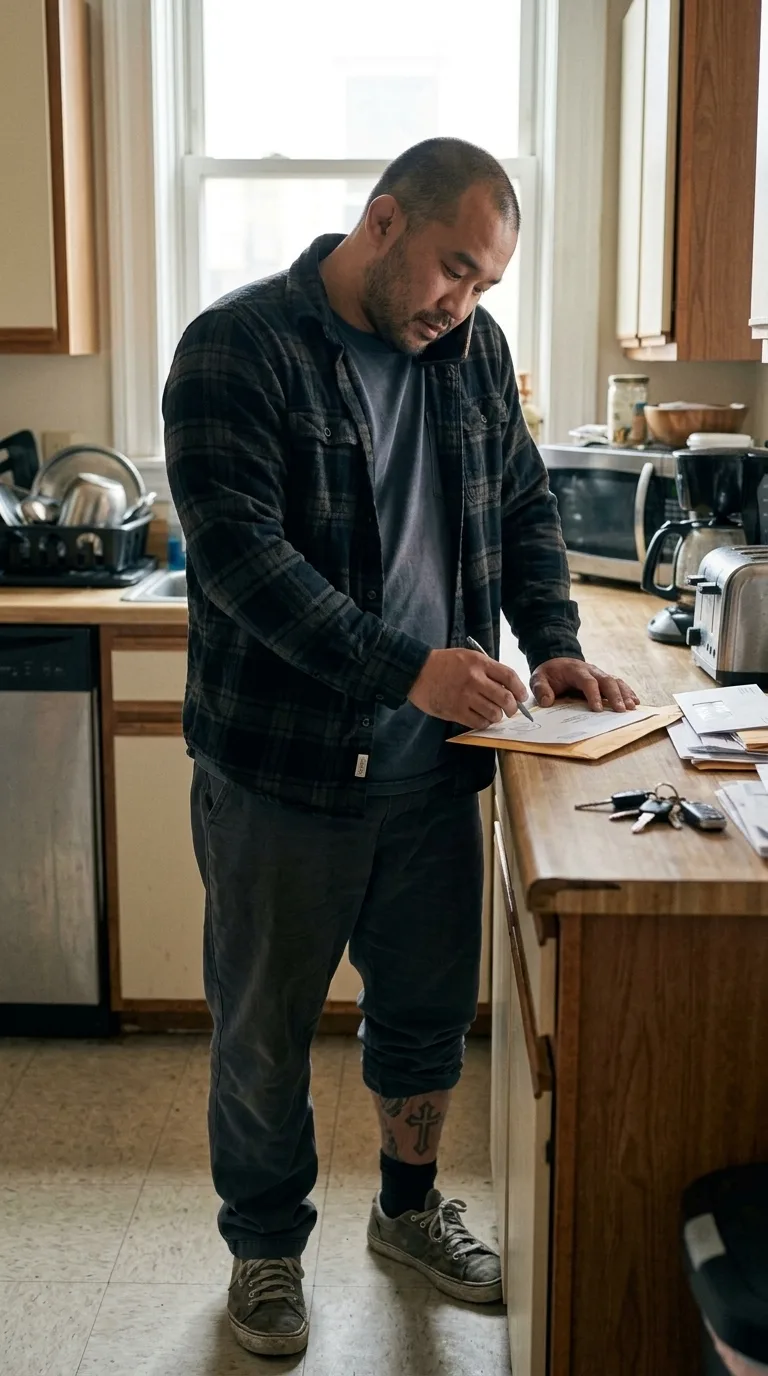
Rarest thing about him: Cauliflower ear — uncommon, 1 in 161
Season 1seed 875126732 · engine v11
Character card
lineage 2NZHHJ
His body-swap story
@connor.waskiewicz, wearing Terrance Beaumont, rolled the wheel on and woke up as Henry Takeda, spent under a minute in him, then spun the wheel and woke up as Caleb Hostetler
You are still Terrance Beaumont for four more seconds. The knife in his right hand is halfway down a pepper, and you set it on the board because you have decided, and he never felt it coming. Eleven minutes of him, and the kitchen is loud with extractor fans and somebody's radio. His shoulders are wide and easy and they do nothing for you. Before him you were Dale Hutchins, behind a register in Ohio, a beard you kept touching, a friend who called on Sundays and said nothing for a long time. You left Dale two minutes ago and took the Sunday call with you. You do not say that to yourself in so many words. You wipe your hands on Terrance's apron and the page opens.
The wheel turns. Then you are standing in a cold kitchen with a phone at your ear.
Music loops back to its first bar, bright and tinny, and your shoulder lets the phone drop into your hand. Your other hand holds a pen that has stopped on the second digit of a number written on an envelope. It does not start again. The floor is cracked linoleum, cold through thin shoes. Your jaw is clenched hard enough to ache, and you let it go, and it clamps again by itself.
The flannel is the first thing that knows him. It sits heavy on the shoulders, soft at the cuffs, and as you shift, the cuff drags across your wrist and you are in his hands. He pulls it off a hook at the door in the dark of a cold morning, one arm and then the other, the left sleeve always first because the right shoulder complains. He is thinking about nothing. He is thinking that the heat in this house comes on late. The feeling is tired, plain and decent, like a coat that has stopped asking anything of him.
You touch the counter and it gives you more. Edge of laminate, worn pale where he leans. A rowhouse. Marble steps scrubbed hollow by a century of other people's shoes, and a woman two doors down who sweeps them every morning, and he has never learned her name and is ashamed of it every single day. You did not know a man could carry that so quietly.
The pen again. His thumb knows the click. A reference number, a bill that is wrong, an hour on hold that he has been quietly furious about since the week began. Under the fury is fear of owing. He has money put away, not much, and he guards it the way you guard a thing that took years.
Your ear throbs where the phone pressed it. You touch it and find it thick and ridged, a lump of old gristle, and a gym comes up through your fingers: mats that smell of bleach, a boy's sweat, a hold that went on one second too long and a pop like a knuckle. He was nineteen. He was proud. He kept the ear like a medal and never told his mother how it happened.
The ink on his calf itches under the cuff. You do not look at it. You feel it anyway, the cross and the hands pressed together, and a different afternoon: a needle, a friend laughing, his own voice saying he did not believe in much but wanted something to hold. Spiritual, not religious. He talks to nobody, and somehow it is still prayer.
The body under all of it is big and tired. Thirty-six years in a soft frame, belly against the counter, knees stiff from cold concrete and a forklift seat. His hands are thick and know the lever, the tilt, the lift of a pallet ten feet up. Your fingers twitch, ready to steer.
You look at your hands. They are not Terrance's. They are not Dale's. Wide, scarred across the knuckles, the pen between them.
You look up into the window glass, a man you have never been, and you say, low, "Hello, Henry."
The music starts again. You do not know how long he will last.