Hector Villaseñor
Fictional. Generated by AI — not a real person, and no likeness of one is intended.
65, farmhand in Phoenix · rolled by @klaus.dietermann · card — no film
History
who has worn him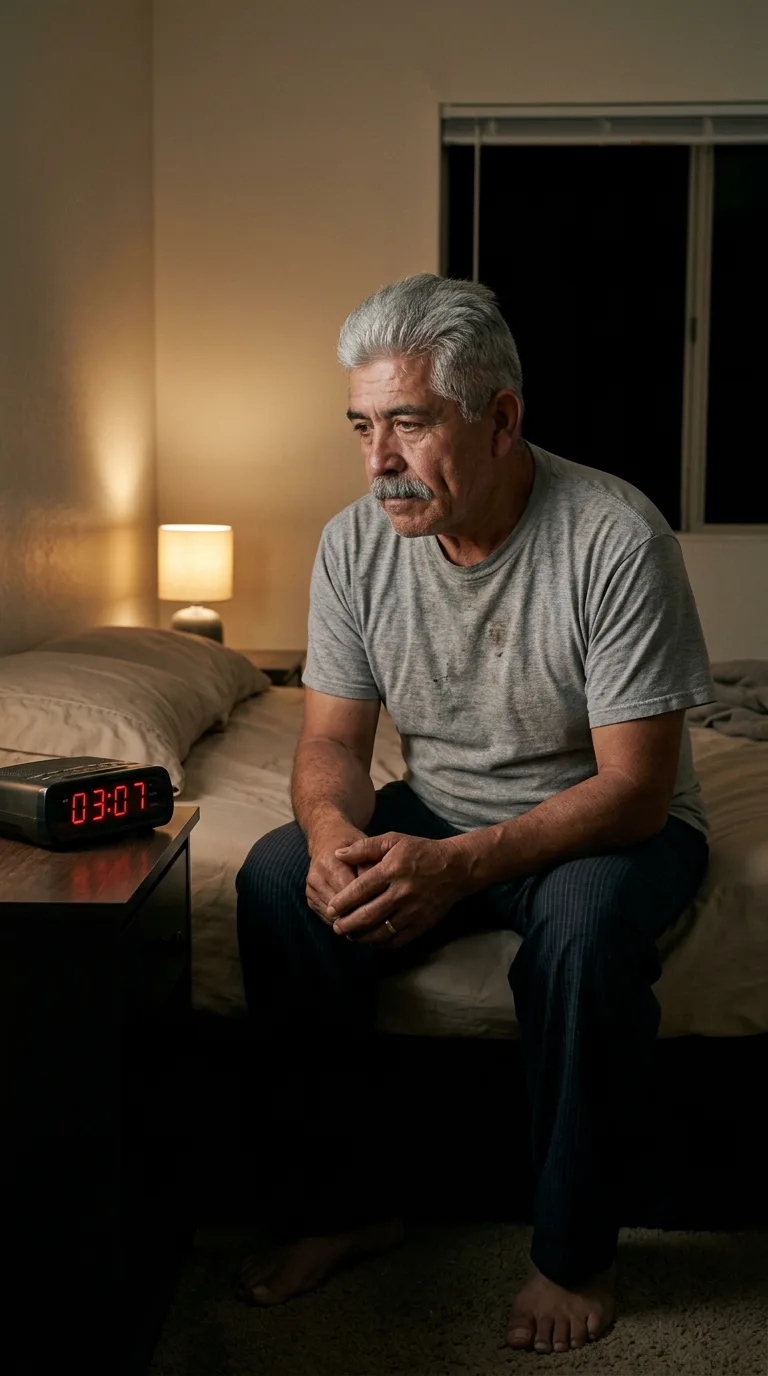
Rarest thing about him: Praying, not very seriously — common, 1 in 44
Season 1seed 1004424371 · engine v11
Character card
lineage KEPHG1
His body-swap story
@klaus.dietermann, wearing Russell Deptula, rolled the wheel on and woke up as Hector Villaseñor
The checkout light at Russell Deptula's register has been dead for two minutes and you have been him for exactly that long, and already you know it was a mistake. Not a bad body — soft in the middle, bad knees, a beauty mark he'd never once in sixty-two years found interesting — but a *quiet* one. No ache in it worth the name. You stand in the break room at three in the morning Los Angeles time, Thursday bleeding into Thursday, fluorescent light humming over a body that has nothing left to tell you. Two minutes was enough to learn he doesn't like his son-in-law and his back hurts on humid days. That's the whole file. You didn't spend what you spent to read a pamphlet. The phone is in his pocket, vessel.cards already loaded from the parking lot, the wheel sitting there mid-spin in your memory like a held breath. You open it again because boredom is its own kind of hunger and because thirty-six men were not enough and because somewhere under that you already know you will never let it be enough. You spin.
Weight drops onto you differently — lower to the ground, denser through the shoulders, knees that announce themselves at once, a familiar ache gone unfamiliar by being new. You are kneeling. Carpet under your shins, bedspread rough and cool under your clasped forearms, a clock radio two feet from your face reading numbers that don't matter yet. You'd been saying something — the last of it is still moving in a throat that isn't the one you had — *amen* — and a breath got half laughed out behind it, like finishing a chore faster than you meant to and catching yourself smiling about it. The body starts to rise. Then it doesn't. Both knees come back down onto the bedspread on their own, obedient to something that is now only you, and the smile goes out of the face mid-breath, and the forehead tips forward and rests on the blanket.
The bedspread gives it to you first: cotton, worn thin in a stripe where two bodies have slept for thirty-one years, and under that, Marisol's hand smoothing it that morning before she left for her sister's — she goes Thursdays, she won't be back until the dark part of tomorrow, and that is why the room is so quiet it rings. The clock reads 11:14 and it is not night here, not for this body — it's the stretch of morning he sleeps through because the crew starts at four and quits when the heat turns the rows into an oven, and he is always down by nine and always up again by two to do it over. Night for you in Los Angeles. Broad, blinding almost-noon for Hector, curtains pulled against it, the gap at the edge throwing one yellow blade across the carpet.
The t-shirt against your back gives you more — thin gray cotton gone soft at the collar, a sweat stain at the chest that never washes all the way out no matter what Marisol uses, and under it the memory of putting it on backwards once last summer and her laughing so hard she had to sit down, and you fixing it without a word because some jokes are worth losing on purpose. His hands know the motion of a shirt before his mind does: sleeve, sleeve, collar, the small practiced economy of a body that has dressed itself in the dark for forty years without turning on the light so as not to wake her. Jeans worn pale at the knee from exactly this position, kneeling, because he does this most days, not devoutly, not with his whole chest in it — more like checking in on someone he believes is there but doesn't expect to answer. The wedding band is a thin gold weight he forgets until he notices it, the way you forget your own pulse.
And the dimples — his face holds them even collapsed against a bedspread, even now, two parentheses that have outlived every other thing time was allowed to take from this face. Two daughters' names surface with the shirt's smell of dust and tomato vine — Araceli, who calls on Sundays, and Lupe, who doesn't, not since the thing about money three years back that nobody in the family says out loud anymore. A whole stretch of harvest mornings comes up through the knees: stooping, straightening, the crate handle worn smooth where his palm always lands in the same groove, Marisol's voice on the phone at lunch saying *ya comiste?* before she says anything else, always, forty years running. He had been going to stand up and start the long dumb grind of readying for the two o'clock shift, boots by the door, hat on the hook, and instead his body had chosen, unprompted even by him, three more seconds on its knees — half a joke to God, *gracias, otro día* — and that's where you landed, in the gap between the joke and the floor.
You lift your face off the bedspread. The hands come up in front of you — broad, brown, the nails blunt and a little stained at the cuticle no soap gets all the way out of, the ring loose enough to turn with a thumb. You turn it once.
"Quién —" you start, and then just watch the hand instead, turning it slow in the blade of light from the curtain, and you don't finish the question, because some part of this body already knows better than to expect an answer back.