Hector Villanueva
Fictional. Generated by AI — not a real person, and no likeness of one is intended.
50, personal trainer in New York · rolled by @connor.waskiewicz · card — no film
History
who has worn him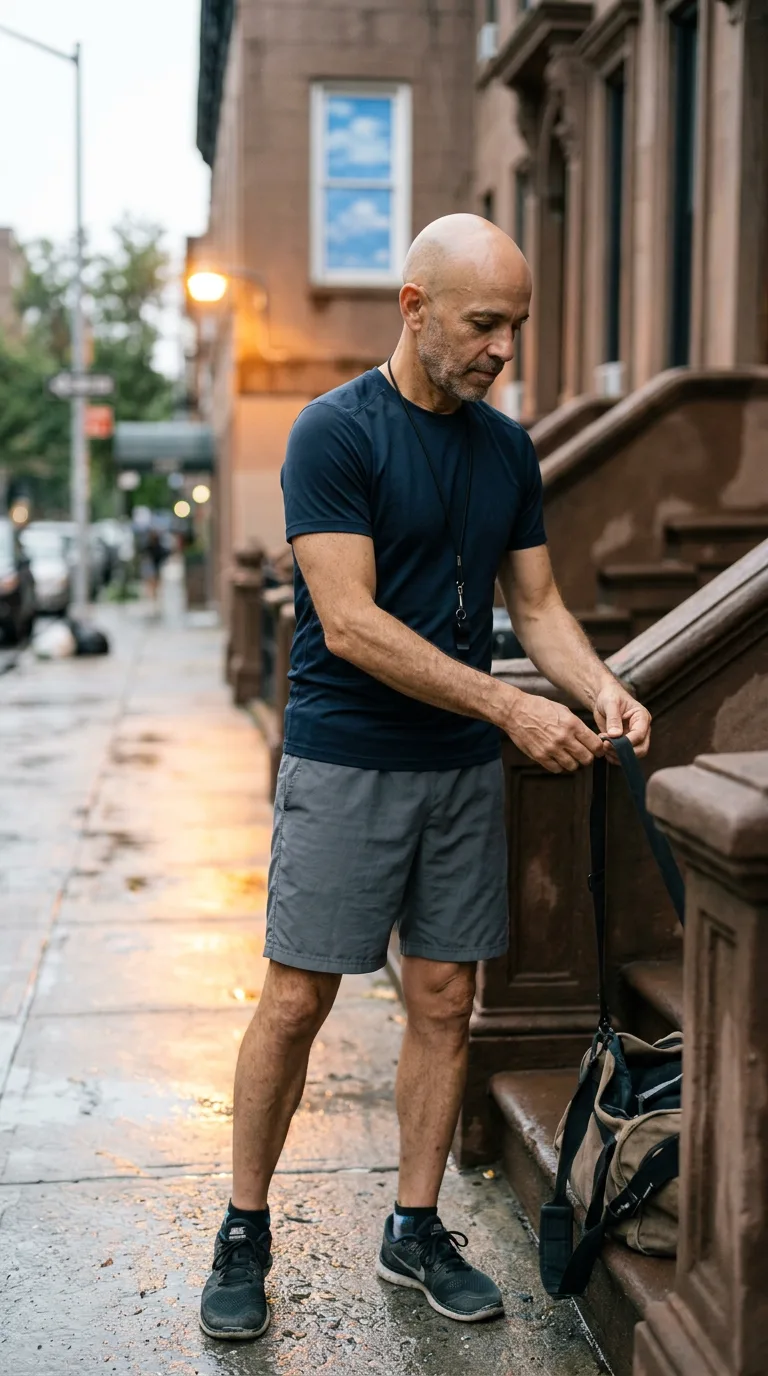
Rarest thing about him: Eyebrow — uncommon, 1 in 141
Season 1seed 1767845907 · engine v11
Character card
lineage 2NZHHJ
His body-swap story
@connor.waskiewicz, wearing Gordon Takeda, rolled the wheel on and woke up as Hector Villanueva, spent under a minute in him, then spun the wheel and woke up as Osvaldo Benítez
You are sixty-five and your knees are a committee. Gordon Takeda's knees, in Gordon Takeda's kitchen, where the light off the Atlanta driveway lies across the counter in a flat white slab. His laptop is open to a ticket nobody can close. His wife's note is on the fridge in her slanted hand: *Call your brother.* You have worn him for less than a minute and already you know what he cannot do. He cannot be surprised. Every room he walks into, he has already mapped the cables behind it. You wanted a man who did not know what came next, and he is not that man. Nobody told you it would feel like being handed a very tidy, very well-labeled drawer.
So you open the page. The wheel is already turning in the little glass of the phone, ticking over names you will never hear, and your thumb is steady, because it is his thumb and he has never in his life been afraid of a button.
The tick slows. It lands.
Wet air. Your hands are mid-motion, a strap pinched between the fingers of both, and the strap goes wrong in them, a loop where there should be a pass, and you correct it slowly, the right way, and then you do ten more movements and check every one, because something under your ribs says check. Sodium light is orange on the sidewalk. Rain has stopped but the street is still shining with it. Your weight is on the balls of your feet. Your breath comes out through a nose that has been broken or has not. Your head is cold, bare to the damp air. Something small and metal sits in your eyebrow and tugs when your face moves.
Then the stoop rail under your hip, brownstone gone slick and gritty, and it opens a door. A boy on a stoop like this one, a different one, in Washington Heights, his mother calling down in Spanish that the soup was getting cold, and him pretending not to hear because the older boys were still out. The rail was warm then. Summer. He was nine and perfectly happy.
The strap in your fingers is canvas, frayed at the edge where he always grips it. The bag's weight: a towel, a water bottle, a spare shirt his wife folds in thirds. Your thumb knows the buckle. It remembers the day he bought the bag, years ago, defending the price to himself, and the hundred other mornings he has packed it in the dark while she slept with one arm thrown over his side of the bed. Her name is Marisol. You do not say it. It sits in your mouth like a coin.
The shirt against your back is navy and thin from washing. Memory comes up through the sleeves: this morning, the left arm first, because the left shoulder clicks, then the right. The whistle's cord settling around his neck, the little weight of it against the sternum, a habit from the years he coached kids' soccer before the gym. The shorts with the drawstring he always double-knots. He stood at the mirror and touched his face, the jaw, the stubble he had not bothered with for three days. He does that. His hand goes to his face when he is thinking. Yours does it now, and finds the bristle, salt and pepper by the sound of it, and the cool bar of the ring in his brow, which he put there at forty-six, a year after his father's funeral, when he decided he was done being only what he was expected to be. Marisol laughed for a week. Then she kissed it.
A church, then. Incense and cold stone, the pew hard under his thighs, a rosary wound twice around his fingers though he is not in the habit. He prays for nothing in particular. He prays the way he lifts: for the repetition, for the quiet at the bottom of it.
The wedding band turns under your thumb, plain, a little loose in winter and tight in August. He quit smoking on the roof of a building you will never see, one cigarette left in the pack, and crushed it, and felt like a man who had done one true thing. His belly is soft over strong legs. His lower back has a low, dull argument with the cold. His shoulders are good. His hands are quick and dry and know every machine in that gym by its grease.
You lift them. The band. The knuckles. The pale line of the strap's pressure across one palm. They are not yours, and they do not know it.
You look up, past the stoop, past the orange lamp, and say, quietly, in a voice that is deeper than you expected, "Okay. You're mine."
Behind it the question is already there: an hour, a year, or the time it takes the rain to start again.