Hector Villafranca
Fictional. Generated by AI — not a real person, and no likeness of one is intended.
47, groundskeeper in Philadelphia · rolled by @hector.villafranca · card — no film
History
who has worn him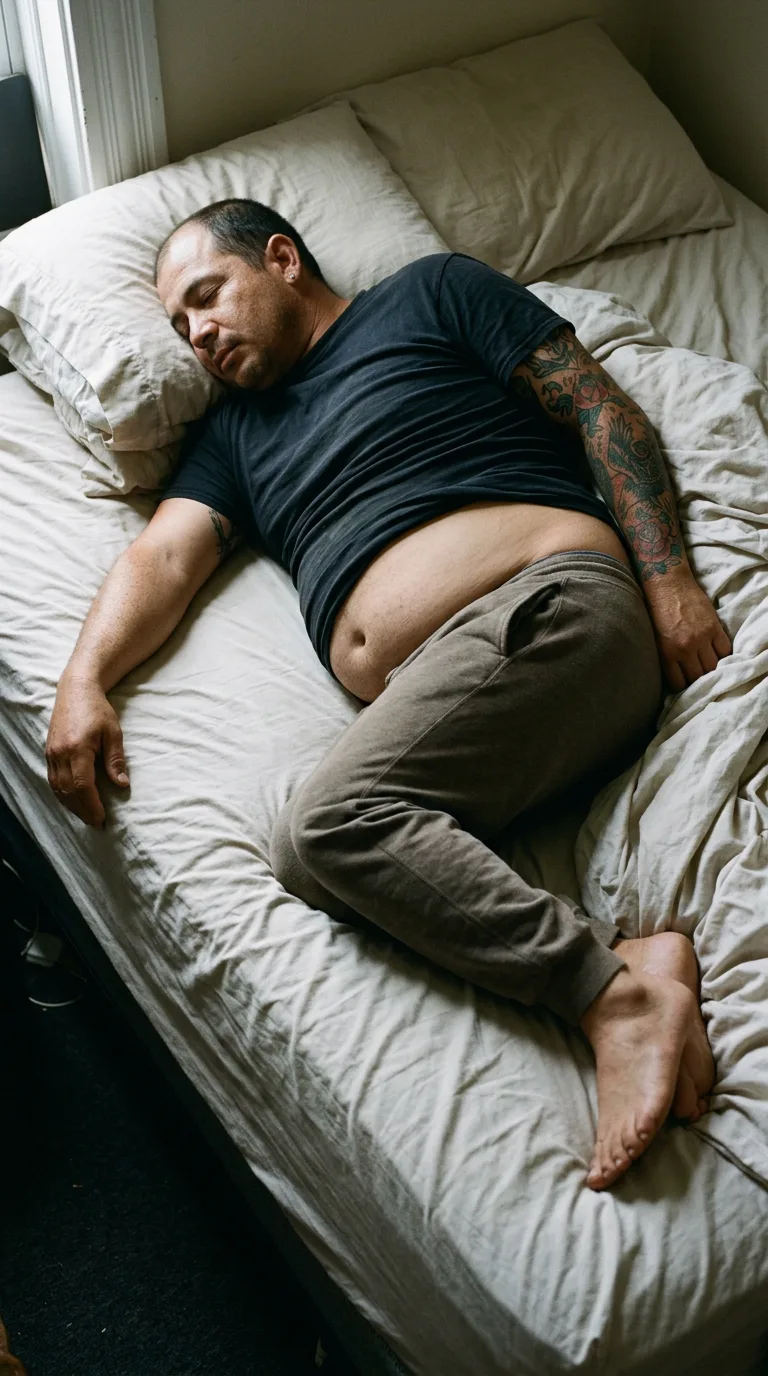
Rarest thing about him: Heart disease — epic, 1 in 110
Season 0seed 1562528867 · engine v10
Character card
lineage 1IBXS7
His body-swap story
@hector.villafranca rolled the wheel on and woke up as Hector Villafranca — their first
---
The tab has been open for three days. You keep closing your laptop on it like that solves anything, and then opening it again during lunch, during the boring stretch after lunch, during this exact nothing-morning when the light through the blinds is doing that flat gray thing it does and nobody needs anything from you for forty-five minutes. vessel.cards. You found it the way you find everything, sideways, a link in a thread about a movie about a body swap, someone saying *lol imagine if this were real* and someone else saying *it basically is, look*. You have wanted this since you were a kid watching a rerun of some sitcom where two people switch and everyone laughs. You never laughed. You just wanted to know what it felt like from the inside, the actual mechanics of waking up wrong. Thirty years of wanting a thing that was never for sale, and now there's a wheel, and a price, and a button that says SPIN in a font that's trying too hard to look ordinary.
You pay. You spin.
There's no countdown, no light show. Just a small violent tilt, like a chair leg giving out, and then weight — a lot of weight, weight you did not have nine seconds ago, a gut and a chest and thick forearms — and you are lying face down in sheets that smell like fabric softener and someone else's sweat, one arm hanging off the edge of a mattress into cool air. Streetlight bars the wall through a gap in the curtain. It is the middle of the night here. It was the middle of the morning where you were. That math doesn't resolve and you don't try. The arm draws itself up without you deciding to move it — his body, doing the thing bodies do, finding a resting shape — and you roll onto your back, hands folding over your chest like a man laid out for viewing, and the breath that was ragged a second ago goes slow and even, and that is the whole arrival. No flash of light. No sound. A man went from dreaming whatever he was dreaming to gone, and something else is home now.
The sheets are the first thing you touch, and they are the first thing that talks back. Not words — a feeling, a whole rush of it: this bed, three years, a mattress bought secondhand off a guy on Kensington Ave who delivered it in a pickup with a cracked taillight. Before that a mattress on the floor of an apartment that isn't this one, a year that tasted like being twenty-six years old and stupid about money. You didn't ask for any of it. It just comes, riding in on the cotton under your palms.
You lie there a second in his weight, feeling how it sits — the belly, warm and soft and slightly sour with sleep, the ache low in the back that says he's been on his feet on grass and dirt for twenty years, knees that click when you think about bending them though you haven't tried yet. Heart doing something under the sternum that you can't name but that feels, faintly, like a held breath it can't quite let go. You know that isn't nothing. You don't dwell on it.
Your hand finds the hem of the T-shirt he slept in and that's another door: this shirt, a 5K his daughter Marisol made him run two Aprils ago, finishers medal still in a drawer somewhere he never opens. There are more kids than her — a boy, older, who doesn't call enough, and a younger one whose face arrives only as a laugh, high and delighted, at something on a playground swing. An ex-wife, Diana, who he still calls when the Eagles lose in a particular way, just to say *can you believe this*, and she still picks up, and neither of them has explained that to anyone. A girlfriend now — Renata, warm hands, a laugh that comes easy, who doesn't yet know about the chest thing, the pills in the cabinet he takes with orange juice so they go down easier, the cardiologist's card he keeps meaning to call back.
The memory that comes hardest, though, comes off the shirt still folded on the chair by the window — the one he'll put on in a few hours for the shift that starts before the sun does, because the diamond has to be mowed and lined before a single kid steps onto it for an 8 a.m. game. You feel his hands doing it in memory only, sleeve by sleeve: the flannel-lined work shirt, going on left arm first out of some habit from his father, who taught him mowing patterns on a Little League field in Kensington thirty years ago and told him a man who does the grass right gives the whole neighborhood something to be proud of even if nobody ever says thank you. The right sleeve drags a little over the tattoo — the sleeve of ink he started at twenty-three and finished paying off in installments over a decade, a rose here for his mother, an anchor there for nothing in particular except that he liked it, colors gone soft now like a photograph left in a window. His fingers find the studs in his ears without meaning to, a thing they do, checking they're still there, the way another man might check for keys.
You feel the chew tin he doesn't have in his hand right now but that his jaw wants anyway, an old ache in the gum where it always sits. You feel that his hands, steady enough pushing a mower in a straight line for two hundred feet, go to pieces in front of a boss or a permit office or anybody with a clipboard — stammer, stall, go quiet rather than fight through it, which is its own kind of shame he's made peace with by mowing very, very straight lines instead.
You feel, underneath everything, that he does not drink, has not in eleven years, and that the quiet in him on a Sunday morning is not absence but something closer to faith — not a church he goes to, just a conviction, held privately, that the grass coming back every spring means something, that his mother watches the games from wherever she is, that none of it needs a building to be true.
Your hands — his hands — come up off his chest into the gray dark of the room, and you turn them over, palm up, palm down, freckled to the knuckle same as the nose, same as the cheeks, and even in the almost-no-light you can see it, that scatter of them, the one thing anybody would tell you about him if you asked.
You say it out loud, to the empty room, in a voice that is not stuttering because nobody is watching, nobody is judging, there is no clipboard here — just a low, wondering "There you are" — and you don't know yet if that's the last thing you'll ever say in this voice, or the first of a hundred mornings, and neither does the wheel, and neither, mercifully, does he.