Hector Belmonte
Fictional. Generated by AI — not a real person, and no likeness of one is intended.
52, sales rep in Chicago · rolled by @hector.belmonte · card — no film
History
who has worn him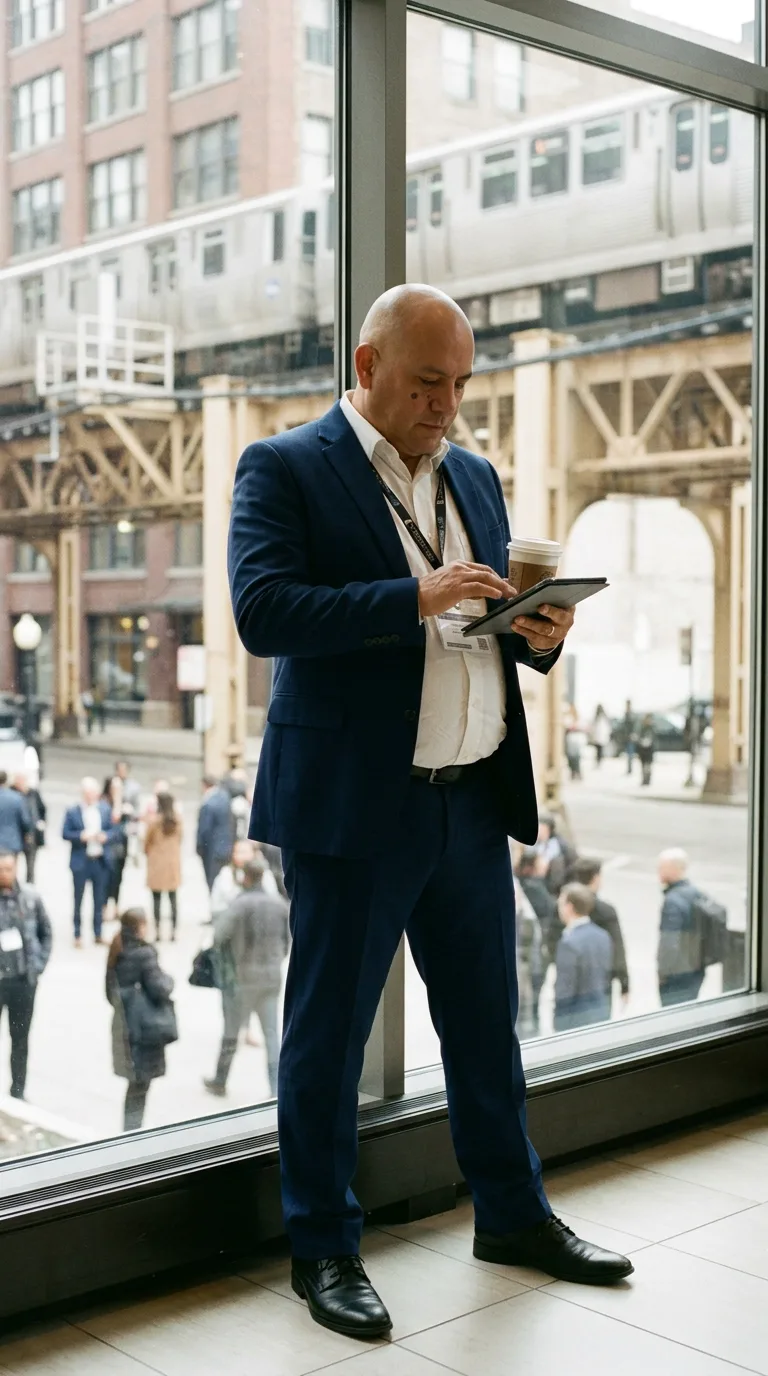
Rarest thing about him: A pack a day — common, 1 in 17
Season 1seed 510182792 · engine v11
Character card
lineage HYEKCH
His body-swap story
@hector.belmonte rolled the wheel on and woke up as Hector Belmonte — their first
The evening is nothing much. Dinner's done, the sink has one pan in it you'll deal with later, and the scroll has gone past the point of finding anything, into the part where your thumb just moves. You've had this particular hunger for years — the swap stories, the body-switch threads, the late-night subreddits full of people wishing out loud for a thing that was never actually for sale. Tonight it is. vessel.cards loads slow on your end, cheap-looking, a wheel rendered in flat colors like a raffle app. You don't believe it. You pay anyway, because believing was never the price of admission. You spin.
There's no fall, no tunnel, no countdown. There's a tablet in your hand and a coffee cup pinching between two fingers and a window full of winter light and an L train going by close enough to rattle the glass, and you are standing in all of it, mid-swipe, like you've always been standing in it. Your — his — thumb is on the screen, dragging an email open, and for half a second the thumb does the wrong thing, taps low, opens the wrong message, and you feel the small flinch of a man who has never once in ten years fumbled his own phone. You correct it. You correct the next one too, carefully, and the one after that, each tap checked like you're new at this, because you are.
The tablet is warm from his hand already. That's the first door. A trade show two years ago, Hector's trade show, his biggest account that quarter, standing in almost this exact spot explaining a shipping schedule to a man who didn't care, and underneath it, older, a classroom in Pilsen where a nun rapped his knuckles for holding a pencil wrong and he switched hands out of spite and never switched back — that's why the tablet sits a little odd against this palm, heel of the hand doing the bracing a thumb should do. The coffee cup gives you less: just today, just this lobby, bought four minutes ago from a cart outside, too hot still, untouched.
The lanyard is the deep one. It's looped twice around your neck under the collar, and when your fingers brush the plastic sleeve you get the whole badge-laminating machine in HR, Hector standing at it eleven years running, every January, same bad photo retaken because the first one always catches the mole wrong, makes it look like a smudge on the lens. He hates the photo. He's never said so out loud, not to his wife, not to Denise before her — just carries a small yearly irritation nobody else has ever been told about, and now you have it, free, through the warm plastic.
The shirt is the deep one, deeper than the lanyard. White, pressed too hard by the dry cleaner on Western, buttoned this morning in a bathroom with a cracked tile Marisol keeps saying she'll get fixed. You get his hands doing it, sleeve by sleeve, cuffs first out of habit from his father, who did it that way and said a man who starts at the collar is dressing like he's being hanged. You get the belt notch he moved out one hole in March and didn't mention to anyone, the gut he's stopped fighting and started just managing, dad-bod and knows it, calls it that himself in the mirror with something that isn't quite a joke. You get the fifth button, the one that always gapes a little now, and the practiced way he angles the jacket to cover it before he leaves the house. You get Marisol's hand smoothing that same collar flat at the door, saying something about his father's chemo appointment Thursday, and you get, underneath that, quieter, a different kitchen a long time ago, Denise's kitchen, the two kids young in it, a version of mornings he doesn't visit much anymore because it still costs him something when he does.
The shoes against the lobby floor give you standing itself: fifty-two years of it, lower back that announces itself after the third flight of conference stairs, a left knee that clicks on cold mornings like this one, calves still strong from twenty years of walking hotel carpet with a bag on his shoulder. A pack of cigarettes rides in the jacket's inside pocket against your ribs, half gone, and just touching the cellophane through the fabric gives you the taste of the one he had at six-fifteen this morning on the back steps before Mass thoughts even started, a small daily absolution he doesn't examine. Two drinks most nights, never three, a rule he set once and has mostly kept. A rosary somewhere in a drawer at home he hasn't touched since his mother's funeral but still crosses himself before flights.
The wedding band is the smallest door and it opens the widest room — fifteen years of Marisol, a fight about money that lasted a week in 2019, her laugh at something stupid he said in a parking garage, the whole unspectacular architecture of staying. It sits a little loose today; he's noticed that too, same as the belt, and done the same thing about it, which is nothing.
You're still standing at the window. The train has passed. The lobby noise comes back in — a bellhop's cart, someone's heels, a conversation about a nine-fifteen that already happened. It is the middle of the morning here, bright and flat and midwestern, though some other version of a day is just now letting go of you, wherever that was.
You look down at the hand holding the coffee. Olive-brown, a plain gold band, a thin white scar across one knuckle you didn't put there and don't yet own the story of. You turn it over once, like it might come with instructions.
"Okay," you say, to no one, to the glass, to the trains. "Okay."
Nobody in the lobby looks over. Why would they. A man pausing by a window is just a man pausing by a window, and you have no idea, standing in him, how long you get to be the only one who knows otherwise.